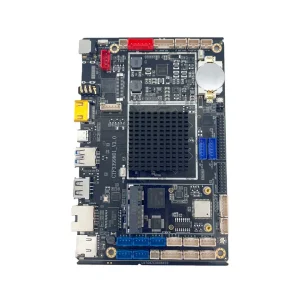
Direct Factory Integration
High-Yield Electronic Assemblies Tailored for Ghana
Engineered to withstand tropical West African climates, power fluctuations, and extensive rural deployment with rigorous DFM verification and multi-stage testing.
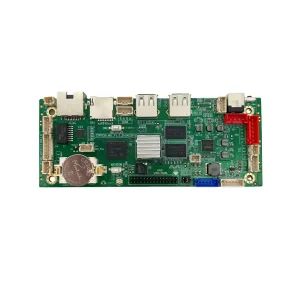
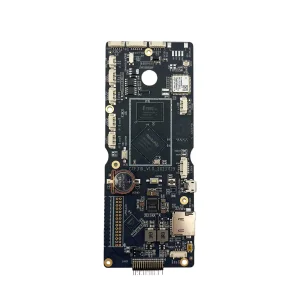
Industrial Intelligence
Ghana’s Industrial Macro-Dynamics & Technological Transition
A comprehensive assessment of commercial electronics demand across Greater Accra, Ashanti, and the Western Corridor.
85.9%
National Grid Access Rate
28M+
Active Mobile Money Accounts
10%
Renewable Target in Energy Mix
98.5%
Aozite SMT First-Pass Yield
The Infrastructure Leap: From Cocoa & Mining to Embedded Automation
Ghana stands at a critical juncture in Sub-Saharan Africa's industrial renaissance. Historically driven by cocoa processing, gold extraction, and offshore petroleum, the country is executing aggressive modernization via initiatives like "One District One Factory" (1D1F) and extensive fintech digitization.
Local assembly operations and equipment builders in Accra and Tema face significant hurdles: lack of domestic silicon fabrication, unconditioned ambient moisture along coastal regions, and extreme line surges on municipal feeds. For engineering teams deploying commercial hardware in Ghana, working directly with an established Shenzhen PCBA partner guarantees components certified to withstand tropical thermal gradients and severe electrical interference.
Supply Chain Takeaway: Localizing board-level design for Ghana requires ruggedized power conditioning, conformal silicone/polyurethane coatings, and industrial-grade dielectric substrates (FR-4 High-Tg ≥170°C).
Overcoming the Electronics Import Deficit
While consumer electronics have flooded regional distribution hubs like Kantamanto, domestic engineering firms face long cycle times and inflated distributor margins when attempting small-to-mid scale industrial board fabrication. Chinese turnkey production eliminates multiple intermediary broker markups.
By leveraging direct Shenzhen-to-Kotoka (ACC) or Tema Port multimodal logistics, Ghanaian enterprises access rapid prototyping (72-hour turnaround for quick-turn SMT), DFM clearance, and verified original components directly from factory lines, bypassing the grey-market component liabilities common in open markets.
Localized Engineering
Mission-Critical Hardware Applications Across Ghana
Field-proven PCBA architectures tailored to specific domestic operational environments in West Africa.
Solar Inverters & Mini-Grid Telemetry
Off-grid electrification across the Northern and Volta regions demands micro-inverter control boards and MPPT charge regulators capable of surviving 45°C ambient temperatures with 95% non-condensing relative humidity.
- High-copper thick traces (2oz–4oz) for sustained dissipation
- Galvanic isolation safeguarding microcontrollers from lightning surges
- Embedded 4G/2G telemetry for remote micro-utility metering
Fintech POS Terminals & Biometrics
Fuelled by Ghana’s interbank payment settlement system (GhIPSS) and mobile money proliferation, ruggedized handheld payment hardware requires tight SMT integration and ultra-compact, multi-layer HDI circuits.
- 0.4mm pitch BGA placement with 100% 3D X-ray inspection
- Low-dropout regulators ensuring stable Li-ion battery life
- Cryptographic hardware integration complying with financial security norms
AgriTech & Cold-Chain Telematics
Preventing post-harvest loss in cocoa, horticulture, and cashew export corridors requires automated environmental telemetry nodes powered by low-power LoRa/NB-IoT microcontrollers.
- Deep sleep current optimization below 10µA
- Conformal coating (IPC-CC-830B) resisting agrochemical exposure
- Multi-sensor I2C/SPI interfaces for soil moisture and temperature
Factory Capabilities
China Supply Chain Resilience: The Shenzhen Advantage
Why leading enterprises serving Ghana trust our direct production hub over secondary brokerages.
Same-Day Sourcing Perimeter
Located in Shenzhen's core industrial cluster, our facilities maintain direct APIs with global semiconductor authorized distributors and verified regional master agents, eliminating 2-4 week procurement bottlenecks.
Advanced Engineering DFM Review
Every Gerber package undergoes automated and manual Design for Manufacturability (DFM) verification. We catch tombstoning vulnerabilities, aspect ratio limits, and thermal bridging flaws before metal stencils are etched.
Closed-Loop Quality Control
From 3D Solder Paste Inspection (SPI) to Automated Optical Inspection (AOI), inline X-ray inspection for leadless components (QFN/BGA), and functional firmware testing (FCT), reliability is engineered into every joint.
Technology Horizon
Engineering Roadmap: West African Hardware 2026–2030
Anticipating component architectures, substrate enhancements, and automated assembly progressions.
PHASE 01: IMMEDIATE
Tropicalized Substrates
Standardizing High-Tg FR-4 alongside hydrophobic conformal coating to eliminate dendrite growth and leakage currents caused by coastal salt-fog in Greater Accra.
PHASE 02: 2026-2027
GaN Power Converters
Transitioning from silicon MOSFETs to Gallium Nitride (GaN) in regional solar inverters, shrinking thermals and increasing conversion efficiency above 98%.
PHASE 03: 2027-2028
Edge AI on Silicon
Surface-mounting ultra-low-power NPU microcontrollers directly onto local industrial gateways for offline machine vision and predictive maintenance in mines.
PHASE 04: 2029+
Modular Circularity
Implementing lead-free modular architectures enabling straightforward local component reclamation and repair in Ghana's emerging circular electronic hubs.
Regulatory Framework
Ghanaian Compliance Standards & Multimodal Logistics
Seamless execution from factory floor to Tema Port and Kotoka International Airport.
GSA (Ghana Standards Authority)
Shipments are aligned with GSA conformity assessment guidelines. Full technical files, RoHS reports, and CE/FCC documentation are pre-cleared to ensure expedited port release.
Expedited Air & Sea Corridors
We provide standard 5-7 day door-to-door express air freight to Accra for critical engineering iterations, or optimized LCL/FCL ocean freight via Tema Port for volume production runs.
ESD Tropical Packaging
Every PCBA batch ships in sealed anti-static moisture barrier bags (MBB) containing specialized silica desiccant cards to withstand sea-transit humidity transitions.
Procurement Guide
Frequently Asked Questions: Sourcing PCBA for Ghana
Essential guidance covering technical requirements, DFM reviews, lead times, and customs management.
What engineering documentation is required to receive a formal PCBA quotation?
To generate an accurate turnkey quote within 24 hours, we require: (1) Complete Gerber files in RS-274X or ODB++ format; (2) A Bill of Materials (BOM) in Excel with clear Manufacturer Part Numbers (MPN), approved alternate manufacturers, and reference designators; (3) Pick-and-Place (Centroid) coordinates; and (4) Functional testing specifications if you require pre-shipment firmware flashing and automated test fixture validation.
How do you ensure electronics survive Ghana’s coastal humidity and inland heat?
We employ high thermal-stress substrates (FR-4 High-Tg 170°C or aluminum core for power circuits) alongside automated selective conformal coating (polyurethane, acrylic, or silicone). Furthermore, our thermal profiles for reflow ovens are custom-tailored per board to avoid micro-voids, and components are stored in desiccant cabinets meeting J-STD-033 standards.
Can you support both low-volume prototyping and volume production runs?
Yes. Our 8 SMT production lines are calibrated for agile high-mix, low-volume (HMLV) prototyping as well as high-speed automated mass production. Our quick-turn prototype service can deliver populated boards within 3-5 working days following component kit arrival.
What are the standard freight options and transit times to Accra or Tema?
For rapid evaluation lots and prototypes, international express air freight (DHL/FedEx/UPS) from Shenzhen to Accra typically takes 4 to 7 business days. For containerized commercial production, sea freight from Shenzhen/Guangzhou to the Port of Tema ranges between 30 to 40 days, complete with full export documentation (Form M/HS Code declaration assistance).
How are component counterfeits prevented during sourcing?
We enforce a strict zero-counterfeit supply policy. Active ICs, microprocessors, and high-precision passives are procured directly from original component manufacturers (OCM) or franchised authorized distributors (e.g., Digi-Key, Mouser, Element14, Arrow, and primary Asian tier-1 agents). Every batch is subject to incoming IQC verification including solderability checks and decapsulation verification when required.
Production Portfolio
Turnkey Manufacturing Capabilities for West Africa
Explore our industrial-grade PCBA services engineered for global export and local market execution.