
High-Reliability PCBA Assemblies for Pakistan & International Projects
Pre-engineered, turnkey surface-mount and through-hole assemblies engineered to strict IPC-A-610 standards, accelerating production cycles for hardware developers and industrial factories.
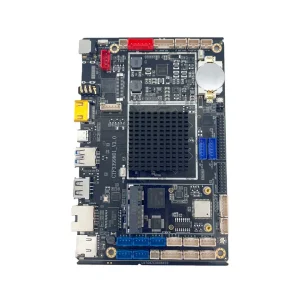
Pakistan Project: ODM One-stop PCBA Manufacturing & PCB Assembly
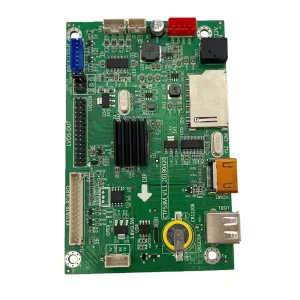
OEM Professional SMT PCBA Production for Electronics Manufacturers
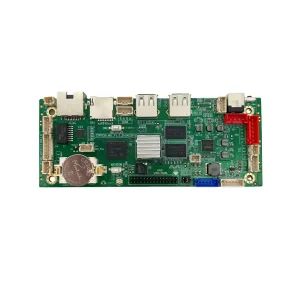
Custom High-quality PCBA Assembly for IoT Control Boards
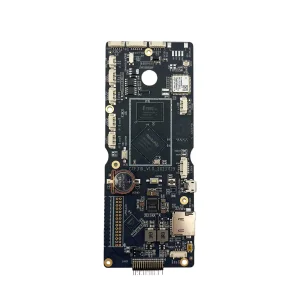
Custom Shenzhen SMT PCBA for Smart Product Manufacturing Service
The Industrial & Electronics Manufacturing Landscape in Pakistan
A strategic overview of industrial transition under CPEC Phase II, expanding special economic zones (SEZs), and the rising domestic demand for precision electronic assemblies.
1. Industrial Shifts: From Low-Tech Assembly to High-Density Electronics
Pakistan, with a burgeoning population exceeding 240 million and a median age below 24, represents one of South Asia's fastest-growing consumption frontiers. Historically centered around primary textiles, leather tanning, light mechanical engineering, and basic agricultural processing across the industrial hubs of Karachi, Lahore, Faisalabad, Gujranwala, and Sialkot, Pakistan's manufacturing fabric is undergoing an unprecedented modernization pivot. The drive toward indigenous electronics manufacturing is catalyzed by government initiatives including the Mobile Device Manufacturing Policy (MDMP), the Electric Vehicle Policy (EVP), and ongoing infrastructure modernizations mandated by utility distribution companies (DISCOs).
Nevertheless, a major structural bottleneck persists within Pakistan's local domestic supply chain: the absence of tier-1 bare copper-clad laminate PCB fabrication foundries and ultra-fine-pitch component surface mount technology (SMT) infrastructure. Most local electronic workshops operate on Semi-Knocked-Down (SKD) or Completely-Knocked-Down (CKD) manual assembly principles. Sourcing mission-critical printed circuit board assemblies (PCBA) featuring micro-BGAs (Ball Grid Arrays), sub-0.4mm pitch QFNs, and high-frequency RF impedance control directly from automated Shenzhen turnkey plants provides Pakistani product manufacturers with the engineering leverage required to deliver export-grade end products without capital-intensive domestic cleanroom outlays.
CPEC Special Economic Zones (SEZs)
Key industrial parks—such as Rashakai SEZ in Khyber Pakhtunkhwa, Dhabeji SEZ in Sindh, and M-3 Industrial City in Faisalabad—are establishing preferential duty frameworks for joint ventures, accelerating regional demand for reliable sub-assembly components, motor controls, and power management units.
Severe Energy Crisis & Solar Boom
Surging national grid tariffs have triggered exponential residential and commercial adoption of decentralized solar systems. Local assemblers urgently source high-reliability inverter control boards, maximum power point tracking (MPPT) circuits, and lithium-iron-phosphate (LiFePO4) Battery Management Systems (BMS).
Smart Grid Utility Mandates (AMI)
Utility giants including K-Electric, LESCO, IESCO, and MEPCO are transitioning toward Advanced Metering Infrastructure (AMI). Millions of smart digital revenue meters require industrial-grade telemetry boards resilient against environmental heat, grid voltage spikes, and electromagnetic interference.
China Factory Efficiency: Powering Pakistan's Manufacturing Advantage
Why procurement teams across Lahore, Karachi, and Islamabad partner with Shenzhen turnkey manufacturers to bypass component shortages and deliver scalable, cost-optimized hardware.
2. The Ecosystem Advantage: Hyper-Dense BOM Procurement & Automated Verification
In electronic hardware development, the Bill of Materials (BOM) cycle represents over 65% of the overall product delivery timeline. In an isolated production setting, fragmented sourcing of passive components (resistors, multilayer ceramic capacitors), power MOSFETs, microcontrollers (STMicroelectronics, Espressif, Microchip), and precision connectors introduces risks of counterfeit parts, prolonged port customs delays, and crippling inventory overhead.
Located in Shenzhen—the central node of global electronics manufacturing—our facility maintains direct API integration with authorized franchised distributors and primary semiconductor wafer houses. This proximity guarantees full component traceability (original manufacturer Certificates of Conformance, Date Code control within 24 months, and anti-static moisture-sensitive device management). Coupled with high-speed automated SMT lines capable of over 1.2 million component placements daily, our engineers convert Gerber and BOM designs into fully assembled, tested boards in a fraction of standard lead times.
| Evaluation Parameter | Standard Pakistan Local Assembly (SKD/CKD) | Shenzhen Turnkey High-Yield Facility (Aozite) | Strategic Benefit for Pakistani Manufacturers |
|---|---|---|---|
| Component Sourcing & BOM Kitting | Decentralized imports; risk of broker stock & customs holdups | Centralized local Shenzhen sourcing; direct franchised stockists | Zero Counterfeit Risk 100% CoC traceability |
| SMT Precision & Density | Predominantly manual/semi-auto, limited down to 0805 passives | High-speed automated SMT down to 0201 passives, 0.35mm pitch BGA | Extreme Miniaturization High computational density |
| In-Line Inspection Protocols | Visual manual inspection; high probability of escape defects | Closed-loop 3D SPI + 3D Multi-Angle AOI + High-Resolution X-Ray | >99.2% First-Pass Yield Solder voiding <15% under BGA |
| Thermal Profiling & Solder Alloy | Standard leaded solder baths or uncalibrated hot-air ovens | 10-Zone Nitrogen Reflow + Selective Wave Soldering (RoHS Lead-Free) | High Thermal Fatigue Life Survives 50°C+ ambient heat |
| Functional Circuit Testing (FCT) | Basic power-on bench tests; non-automated test reporting | Customized pneumatic ICT/FCT bed-of-nails fixtures with firmware burning | Plug-and-Play Direct integration into local enclosures |
Localized High-Growth Industrial Application Scenarios in Pakistan
Delivering domain-specific circuit board assemblies engineered for demanding environmental conditions, voltage fluctuations, and heavy industrial duty cycles.
1. Hybrid Solar Inverters & Battery Management (BMS)
With severe electrical load-shedding and high summer tariffs, off-grid and hybrid solar inverters dominate the consumer and agricultural markets. Our power PCBA configurations combine heavy 3oz/4oz copper boards, heavy-duty DIP through-hole MOSFET mounts, and conformal silicon coating to withstand 50°C ambient temperatures and extreme dust storms across Punjab and Sindh plains.
2. Utility Smart Metering (AMI) & Grid Telemetry
Deployments in state utility sectors demand tamper-proof electronic revenue meters equipped with cellular NB-IoT, GSM, and optical port data transmitters. We assemble high-reliability analog front-end (AFE) sensor boards with Class 0.5 measurement precision, transient voltage suppression (TVS) diodes, and conformal resin coatings to prevent moisture and condensation ingress.
3. Textile, Leather & Industrial Machinery Control
Faisalabad and Sialkot factories are upgrading spinning mills, circular knitting looms, and automated surgical tool finishing lines. We produce industrial-grade programmable logic controllers (PLCs), variable frequency drive (VFD) daughterboards, and optoisolated I/O interface assemblies that isolate sensitive microprocessors from industrial motor surges and inductive kickback.
4. Electric 2-Wheeler & 3-Wheeler Motor Controllers
Under Pakistan's Electric Vehicle National Transition roadmap, domestic motorcycle brands are moving to electric drivetrains. Our manufacturing facilities produce high-current BLDC and PMSM motor driver PCBA assemblies featuring aluminum-core substrates, multi-layer thermal vias, and CAN-bus automotive communication protocols for real-time battery analytics.
5. Agricultural IoT & Solar Tube-Well Automation
In rural Sindh and Punjab, automated solar water pumping requires remote telemetry to monitor water table levels, flow rates, and solar irradiation. Our IoT control boards integrate ultra-low-power microcontrollers with satellite/cellular transceivers to ensure autonomous irrigation scheduling, saving up to 35% on groundwater extraction power.
6. Consumer Smart Audio & Wearables
The youth-driven demand for personal consumer gadgets has stimulated local branding of Bluetooth earphones, smart wristbands, and personal health trackers. We produce ultra-dense, multi-layer rigid-flex circuit boards utilizing micro-pitch 0.3mm BGA packaging, vacuum reflow soldering, and conformal potting for sweat and water resistance.
Engineering Trends & International Procurement Benchmarks
What enterprise procurement directors, chief technology officers, and quality engineers mandate when auditing overseas manufacturing partners.
3. Five Critical Engineering Verification Pillars for Pakistan-China Projects
Enterprise procurement can no longer rely solely on unit price calculations. When defective electronic assemblies reach an assembly line in Karachi or Lahore, reverse logistics and customs re-importation involve prohibitive costs and months of lost production. Global supply chain leaders follow five strict verification pillars:
Pillar I: Front-End Design for Manufacturability (DFM) Audit: Before a laser stencil is cut, experienced manufacturing engineers analyze the Gerber package. This step checks component pad geometry against IPC-7351 guidelines, inspects trace-to-trace spacing, verifies thermal relief on heavy copper ground planes, and evaluates solder mask expansion to eliminate solder bridging between fine-pitch IC pins.
Pillar II: Solder Paste Inspection (3D SPI) with Closed-Loop Feedback: Solder paste volume defects cause over 70% of all SMT failures. Modern assembly relies on 100% 3D optical SPI equipment that measures paste volume, height, area, and registration accuracy on every printed pad. Integrated feedback systems automatically realign stencil printers if paste offsets exceed 10 micrometers.
Pillar III: High-Density Interconnect (HDI) & X-Ray Void Ratio Control: As microcontrollers move toward sub-0.5mm ball grid arrays and bottom-terminated components (BTC/QFN), visual inspection becomes impossible. Using automated 2D/3D X-Ray inspection (AXI), engineers verify that void ratios beneath thermal ground pads remain strictly below 15%, preventing localized overheating and premature field failure.
Pillar IV: Environmental & Conformal Protection: In arid and industrial zones throughout Pakistan, airborne dust, corrosive hydrogen sulfide gases, and ambient humidity during monsoon seasons deteriorate bare circuitry. Automated robotic spray coating of acrylic or polyurethane conformal coating protects sensitive traces, backed by high-voltage insulation and dielectric withstand testing.
Pillar V: Custom Functional Circuit Testing (FCT) & Traceability Serialization: Every finished circuit board should undergo simulated operating condition verification. Using customer-provided firmware, custom test fixtures power on the board, stimulate inputs, measure voltage rails, check current draw, and verify RF wireless output before laser-etching a unique DataMatrix 2D barcode for component-to-board traceability.
Ready to Validate Your PCBA Production Run?
Upload your Gerber files and BOM spreadsheet for a comprehensive Design for Manufacturability (DFM) audit and instant competitive quotation within 24 hours.
Send Inquiry NowFrequently Asked Questions: PCBA Manufacturing for Pakistan & Global Clients
Clear, engineering-focused answers covering logistics, component authentication, minimum order quantities, and test protocols.
How are electronic sub-assemblies transported to Pakistan efficiently?
We work with international freight forwarders supporting express air cargo (DHL, FedEx, UPS) directly to Karachi (KHI), Lahore (LHE), and Islamabad (ISB) for urgent pilot builds (3-5 days transit). For bulk volume orders, sea freight from Shenzhen to Karachi Port (Qasim or KPT) takes approximately 14-18 days. We supply comprehensive commercial invoices, packing lists with HS codes (typically under 8534.00 for bare boards, 8538.90 or 8542.39 for sub-assemblies), and FTA Certificate of Origin Form E documents to optimize import customs duties.
How do you guarantee authentic, genuine ICs and passive parts?
We maintain direct account relationships with authorized global catalog distributors (Mouser, DigiKey, Element14) and verified tier-1 Asian franchised agents. Every component reel or tray is scanned upon receipt and checked for authentic barcode labels, manufacturer lot numbers, and undamaged packaging seals. We do not purchase through unauthorized secondary brokers unless specifically approved in writing by the client for obsolete lifecycle components.
What files are mandatory to quote and initiate PCBA production?
We require standard RS-274X or ODB++ Gerber files including all copper layers, solder mask, silkscreen, and drill files. For assembly, we need a complete Bill of Materials (BOM) in Excel format with manufacturer part numbers (MPN), component designators, package footprints, and exact quantities, alongside the Pick-and-Place (XY Centroid) machine file.
Can you manufacture boards according to IPC-A-610 Class 3 standards?
Yes. Our default manufacturing standard aligns with IPC-A-610 Class 2 for general industrial and consumer electronics. For mission-critical infrastructure, automotive systems, and medical projects, we apply IPC-A-610 Class 3 specifications, which enforce 75% minimum barrel fill on through-hole pins, tighter solder voiding tolerances, and comprehensive thermal cycling stress analysis.
What are your Minimum Order Quantity (MOQ) requirements?
We support high-mix, variable-volume production models. Prototyping and pilot engineering validation batches have no minimum quantity requirement (we routinely manufacture 5 to 50 boards for R&D trials). For continuous mass production, our 8 automated high-speed SMT lines scale to tens of thousands of units monthly with low per-unit setup overhead.
How do you handle firmware programming and functional testing (FCT)?
Clients supply compiled hex/binary files alongside testing instructions. Our test engineers develop custom bed-of-nails pneumatic test fixtures that simultaneously flash microcontrollers (via SWD, JTAG, or UART), verify voltage rails, check current draw in standby and active states, and perform loopback functional validation before shipment.
End-to-End PCBA Manufacturing & Industrial Assembly Line
Explore our complete manufacturing series, covering industrial power systems, embedded smart wearables, audio hardware, and custom turnkey fabrications.
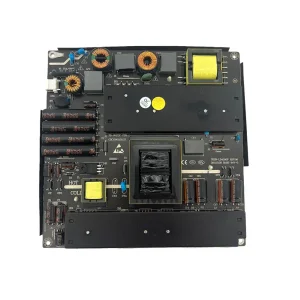
Best SMT Factory Power PCBA Production with DIP Supplier
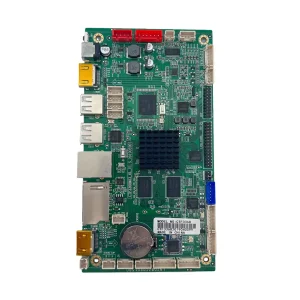
High-Quality Industrial Control PCBA Assembly & Processing
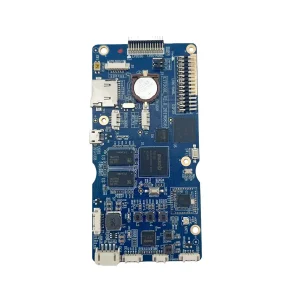
China Custom PCBA Production from Gerber & BOM Files Service
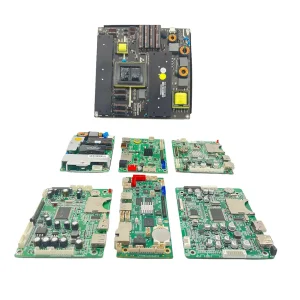
High-Quality OEM ODM PCBA for All Electronic Products
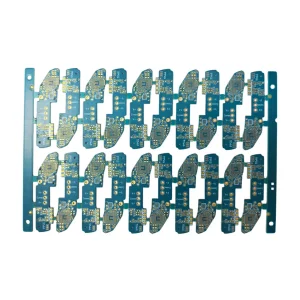
ODM Earphone Panel PCBA OEM ODM Service Supplier
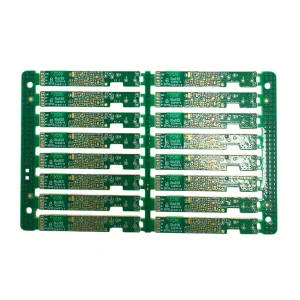
OEM Smart Bracelet PCBA OEM Manufacturing Factories
ODM Earphone Panel PCBA OEM ODM Service Factory
High-Quality Industrial Control PCBA Processing Service
Direct Engineering Collaboration for Industrial Leaders
Whether deploying smart solar inverters in Lahore, industrial PLC systems in Faisalabad, or consumer IoT in Karachi, leverage our 20+ years of high-speed SMT assembly and complete BOM procurement in Shenzhen.