
Integrated Turnkey Solutions for Northern & Southern Vietnam Tech Clusters
Industrial-grade electronic components engineered for direct integration into Tier-1 and Tier-2 manufacturing ecosystems across Bac Ninh, Hai Phong, and Binh Duong.
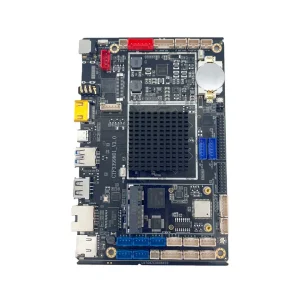
Vietnam Market ODM One-Stop PCBA Manufacturing & Turnkey Assembly
Explore Specification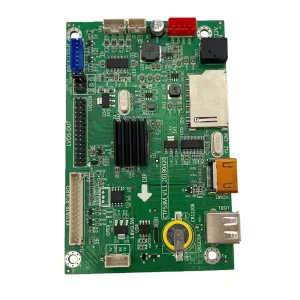
Vietnam OEM High-Precision SMT PCBA Processing for Consumer Electronics
Explore Specification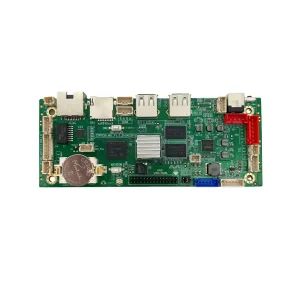
Vietnam Smart Grid Custom PCBA Assembly for Industrial IoT Modules
Explore Specification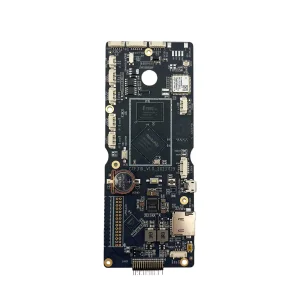
Shenzhen Engineered SMT PCBA for Smart Automation Ecosystems in Vietnam
Explore SpecificationVietnam’s Electronics Surge & The "China Plus One" Symbiosis
Evaluating macro capacity allocations, localized assembly limitations, and structural supply chain interlocks between the Greater Bay Area and Red River Delta clusters.
Vietnam Commercial Realities
Vietnam has become a major global electronics assembly powerhouse, anchored by FDI conglomerates in Bac Ninh, Thai Nguyen, and Bac Giang. However, the domestic ecosystem is concentrated largely in box-build packaging, final mechanical assembly, and manual through-hole insertion, lacking deep wafer-level, active component, and HDI board domestic manufacturing capability.
Global Geopolitical Realignment
Global brands pursue tariff mitigation and dual-regional resilience via the "China Plus One" model. While final customs origin frequently targets Vietnam to satisfy Rules of Origin (ROO) requirements, over 70% of active silicon, multi-layer rigid-flex boards, and fine-pitch passives continue to funnel directly through cross-border land transport from Guangdong.
The Cross-Border Turnkey Hybrid
Forward-thinking enterprises avoid localized component inflation by contracting advanced SMT placement, automated DFM checks, and functional test programming directly to mature Shenzhen facilities, feeding ready-to-dock, certified PCBA modules straight into Vietnamese final assembly plants.
Engineering Efficiency & Production Matrix Comparison
Why Tier-1 OEMs deploy Shenzhen engineering units for NPI (New Product Introduction) and high-density PCBA fabrication before scaling regional assembly.
High-Density Component Sourcing & Iteration Velocity
Developing products for the Vietnam market demands swift turnarounds that local component supply chains cannot yet match. In Shenzhen, missing an unallocated passive reel or encountering an end-of-life MCU does not paralyze production. Replacement active elements, custom bare dies, and calibrated stencils are sourced, reviewed, and mounted within single 12-hour shifts.
By executing DFM (Design for Manufacturability) analysis prior to volume procurement, our engineers optimize solder land geometry, eliminate tombstoning risks for 0201/01005 passives, and resolve thermal profile mismatches in high-mass ground planes before high-speed pick-and-place lines activate.
Comprehensive Verification & Traceability Standards
Standard electronic sub-assemblies exported into Vietnamese bonded zones must comply with rigorous export and domestic documentation, including UL94V-0 flammability ratings, RoHS 3 directive standards, REACH certifications, and IPC-A-610 Class 2 or Class 3 workmanship criteria.
Our quality loops mandate real-time 3D Solder Paste Inspection (SPI) to verify paste volume and deposition geometry, inline dual-track automated optical inspection (AOI), high-voltage isolation screening, and micro-focus closed-tube X-ray analysis to verify under-package void ratios within critical BGA and QFN chips.
| Evaluation Parameter | Local Vietnam Assembly Lines | Shenzhen Direct Turnkey (Aozite Model) | Cross-Border Hybrid Value |
|---|---|---|---|
| NPI & Prototyping Lead Time | 3 - 6 Weeks (Component imports dependent) | 3 - 7 Working Days (Direct local inventory) | Shortens time-to-market by up to 75% |
| Micro-Component Placement | Commonly 0402, limited 0201 capabilities | Full capability for 01005, 0.35mm pitch BGA | Enables ultra-compact wearable architectures |
| Component Traceability | Secondary distribution broker channels | Direct franchise/factory distribution sources | Prevents counterfeit component infiltration |
| Tooling & Stencil Precision | Standard laser-cut stencils | Step-down stencils with nano-polymer coating | Eliminates bridging in high-density areas |
| Custom FCT Rig Engineering | Outsourced or manual jig testing | Dedicated in-house automated FCT programmers | Guarantees 100% board-level firmware validation |
Targeted Deployment Scenarios Across Vietnam's Growth Sectors
Custom circuit board engineering adapted specifically to humid tropical climates, industrial power variances, and smart city infrastructure.
Smart Grid & Industrial Motors
Heavy machinery parks in Dong Nai and Hai Duong require heavy-copper circuit boards (2oz-4oz) capable of withstanding severe voltage fluctuations and continuous thermal loading without track delamination or dielectric breakdown.
Tropicalized Smart Home Modules
Electronics deployed across Southeast Asia face ambient relative humidity exceeding 85%. Our production utilizes automated selective conformal coating (acrylic, silicone, or polyurethane) to prevent dendritic crystal growth and moisture-driven short circuits.
Telecommunications & 5G Gateways
Supplying telecom developments with high-frequency PTFE and hydrocarbon ceramic laminates (Rogers/Taconics) assembled with controlled impedance routing (±5% tolerance) for next-generation edge devices.
Accelerate Your Production Timeline for Vietnam
Direct Gerber & BOM analysis by senior process engineers within 24 hours. Ensure design manufacturability, lock in component allocations, and achieve stable line rates from day one.
Global Procurement Demands & Hardware Market Trends
Adapting your procurement strategies to shifting regulatory standards, supply chain transparency demands, and rapid design miniaturization.
ESG, Carbon Neutrality, & Material Traceability
Multinational procurement executives require comprehensive life-cycle declarations. Sourcing from our automated manufacturing floor ensures compliance with lead-free soldering formulations (SAC305), halogen-free core materials, conflict-free mineral verifications, and digital product passports (DPP) supported by reel-level lot IDs.
Embedded Edge Computing & HDI Miniaturization
Product form factors continue to compress while computing demands expand. Meeting global procurement criteria requires sophisticated Any-Layer HDI (High Density Interconnect), blind and buried micro-vias drilled via UV laser, and accurate micro-ball pitch SMT placement under 0.4mm pitch specifications.
Frequently Asked Questions: Sourcing ODM/PCBA for the Vietnam Market
Clear, technical answers to common queries regarding cross-border supply chains, lead times, tariffs, and technical inspection methods.
Specialized ODM Manufacturing Portfolio for Industrial & Consumer Sectors
Explore our complete manufacturing portfolio, tested to international IPC criteria and engineered for reliable field operation.
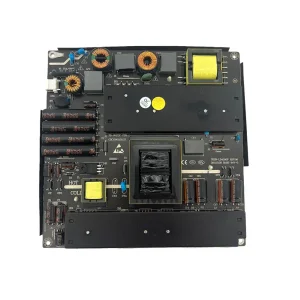
Vietnam Market Industrial Power Supply PCBA with Wave Soldered DIP
Explore Specification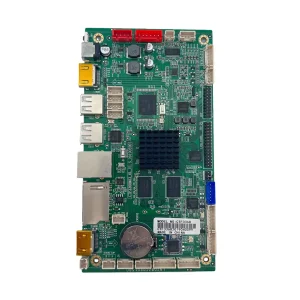
High-Reliability Industrial Automation & PLC PCBA for Vietnam Facilities
Explore Specification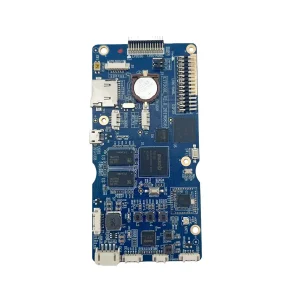
Full Turnkey Custom PCBA Production from Gerber & BOM for Vietnam OEMs
Explore Specification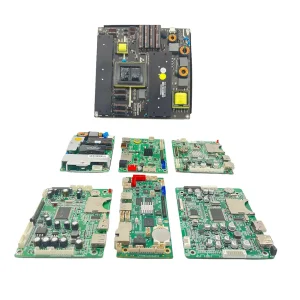
OEM & ODM High-Complexity Multi-Layer PCBA for Consumer Electronics
Explore Specification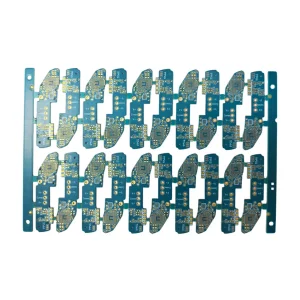
Ultra-Miniature Earphone & Acoustic Panel PCBA OEM/ODM Service
Explore Specification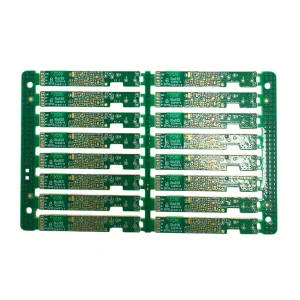
Wearable Bio-Sensor Smart Bracelet PCBA Assembly for Vietnam Markets
Explore Specification
High-Efficiency IoT Control & Edge Communication PCBA Solutions
Explore Specification
Enterprise-Scale Turnkey PCBA Production & Rapid Prototype Engineering
Explore SpecificationPartner with a Verified Turnkey PCBA Manufacturer
Connect with our senior engineering team to review your technical schematics, optimize BOM supply pipelines, and schedule production line assignments.
Send Inquiry Now