Enterprise ODM Systems Serving Mexico City Infrastructure
High-precision SMT, mixed-technology PCBA, and turnkey engineering tailored for industrial, smart energy, and IoT deployment across Vallejo-i, Naucalpan, and CDMX central corridors.
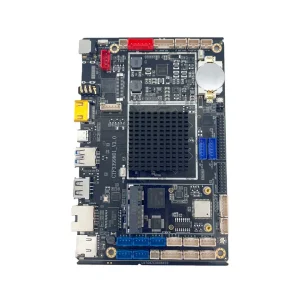
ODM One-stop PCBA Manufacturing & PCB Assembly for Mexico City Facilities
Product Specifications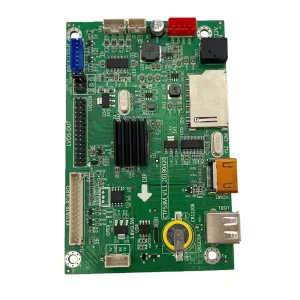
OEM Professional SMT PCBA Production for Mexico City Electronics Manufacturers
Product Specifications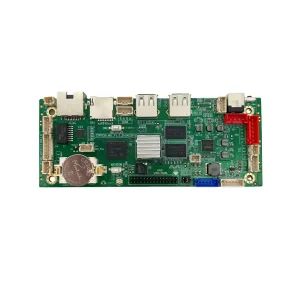
Custom High-Quality PCBA Assembly for IoT Control Boards Serving Mexico City
Product Specifications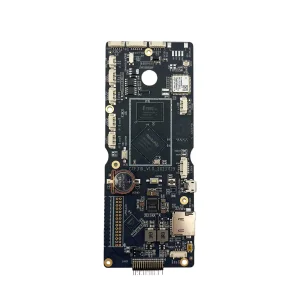
Custom Shenzhen SMT PCBA for Mexico City Smart Hardware Ecosystems
Product SpecificationsThe Commercial and Industrial Reality of Mexico City's Electronics Sector
Mexico City (Ciudad de México - CDMX) and its surrounding metropolitan zone (Zona Metropolitana del Valle de México - ZMVM) represent the undisputed commercial, engineering, and financial nucleus of Mexico. While traditional maquiladora clusters historically dominated northern border hubs like Ciudad Juárez, Tijuana, and Reynosa, Mexico City has transitioned rapidly into a high-tier research, advanced prototyping, systems integration, and high-value hardware distribution capital.
Fueled by the historic nearshoring wave and the regulatory framework of the United States-Mexico-Canada Agreement (USMCA / T-MEC), multinational corporations and Mexican technology scale-ups operating in Mexico City face unprecedented demand for precision electronics. Strategic industrial submarkets such as the Vallejo-i Technology and Innovation Industrial Zone in Azcapotzalco, alongside adjacent logistics and manufacturing corridors in Naucalpan, Tlalnepantla, Cuautitlán Izcalli, and the nearby Toluca automotive belt, require direct, agile access to Original Design Manufacturing (ODM) and Original Equipment Manufacturing (OEM) factories capable of bridging raw design conception with mass volume fabrication.
However, local Mexican domestic PCBA (Printed Circuit Board Assembly) facilities predominantly emphasize low-mix manual box-build, wire harness assembly, or final secondary packaging. Critical bare PCB fabrication, multi-layer high-density interconnect (HDI) micro-drilling, ultra-fine-pitch component sourcing, and high-speed robotic surface mount technology (SMT) remain concentrated in elite Asian manufacturing hubs. For engineering directors, procurement vice presidents, and product innovators headquartered in Mexico City, creating a synchronized bilateral pipeline with a world-class Shenzhen ODM factory is no longer an optional cost-saving exercise—it is the defining strategic imperative for product survivability, time-to-market acceleration, and bottom-line scalability.
Vallejo-i & Central Hub Synergies
Seamless feeding of semi-assembled SMT motherboards and intelligent control modules directly into CDMX’s primary industrial digital park for final system integration.
T-MEC / USMCA Value Alignment
Assisting North American product teams in engineering sub-assemblies that fulfill regional value content (RVC) guidelines through targeted BOM optimization and documentation.
Rapid Transit to Benito Juárez & AIFA
Streamlined logistics routes utilizing direct air cargo corridors into AICM and Felipe Ángeles International Airport (AIFA) for expedited custom clearance.
Why Mexico City OEM Brands Anchor Sourcing in Shenzhen’s Ecosystem
While nearshoring advocates frequently emphasize shifting 100% of production onshore, seasoned hardware leaders recognize the physical limits of electronics supply chains. True resilience is achieved through a hybrid, high-leverage model: leveraging China’s peerless component availability, rapid tooling, and hyper-dense engineering talent, coupled with late-stage box-build and final deployment in Mexico.
Shenzhen Aozite Technology delivers this structural advantage directly to businesses operating throughout Mexico City. Our facility houses 8 high-speed automated SMT lines equipped with Japanese pick-and-place robotics capable of placing 01005 chips, micro-BGA components down to 0.35mm pitch, and complex RF ICs with sub-micron repeatability.
- Direct Silicon Sourcing: Direct tier-1 relationships with semiconductor manufacturers and authorized regional distributors eliminate secondary broker markups and counterfeit risks.
- Full Closed-Loop DFM & DFA: Comprehensive Design for Manufacturing (DFM) reviews executed by process engineers with 20+ years of assembly experience prior to copper etching.
- Quality Verification Infrastructure: Closed-loop 3D Solder Paste Inspection (SPI), inline multi-angle Automated Optical Inspection (AOI), 3D Automated X-ray Inspection (AXI) for BGA solder joints, and in-circuit / functional testing (FCT).
| Capability Parameter | Shenzhen ODM Standard | Domestic Regional Shop |
|---|---|---|
| Turnaround on Exotic Passives | 24 – 48 Hours | 3 – 6 Weeks (Import dependent) |
| SMT Placement Velocity | 1.2M+ points/day | 100K – 250K points/day |
| Inspection Protocol | 3D SPI + Inline AOI + 3D X-Ray | Standard 2D AOI / Manual Spot |
| Multi-Layer PCB Fabrications | Up to 32 Layers / Blind & Buried Vias | Primarily 2 – 8 Layers standard |
| BOM Cost Optimization | Direct Factory Tier-1 Volume Pricing | Broker & Distributor Markups |
| Tooling & Mold Prototyping | 7 – 12 Days CNC / Rapid Tooling | 4 – 8 Weeks lead time |
Localized Support & Compliance Safeguards for the Mexican Market
Navigating technical certification, Mexican Official Standards (NOM), and SAT customs documentation requires deep engineering diligence and procedural transparency.
NOM-001 & NOM-019 Compliance
Board-level electrical safety design engineered to pass strict NOM-001-SCFI (electronic apparatus) and NOM-019-SCFI (data processing equipment) certification audits conducted by NYCE or ANCE accredited testing bodies.
IFT Wireless Homologation
For cellular, Wi-Fi, BLE, and LoRa modules, our RF layout engineers design impedance-matched traces and shielding cages that meet IFT (Instituto Federal de Telecomunicaciones) standards (IFT-008/IFT-011) without radiated emission failures.
IMMEX & Fiscal Documentation
Complete traceability and standardized commercial invoicing formatted to align with SAT customs requirements, enabling Mexican importers utilizing the IMMEX temporary import regime to avoid unexpected VAT/IEPS encumbrances.
Many electronics projects initiated by overseas buyers stall because the engineering files do not account for Mexican environmental, thermal, and electrical realities. In Mexico City, high altitude (~2,240 meters above sea level) impacts dielectric breakdown limits, convective air cooling efficiency, and component heat dissipation. Our engineering group factors atmospheric pressure derating and thermal cycling into high-power PCBA designs, ensuring that industrial controllers, power conversion circuits, and IoT devices operate continuously without thermal runaway or premature solder fatigue.
Strategic Hardware Application Scenarios Across Greater Mexico City
ODM products engineered by Shenzhen Aozite Technology actively power critical economic infrastructure across the Mexican capital. By matching specialized PCB assembly processes with targeted use cases, we empower Mexican technology enterprises to compete on a global tier:
Fleet Telematics & Logistics Tracking
Mexico City’s massive distribution hubs (such as Central de Abasto and northern freight corridors) demand ultra-ruggedized GPS/cellular telematics boards with wide DC input ranges, reverse-voltage protection, and conformal coating resistant to moisture and dust.
Industrial Control & Automation
Heavy manufacturing, pharmaceutical, and food-processing plants in Vallejo and Naucalpan rely on mixed SMT + DIP assemblies, built with heavy copper inner layers (2oz–4oz) to handle inductive surges, high vibrations, and 24/7 duty cycles.
Smart Energy & Telemetry Metering
In support of CFE (Comisión Federal de Electricidad) modernization initiatives, our ODM turnkey pipelines manufacture advanced bidirectional power telemetry and solar micro-inverter controller boards built to rigorous IPC Class 3 standards.
Enterprise ODM & SMT Production Series for Mexico City
From power electronics and industrial automation to compact consumer wearables and custom build-to-print prototypes.
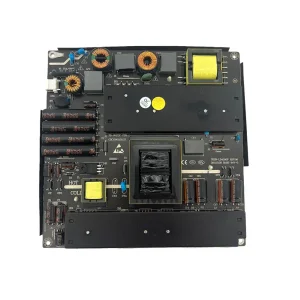
High-Efficiency Power PCBA Production with DIP for Mexico City Grid Hardware
Product Specifications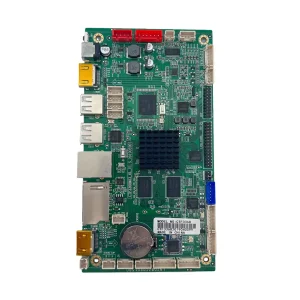
High-Quality Industrial Control PCBA Assembly for Mexico City Plants
Product Specifications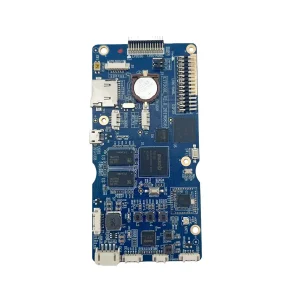
Custom PCBA Production from Gerber & BOM Files for Mexico City Engineers
Product Specifications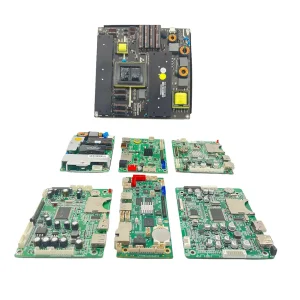
High-Quality OEM ODM PCBA for All Electronic Products in Mexico City
Product Specifications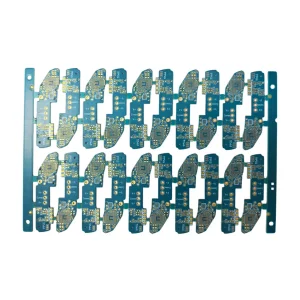
ODM Earphone Panel PCBA OEM ODM Service for Mexico City Consumer Brands
Product Specifications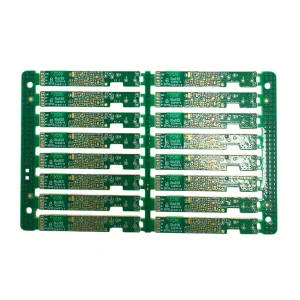
OEM Smart Bracelet PCBA Manufacturing for Mexico City Connected Health
Product Specifications
High-Density Multilayer PCBA Fabrication Serving Mexico City Technology Hubs
Product Specifications
Contract SMT Electronic Manufacturing for Mexico City Technology Integrators
Product SpecificationsGlobal Enterprise Procurement Requirements & Supply Chain Risk Engineering
Enterprise procurement directors managing electronics pipelines into Mexico City operate in an environment fraught with component volatility, sudden end-of-life (EOL) announcements, and strict timeline benchmarks dictated by US and European end-customers. A successful ODM partnership must extend beyond basic soldering into deep supply chain risk engineering.
At Shenzhen Aozite Technology, we provide comprehensive BOM health diagnostics for every incoming project. When evaluating a bill of materials submitted by engineering teams in Mexico City, our procurement analysts cross-reference component lifecycles across major semiconductor manufacturers (including TI, STMicroelectronics, NXP, Analog Devices, and onsemi) to isolate single-source liabilities before production initiates.
Form-Fit-Function (FFF) Equivalents
We present pin-compatible alternative microcontrollers, operational amplifiers, and passive networks verified through empirical lab benchmarking, protecting projects from allocation crunches and reducing unit costs by 15% to 35%.
IP Protection & Hardware Encryption
For proprietary Mexican IoT and automotive electronics, we execute automated firmware flashing inside isolated, air-gapped programming cells, including hardware secure element (SE) key provisioning for encrypted cloud onboarding.
Traceability Down to Solder Reel Lots
Barcoded MES tracking captures every component reel lot, solder paste inspection metric, and reflow thermal curve, providing complete audit records required by Tier-1 automotive and medical auditors.
Frequently Asked Questions: Sourcing ODM PCBA for Mexico City
Clear answers to the mission-critical technical, regulatory, and logistics queries asked by Mexican hardware developers and purchasing executives.
How does our Shenzhen factory support Mexican NOM certification for finished electronics?
Mexican Official Standards (such as NOM-001-SCFI-2018 or NOM-019-SCFI) require physical sample testing at accredited Mexican testing laboratories (like NYCE or ANCE). Shenzhen Aozite Technology provides pre-compliance electrical safety analysis, ensures creepage and clearance distances adhere to IEC/NOM standards, and ships specialized pre-test golden units accompanied by complete electrical schematics, component safety datasheets, and CB test reports to accelerate Mexican accredited laboratory approvals.
What is the standard shipping lead time and customs path from Shenzhen to Mexico City?
For urgent pilot runs and high-value assemblies, air cargo shipments from Shenzhen (SZX) or Hong Kong (HKG) connect to Mexico City International Airport (AICM / MEX) or Felipe Ángeles International Airport (AIFA / NLU) in 3 to 5 business days via established logistics partners (DHL Express, FedEx, or specialized air freight forwarders). For high-volume sea freight, cargo moves via the Port of Shenzhen to Manzanillo or Lázaro Cárdenas (approx. 18–22 days transit), followed by bonded rail or dedicated overland transport to Mexico City distribution parks.
Can we provide consigned components, or must we utilize your full turnkey sourcing?
We provide three flexible procurement models: Full Turnkey (we procure bare PCBs, all electronic components, mechanical hardware, and testing fixtures), Partial Consignment (you consign proprietary ICs, custom programmed ASICs, or specialized sensors while we procure all common passives, diodes, and connectors), and Full Consignment (you provide the complete kitted BOM, and we execute SMT, DIP, and testing). For Mexico City clients, full turnkey is typically the most cost-effective due to our consolidated buying power in the Shenzhen market.
What inspection standards govern the soldering and assembly process?
All PCBA lines at Aozite operate in strict adherence to IPC-A-610 Class 2 standards as our default baseline, with IPC-A-610 Class 3 (dedicated to high-reliability industrial, automotive, and medical infrastructure) available upon request. Every board passes 100% 3D Solder Paste Inspection (SPI) directly after stencil printing, multi-angle inline Automated Optical Inspection (AOI) after reflow soldering, and Automated X-ray Inspection (AXI) for all BGA, QFN, and leadless packages.
How do you assist Mexican importers with IMMEX, tariff codes (Fracción Arancelaria), and VAT rules?
We provide rigorous commercial invoices, packing lists with net/gross weights per carton, certificates of origin, and explicit descriptions that correspond directly to Mexico's TIGIE Harmonized System (HS) classifications (Fracción Arancelaria). For entities operating under the IMMEX program or PROSEC industrial schemes, our documentation enables your Mexican customs broker (Agente Aduanal) to clear shipments through Aduana México without administrative delays or unexpected tax liabilities.