Precision Electronic Solutions for the Algerian Market
Engineered hardware architectures ready for integration across Maghreb energy, industrial automation, and expanding telecommunications networks.
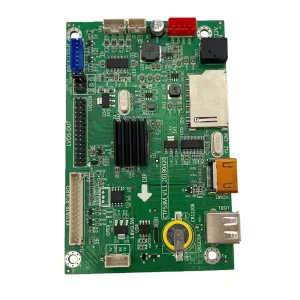
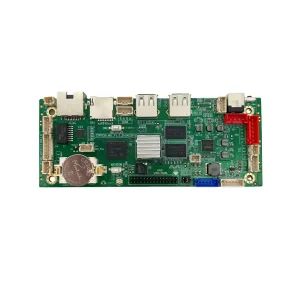
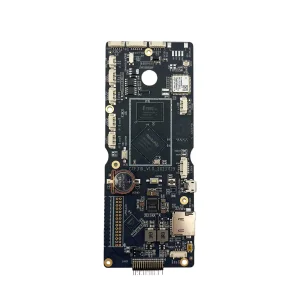
Algeria's Industrial Transformation & Electronic Hardware Demand
Analyzing the intersection of national development policies, energy automation, and international assembly standards.
Local Modernization Mandates
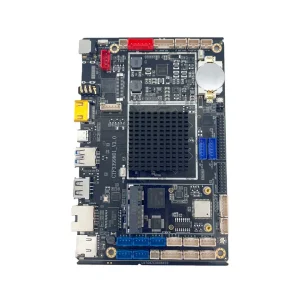
Algeria's aggressive industrial localization strategy under the revised Investment Law (Law No. 22-18) prioritizes technology transfer and domestic value addition. While assembly facilities in Oran, Algiers, and Sétif expand their SKD/CKD lines, there remains a vital requirement for high-reliability surface mount technology (SMT) and populated printed circuit board assemblies (PCBA) built to withstand Saharan heat cycles and extreme field operations.
Global Procurement Friction
Global procurement directors sourcing for Algerian programs encounter rigorous import controls, stringent documentary inspection by the Ministry of Industry, and complex Bank of Algeria FX procedures. Sourcing from a Tier-1 partner who guarantees complete Bill of Materials (BOM) transparency, counterfeit mitigation, and zero-deviation component pedigree eliminates systemic port delays and field rejections.
Harsh Environment Engineering
Algeria's hydro-carbon extraction zones (such as Hassi Messaoud) and utility-scale solar developments in the Hautes Plaines demand boards certified to withstand ambient desert temperatures exceeding 50°C, abrasive silica dust ingress, and thermal fluctuations. Military-grade conformal coating (polyurethane, silicone, or parylene) is imperative to prevent dendritic growth and electrochemical migration.
End-to-End Enterprise Production Standards
A closed-loop manufacturing ecosystem bridging Shenzhen's SMT throughput with strict North African regional specifications.
Technological Roadmap & Strategic Outlook (2025–2030)
Smart Inverter Ecosystems
Implementation of heavy copper PCBs (up to 4oz) for utility-scale PV plants under Algeria's 15,000 MW renewable energy program, handling high sustained amperages.
Cellular & LoRaWAN IoT
Deployment of low-power edge compute boards optimized for remote pipeline monitoring along Sonatrach pipelines, ensuring satellite/GSM autonomous telemetry.
Automotive Tier-2 PCBA
Supporting vehicle assembly hubs in Relizane and Oran with IATF 16949-grade body control units, sensor nodes, and charging station power electronics.
AI-Driven Predictive FCT
In-circuit testing integrated with machine learning models to profile solder joint mechanical strain during high-delta thermal operating shocks.
Algerian Import Compliance & Quality Traceability
Comprehensive regulatory engineering ensuring frictionless customs clearance at Algiers, Skikda, and Béjaïa ports.
Certificat de Contrôle (IANOR)
All manufactured assemblies are accompanied by verified Test Reports, Certificates of Conformity (CoC), and RoHS/REACH declarations aligned with the requirements of the Institut Algérien de Normalisation (IANOR) to eliminate border impoundment risks.
Moisture & ESD Protection
Boards destined for Mediterranean sea transit and arid North African transit are sealed with IPC/JEDEC J-STD-033 compliant moisture barrier bags (MBB), dry desiccant packs, and humidity indicator cards (HIC) within electrostatic-dissipative master packaging.
Full Traceability Matrix
Every PCBA unit features individual 2D DataMatrix laser marking linked to our ERP system, detailing component reels, pick-and-place nozzle parameters, reflow thermal profiles, and 3D AOI/X-Ray inspection logs for absolute auditing accountability.
Frequently Asked Questions for Algeria & Global Sourcing
Essential guidance for procurement officers, electrical engineers, and original equipment manufacturers.
What documentation is required to smoothly import custom PCBA into Algeria?
How do you ensure solder joint integrity under Algeria's desert climate extremes?
Can you handle component procurement to protect against counterfeit chips?
What is the standard lead time for prototype vs. mass production delivery to Algeria?
Turnkey PCBA Assembly Capabilities for Industrial & Consumer Applications
Explore our full range of SMT, DIP through-hole, and turnkey solutions engineered to support industrial scaling in the Algerian and broader EMEA markets.