Turnkey ODM · IPC-A-610
Empowering European OEMs, Serbian industrial automation innovators, automotive electronics pioneers, and smart IoT developers with Tier-1 turnkey PCBA, precision SMT assembly, and resilient component sourcing direct from Shenzhen.
Direct build-to-print, rapid prototyping, and high-density surface-mount solutions qualified for mission-critical automation systems in Belgrade, Novi Sad, and Niš.
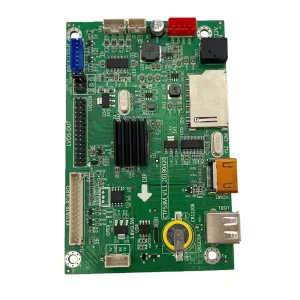
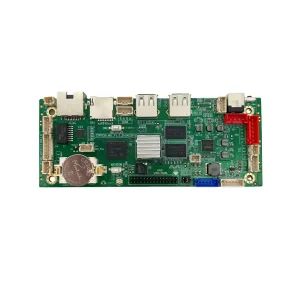
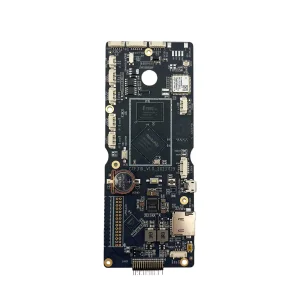
Analyzing the intersection of Central and Eastern European industrial nearshoring, Chinese supply chain integration, and the Free Trade Agreement (FTA).
Over the past decade, Serbia has transformed from a traditional assembly zone into an advanced engineering node in Southeast Europe. With thriving tech parks in Belgrade (Naučno-tehnološki park Beograd), the software and automation clusters of Novi Sad, and the profound industrial heritage of Niš, Serbian enterprises are innovating heavily in embedded systems, agricultural telematics, medical sensing, and industrial robotics. However, local electronic manufacturing services (EMS) in the Western Balkans often face limited multi-layer board production lines, scarcity of micro-pitch SMT feeders, and high BOM minimum order quantities (MOQs). By connecting Serbian R&D teams with Shenzhen’s manufacturing backbone, companies resolve these capacity bottlenecks while adhering strictly to CE marking, RoHS, and UL safety directives.
The historic China-Serbia Free Trade Agreement (FTA) has dramatically enhanced commercial agility between the two nations. As bilateral tariff barriers decrease toward zero on thousands of industrial categories, Serbian electronics engineers and hardware procurement managers enjoy an unmatched cost-velocity ratio. Custom PCB assemblies, specialized active semiconductor components, high-density interconnector (HDI) substrates, and precision mechanical enclosures manufactured in Shenzhen can now clear Serbian customs under preferential terms, shaving weeks off regulatory clearance and substantially slashing landed procurement overhead compared to standard import regimes across the EU.
Serbia has cemented its place in the European automotive supply chain, hosting major manufacturing facilities for automotive wiring, motor drives, sensors, and power electronics that feed German, French, and Italian automotive assemblies. With the global acceleration toward Hybrid and Electric Vehicles (EV), Tier-2 and Tier-3 suppliers based in Kragujevac, Subotica, and Inđija demand automotive-grade PCBA meeting IATF 16949 standards, IPC-A-610 Class 3 soldering reliability, rigorous thermal shock testing (-40°C to +125°C), and automated 3D X-Ray Inspection (AXI) for Voiding-Free ball-grid arrays (BGA).
Bridging European hardware innovation with the world's most concentrated electronics manufacturing ecosystem.
| Evaluation Parameter | Local Balkan / CEE Small-Scale EMS | Shenzhen Direct Manufacturing (Aozite Model) | Strategic Value for Serbian Companies |
|---|---|---|---|
| BOM Sourcing Breadth | Distributor-dependent; high broker markup, 8-16 week lead times. | Same-day direct access to original component makers & tier-1 authorized distributors. | Mitigate chip stockouts; lower total component expenditure by 22% - 38%. |
| Rapid Prototyping | Stencils, tooling, and bare-board fab can take 3-4 weeks. | Integrated quick-turn: Bare PCB in 24h, SMT assembly completed in 48-72h. | Accelerate firmware validation and field testing in Belgrade or Novi Sad. |
| Micro-Electronics & Density | Often limited to 0402 passives, 0.5mm BGA pitch, manual DIP insertion. | 0201 chip components, 0.3mm ultra-fine BGA, POP (Package-on-Package), rigid-flex. | Enables sleek industrial IoT sensors, wearable medical devices, and micro-trackers. |
| Quality Verification | Basic manual visual inspection; spot-check testing due to labor costs. | Full closed-loop 3D SPI, inline 3D AOI, dual-axis X-ray, ICT, and customized automated FCT. | Guarantees zero defective batches reach Serbian production lines, preventing field recalls. |
| Scalability & Flexibility | Struggles to balance low-volume NPI runs with sudden 50,000+ unit mass orders. | 8 automated high-speed SMT lines supporting NPI low-volume runs to continuous high-volume. | Scale production without re-qualifying vendors or re-paying engineering non-recurring expenses (NRE). |
Precision PCBA engineering engineered to excel in tough environmental conditions, compliance standards, and mechanical form factors.
With the rapid modernization of Elektroprivreda Srbije (EPS) electrical distribution infrastructure and the surge in commercial rooftop solar installations across Vojvodina, demand for smart electricity meters, power monitoring RTUs (Remote Terminal Units), and solar photovoltaic microinverters has skyrocketed. These applications require high-voltage isolation (up to 4kV), heavy copper outer layers (3oz-4oz) for sustained thermal dissipation, conformal coating (acrylic or silicone base) to resist moisture and dust, and mixed-technology SMT + DIP wave soldering for heavy inductive components.
As the breadbasket of Southeast Europe, Serbia is integrating IoT telematics on tractors, soil chemistry sensors, automated grain storage controllers, and GPS-guided irrigation systems. These systems face continuous mechanical vibration, wide operating temperature swings (-30°C winter to +55°C engine bay heat), and chemical fertilizer exposure. We deliver ruggedized PCBA featuring polyurethane potting-ready surfaces, automotive-grade bypass capacitors, ESD-hardened RS-485 / CAN-bus communication transceivers, and IP67 sealed sub-assemblies.
In the manufacturing plants of Šabac, Zrenjanin, and Kragujevac, programmable logic controllers (PLCs), frequency drives, and automated optical sorters run 24/7. Solder joint fatigue or capacitor drying causes crippling downtime. Our production includes multi-layer impedance-controlled FR4 boards (up to 24 layers), selective gold immersion (ENIG), custom functional testing jigs (FCT) that simulate real-world inductive loads, and strict compliance with the EU Low Voltage Directive 2014/35/EU and EMC Directive 2014/30/EU.
Engineering discipline built to satisfy demanding European procurement protocols.
Before stencils are cut or components procured, our senior process engineers conduct a 48-point Design for Manufacturability (DFM) and Design for Testing (DFT) review. We identify tombstoning risks on asymmetric copper traces, verify footprint compatibility for BGA/QFN packages, flag obsolete (EOL) components, and recommend drop-in replacements with readily available stock, ensuring uninterrupted assembly.
Over 70% of SMT soldering defects trace back to improper paste volume. Our factory employs automated 3D Solder Paste Inspection (SPI) to detect height, area, volume, and bridge defects in real time before component placement. Post-reflow, high-resolution 3D Automated Optical Inspection (AOI) inspects component polarity, tombstoning, insufficient solder, and misalignment across 100% of manufactured boards.
For complex components such as BGAs, LGAs, and power QFNs with concealed bottom pads, dual-axis X-ray inspection evaluates solder voiding percentages against IPC Class 2 (<25%) and Class 3 (<15%) tolerances. Finally, customized Functional Circuit Test (FCT) fixtures verify power-up, flash microcontroller firmware, and test I/O signals, ensuring every board delivered to Serbia is plug-and-play ready.
Everything Serbian engineers, supply chain leads, and operations managers need to know about working with our Shenzhen manufacturing center.
Whether you are prototyping a new IoT tracking device in Novi Sad or scaling an automotive motor controller in Kragujevac, our engineering directors are ready to review your schematics, optimize your BOM, and provide an audit-ready production schedule.
Send Inquiry Now - Connect with Our SMT EngineersEngineered for high reliability, precision component density, and harsh operating environments across global and Serbian market deployments.