High-Precision OEM Assembly & Engraved Modules
Explore our flagship printed circuit board assembly capabilities, engineered with inline laser etching, high-speed automated placement, and zero-defect quality control protocols.
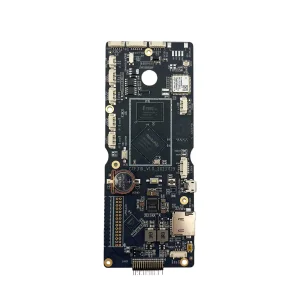
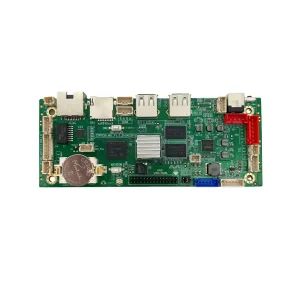
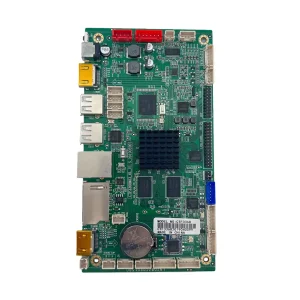
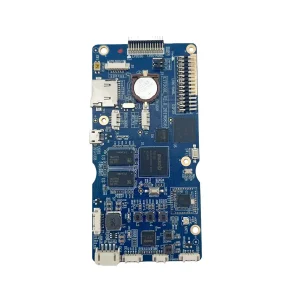
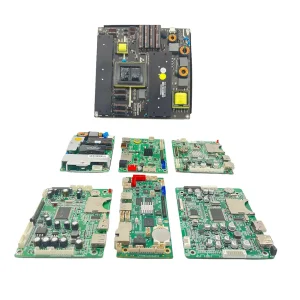
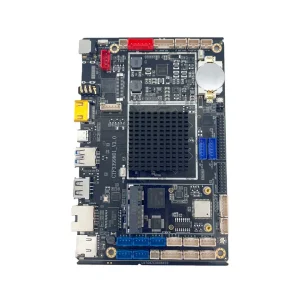
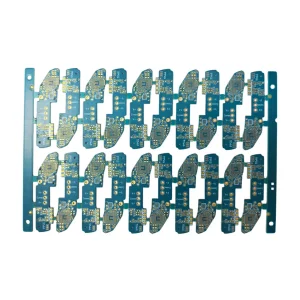
The Paradigm Shift in Traceability: From Sticky Labels to Permanent Laser Engraved PCBA
In high-reliability electronics manufacturing, individual unit traceability is no longer a value-added luxury—it is an indispensable compliance mandate. Traditional adhesive polyamide barcode labels are increasingly failing modern industrial requirements: they degrade under aggressive solvent washing, curl during intense reflow soldering ovens exceeding 260°C, and create electrostatic discharge (ESD) or outgassing risks in hermetic environments.
As premier OEM serial number engraving PCBA manufacturers and suppliers, we have pioneered the integration of inline Direct Part Marking (DPM) using precision Fiber, CO2, and Cold UV laser systems directly into the SMT surface-mount production line. This architectural shift guarantees that each printed circuit board carries an immutable, human-readable serial alphanumeric code alongside high-density 2D DataMatrix (ECC 200) or QR symbologies.
- Zero chemical consumables: Eliminates paper labels, ribbons, and thermal transfer adhesives.
- Sub-millimeter micro-marking: Codes as miniature as 1.5mm × 1.5mm readable at 4 mil resolution.
- 100% IPC-1782 Level 4 traceability: Seamless real-time integration into MES cloud databases.
Why International OEMs Mandate Direct Laser Engraved PCBA
Across North America, Europe, Japan, and Australasia, supply chain executives are upgrading technical specifications to require permanent serial engraving. Understanding these global procurement drivers guarantees strategic sourcing alignment.
Stringent Regulatory & Safety Compliance
Global standards such as FDA Unique Device Identification (UDI) for medical electronics, FAA/EASA aerospace airworthiness directives, and ISO 26262 automotive functional safety standards require indelible hardware identity that survives the full operating lifecycle without risk of peeling or illegibility.
Combatting Counterfeiting & Gray-Market Infiltration
Laser engraving enables high-density cryptographic serialization, including randomized alphanumeric strings, public key hashes, and digital signature DataMatrix codes. This provides hardware-level validation against cloned PCB designs, unauthorized production overruns, and unauthorized warranty claims.
Pinpoint RMA Recalls & Root-Cause Forensic Audits
When field anomalies occur, having a direct part engraved serial number enables surgical component lot isolation down to the specific feeder, reflow oven zone, solder paste batch, and operator shift. OEMs isolate issues to single-digit batch windows rather than recalling millions of functional end products.
Shenzhen Precision Manufacturing: Agility, Scale, & Supply Chain Resilience
Shenzhen represents the apex of global electronic manufacturing services (EMS). Discover how our smart factory infrastructure delivers unassailable competitive advantages in speed, yield, and total cost of ownership.
1-Hour Ecosystem Radius
Direct proximity to Huaqiangbei and raw substrate fabricators allows same-day sourcing of FR4, high-Tg Rogers, solder chemistry, and specialized active ICs, compressing prototype turnaround by up to 60% compared to overseas lines.
Closed-Loop MES Integration
Every laser engraving head connects directly to our centralized Manufacturing Execution System. Serial numbers are generated dynamically, preventing duplicate IDs across panelized multi-up arrays and guaranteeing seamless digital twin synchronicity.
Multi-Wavelength Laser Fleet
Our workshop houses automated 355nm UV Cold Lasers, 1064nm Fiber Lasers, and 10.6μm CO2 Lasers. We select exact photonic wavelengths based on solder mask color, copper thickness, and substrate dielectric chemistry.
High-Mix, Flexible Capacity
With 8 dedicated high-speed automated SMT lines and agile line-changeover tooling, we seamlessly scale from NPI rapid prototyping runs of 50 boards to massive production volumes exceeding hundreds of thousands of serialized units monthly.
Traceability Marking Technologies: Engineering Trade-Off Matrix
A rigorous comparative analysis of PCBA serialization methods to assist hardware designers, quality directors, and procurement teams in making optimal architectural choices.
| Evaluation Parameter | Adhesive Polyimide Sticker | Continuous Inkjet (CIJ) | 1064nm Fiber Laser | 355nm UV Cold Laser (Recommended) |
|---|---|---|---|---|
| Mark Durability | Low (peels, blisters under heat) | Medium (dissolves in solvents) | Extreme (permanent ablation) | Extreme (photochemical bond change) |
| Thermal Resistance | Max 260°C for short cycles | Degrades > 180°C | Immune (up to substrate limit) | Immune (exceeds 320°C reflow/wave) |
| Heat Affected Zone (HAZ) | None | None | Moderate thermal penetration | Virtually Zero (Cold processing) |
| Minimum 2D Code Size | 3.5 mm × 3.5 mm | 4.0 mm × 4.0 mm | 2.0 mm × 2.0 mm | 1.2 mm × 1.2 mm (Ultra-High Density) |
| Chemical / Solvent Resistance | Degrades with IPA / MEK / DI Water | Vulnerable to defluxing agents | Impervious to all PCB solvents | Impervious to ultrasonic aqueous clean |
| Consumable & Maintenance Cost | High (costly labels & ribbon rolls) | High (inks, solvents, nozzle flushes) | Zero consumables (Electricity only) | Zero consumables (Long diode life) |
| MES Automation Speed | Manual or slow robotic feeder | Inline high-speed, drying needed | Instantaneous (< 0.8 sec / board) | Instantaneous (< 0.5 sec / board) |
Mission-Critical Environments Built on Serial Engraved PCBA
Across diverse operating landscapes—from subterranean drilling rigs to high-altitude avionics—our permanently marked circuit board assemblies withstand severe environmental stress.
Automotive New Energy & Battery Management (BMS)
EV powertrain inverters and BMS master controller boards operate under continuous mechanical vibration, ambient engine heat up to 125°C, and coolant vapor exposure. Our UV laser engraved serial codes on automotive-grade FR4 guarantee complete traceability over 15-year vehicle lifespans.
Implantable & In-Vitro Diagnostic (IVD) Medical Devices
Medical electronics demand pristine environments free from particulate shedding or outgassing volatile organic compounds (VOCs). Laser etching directly ablates the solder mask surface without contaminating cleanrooms or degrading during ethylene oxide (EtO) autoclave sterilization cycles.
Industrial Automation, Edge Gateways & PLCs
Factory automation controllers installed in petrochemical plants and heavy CNC equipment face airborne cutting fluids, hydraulic lubricants, and corrosive chemical vapors. Laser engraved codes preserve barcode scan rates even after years of harsh industrial exposure.
Design for Manufacturability (DFM) Guidelines for Laser Engraved PCBA
Ensure flawless serial engraving by integrating these vital PCB layout considerations during the schematic capture and routing phases of your hardware development.
Optical Contrast & Solder Mask Selection
Optical verification scanners rely on high signal-to-noise reflectivity contrast. For UV laser cold marking, matte green, black, and blue solder masks provide exceptional optical density differences against bare glass fiber weaves, ensuring Class A verification grades per AIM DPM standards.
Clearance Keep-Out Zones & Via Proximity
Maintain a minimum keep-out boundary of 0.80 mm between the engraving perimeter and adjacent high-speed signal traces, SMT pads, or test points. Avoid placing untented or micro-vias directly beneath the serial zone to ensure uniform planar focus for the galvanometer laser beam.
Panelized Multi-Up Layout & Fiducials
For high-volume panelized arrays, incorporate two local fiducial markers on diagonal axes adjacent to each individual circuit board's marking window. This enables automated machine vision systems to dynamically compensate for panel stretch or warpage during high-speed laser marking.
Engineering & Procurement FAQ: Serial Number Engraving PCBA
Comprehensive technical and commercial clarifications directly from our SMT process directors and quality assurance managers.
QDoes laser engraving damage internal copper layers or dielectric insulation?
No. When utilizing advanced 355nm UV Cold Lasers, material removal occurs via photochemical bond dissociation rather than aggressive thermal ablation. The laser's focal depth is controlled to sub-micron accuracy, ablating only 15–25μm of solder mask without exposing or micro-cracking the underlying copper laminate.
QCan you engrave custom dynamic serialization received from our ERP/MES API?
Yes. Our smart manufacturing IT network interfaces seamlessly with customer cloud architectures via secure RESTful APIs, SFTP payload exchanges, or pre-allocated alphanumeric range tables. We guarantee zero duplicate serials across global multi-facility manufacturing batches.
QWhat 2D barcode standards are supported, and what grading standard is guaranteed?
We support ISO/IEC 16022 (DataMatrix ECC 200), ISO/IEC 18004 (QR Code), and MicroQR, alongside human-readable alphanumeric strings. All engraved codes are verified inline to meet or exceed AIM DPM Grade 3.0 (Grade B) or ISO/IEC TR 29158 (Grade A) contrast, axial non-uniformity, and print growth criteria.
QHow does laser engraving impact SMT cycle times and overall PCBA unit costs?
Inline laser engraving stations operate in parallel with substrate loading or solder paste inspection, completing a high-density 2D code plus 12-digit human-readable text in under 0.6 seconds. Because it eliminates costly polyimide labels and manual placement labor, it frequently reduces the overall unit BOM cost.
QWill conformal coatings or potting compounds affect barcode readability?
No, provided the coating is optically clear (e.g., acrylics, polyurethanes, silicones). In fact, laser engraved markings provide superior adhesion for conformal coatings compared to glossy adhesive paper labels, which frequently suffer from peeling, de-wetting, and moisture ingress pockets.
QWhat solder mask colors yield the highest barcode scan contrast?
Standard green, matte green, blue, and black solder masks offer optimal optical contrast when ablated to reveal the underlying light-colored FR4 dielectric core. For white or yellow masks, we calibrate pulse frequencies to create a controlled carbonization mark, ensuring crisp, dark contrast without substrate degradation.
Select Our Verified OEM & ODM PCBA Assemblies
Review additional field-tested circuit board assembly solutions manufactured under IPC-A-610 Class 2 & Class 3 workmanship standards with complete end-to-end traceability.