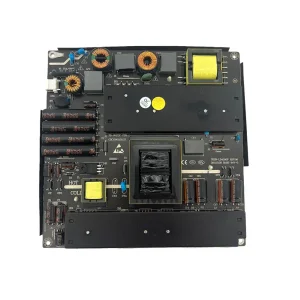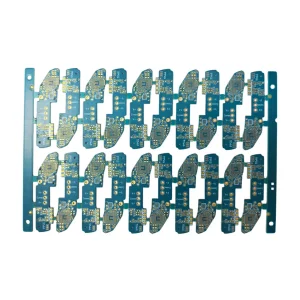
Engineered Turnkey PCBAs Ready for Precision Re-Coating
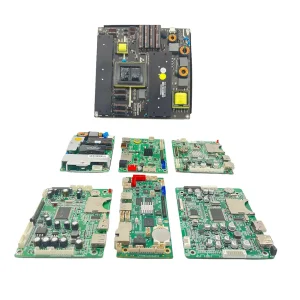
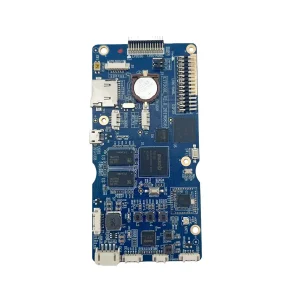
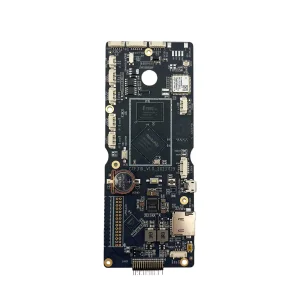
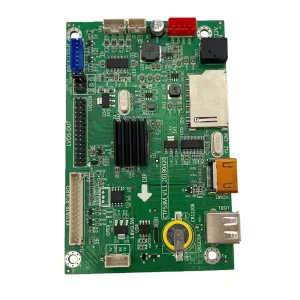
Explore our core industrial assemblies built with closed-loop traceability, high-density SMT mounting, and validated conformal coating workflows designed to endure harsh operating environments.
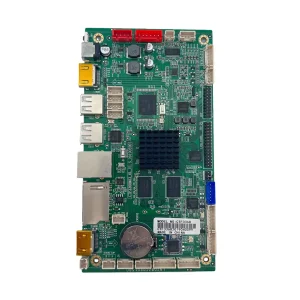
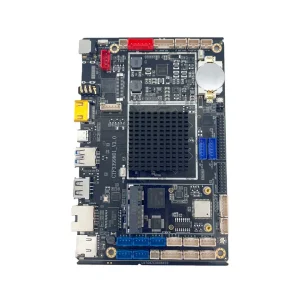
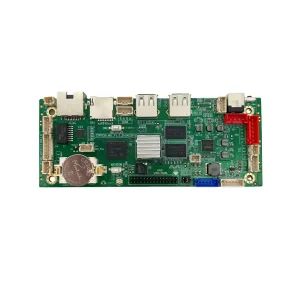
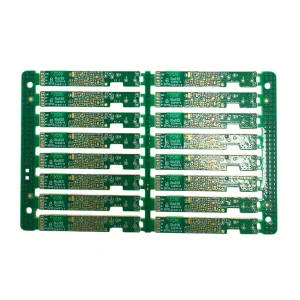
The Science of Re-Coating After PCBA Rework: Mitigating Dielectric Degradation
When mission-critical surface-mount assemblies undergo component rework—such as BGA desoldering, QFN replacement, or manual jumper wire engineering—the protective conformal film is violently disrupted. Re-coating is not simply "brushing on resin"; it requires molecular surface restoration governed by IPC-7711/7721 and IPC-CC-830C.
1. Failure Mechanisms in Post-Rework Re-Coated Circuit Assemblies
In high-reliability electronics—such as automotive powertrain units, aerospace avionics, and remote industrial gateways—the boundary layer where fresh conformal coating meets residual cured coating is the single most vulnerable vector for latent field failures. When localized desoldering heat (exceeding 240°C to 260°C) is applied to remove a defective active device, nearby acrylics, polyurethanes, or silicones experience partial pyrolysis. This thermal cracking generates low-molecular-weight oligomers and non-crosslinked polymer chains along the rework periphery.
If an untrained PCBA factory simply dispenses fresh conformal material over this zone without stripping and chemical surface activation, three destructive phenomena inevitably emerge over operational thermal cycles (-40°C to +125°C):
- Interfacial Delamination & Capillary Voids: Incompatible surface energy between the oxidized substrate and new wet coating creates microscopic meniscus pulling, leading to unbonded pockets where moisture condenses during humidity excursions.
- Electrochemical Migration & Dendritic Shorting: Trapped flux chemistry (halides, carboxylic activators) under improperly cleaned rework zones combines with ambient humidity, resulting in copper and tin dendrite filaments that bridge conductor pitches below 0.4mm under continuous DC bias.
- Coating Swelling and "Orange Peel" Stress Fracture: Solvent systems from the secondary re-coat attacking the perimeter of the primary coating, triggering edge lifting and micro-cracking that destroy dielectric standoff voltage ratings (MIL-STD-202 Method 301).
Validated 5-Stage Chemical & Mechanical Protocol for Standardized Re-Coating
At our Shenzhen SMT intelligent manufacturing hub, we resolve boundary-layer failure through an institutionalized five-phase SOP derived from IPC-7721 Chapter 3 (Conformal Coating Replacement):
Micro-abrasive media blasting (sodium bicarbonate or walnut shell) or chemical spot gel strippers tailored to polymer chemistry (AR, UR, SR, ER).
Multi-chamber semi-aqueous defluxing and deionized water rinsing down to < 1.56 μg NaCl equivalent/cm², monitored by inline ROSE spectrometry.
Argon/Oxygen cold atmospheric plasma treatment to increase surface wetting energy from < 32 dynes/cm to > 54 dynes/cm for flawless covalent crosslinking.
High-speed non-contact micro-piezo dispensing valves with sub-millimeter edge definition, guaranteeing precise feathering at rework boundaries without masking leaks.
UV mercury/LED irradiation followed by moisture secondary cure, verified by automated optical UV fluorescence mapping for zero pinholes and bubbling.
Engineered Re-Coating for Hostile Operating Environments
Different operational fields expose reworked circuits to disparate chemical, thermal, and mechanical stresses. We engineer polymer chemistry matches that preserve original OEM homologations.
Automotive Powertrain & 800V BMS
Electric mobility systems require high-voltage tracking resistance (CTI > 600V) and resistance to glycol coolant sprays, thermal shocks (-40°C to +150°C), and constant road vibrations.
- Dual-cure silicone & polyurethane systems
- Automated thermal boundary feathering
- Full PPAP Level 3 documentation & traceability
Industrial Automation & Smart Grid
Factory environments present severe sulfur gas corrosion (ISA 71.04 Harsh Class G3/GX), salt mist, and continuous airborne oil lubricants that rapidly attack compromised rework boundaries.
- Modified acrylics & crosslinked epoxy seals
- Zero-void edge coverage over fine-pitch QFNs
- UL746E dielectric breakdown certified
Medical Diagnostic & Patient Monitors
Class II & Class III life-critical electronics mandate biocompatible resins resistant to autoclave sterilization cycles, alcohol wipes, and chemical disinfection without cracking.
- USP Class VI compliant medical silicones
- Cleanroom class 10,000 dispensing control
- Strict bio-burden & residue lot control
Next-Generation Conformal Re-Coating: The 2026–2030 Horizon
As electronic component packages scale down to 01005 passives and ultra-dense chiplet architectures, conventional manual touch-up is rendered obsolete. Our engineering roadmap integrates AI-directed vision and advanced nanotechnology.
AI Path Morphing Algorithms
Closed-loop 3D vision scanning of repaired areas automatically calculates topological height offsets, modifying dispensing paths in real-time to avoid keep-out test pins without human error.
Ultra-Thin Nano-Coatings
Vapor-phase fluoropolymer and organosilicon nano-coatings (< 2 μm) eliminating the need for heavy masking on gold connectors and RF shielding cans during repair sequences.
Laser Precision Micro-Ablation
Femtosecond UV lasers selectively ablate defective coating down to the copper trace within ± 2 μm lateral precision, eliminating hazardous chemical solvents completely.
In-Situ Spectral Interferometry
Automated optical coherence thickness gauges that instantly measure re-coat wet film thickness (25–75 μm) across component leads, preventing capillary starvation under IC bodies.
China Factory 4.0: Supply Chain Resilience & Micro-Cluster Speed
Operating from the heart of Shenzhen's electronics ecosystem, our manufacturing facility merges hyper-localized supply connectivity with enterprise MES traceability to turn complex rework and re-coating into an agile competitive edge.
Same-Day Chemical & Component Kitting
Within a 30-kilometer radius in the Greater Bay Area, we source certified Dow Corning, Humiseal, Peters, and Electrolube resins along with active semiconductor replacements within 4 hours, cutting weeks off Western turnaround cycles.
Digital MES Lot Genealogy
Every reworked and re-coated PCBA is serialized with a 2D DataMatrix code. Our MES system logs the technician ID, temperature profile of the rework station, batch number of the secondary coating resin, and post-cure UV intensity.
Cost-Competitive High-Mix Agility
By coupling modular selective coating cells with dedicated high-speed SMT lines, we accommodate engineering batch sizes from 50 prototype units up to 100,000+ volume runs with zero setup penalty and predictable BOM unit economics.
Global Enterprise Procurement: Audit Checklist & Compliance Matrix
When global electronics brands evaluate an OEM partner for SMT assembly and post-rework conformal coating, compliance is non-negotiable. We maintain full transparency across international standards.
| Standard | Process Specification | Engineering Implementation at Aozite | Audit Verification Deliverable |
|---|---|---|---|
| IPC-7711 / 7721 | Rework, Modification & Repair of Electronic Assemblies | Certified CIS / CIT master trainers oversee all desoldering and selective re-coating touchpoints. | Operator Certifications & SOP Traveler |
| IPC-CC-830C | Qualification and Performance of Electrical Insulating Compounds | Chemical compatibility matrices tested against humidity aging (85°C / 85% RH for 1,000 hrs). | Polymer Homologation Data Sheet |
| IPC-A-610 Class 3 | Acceptability of Electronic Assemblies (High Reliability) | Zero meniscus cracking, zero bridged leads, 100% boundary overlap verification under 365nm UV. | AOI Fluorescent Inspection Reports |
| RoHS / REACH | Hazardous Substances & Chemical Registration Directives | Lead-free SAC305 rework solder alloys and low-VOC / solvent-free conformal formulations. | SGS / CTI Third-Party Test Certificates |
| ANSI/ESD S20.20 | Electrostatic Discharge Protection for Electronic Parts | Continuous wrist strap monitoring, conductive flooring (< 10^9 Ω), and ionized air blowing at repair benches. | Daily ESD Calibration Logs |
Technical & Procurement FAQ for Global Buyers
Direct answers to the most stringent engineering and supply-chain queries regarding conformal coating stripping, secondary dispensing, and factory qualification.
We cross-match the original BOM polymer family (e.g., silicone to silicone, acrylic to acrylic). Prior to dispensing, our technicians create a chamfered transition zone along the remaining coating perimeter and apply atmospheric oxygen/argon plasma treatment. This increases surface energy above 52 dynes/cm, ensuring chemical cross-linking that passes ASTM D3359 cross-hatch tape testing with zero flaking (Grade 5B).
We avoid crude immersion stripping. Instead, we use micro-abrasive media blasting using precision 50-micron sodium bicarbonate crystals through fine micro-nozzles, or localized chemical thixotropic gel peeling. This isolates the reworked device without mechanical abrasion or solvent migration to nearby capacitors, inductors, or test pads.
We enforce a rigorous post-rework wash cycle using automated aqueous defluxing agents followed by multiple deionized water rinses. Cleanliness is verified using automated ROSE (Resistivity of Solvent Extract) testing, which must register below 1.56 μg/cm² equivalent NaCl, alongside localized surface insulation resistance (SIR) testing according to IPC-TM-650 Method 2.6.3.7.
Yes. Leveraging Shenzhen's 24-hour supply chain cluster, our fast-track engineering line can execute diagnostic evaluation, component rework, ultrasonic defluxing, robotic re-coating, and dual UV curing within 24 to 48 hours for expedited lots, fully backed by complete X-ray and AOI documentation.
Featured SMT & DIP PCBA Production Lines
From compact wearable consumer boards to high-power industrial inverter assemblies, our modern factory lines are equipped for full turnkey execution, component procurement, SMT placement, and environmental protective coating.