Precision PCBA & Embedded Engineering

OEM Firmware Engineer Support Manufacturer & Factories

Bridging hardware manufacturing, low-level microcode execution, and automated testing. Discover full-lifecycle turnkey PCBA engineering powered by Shenzhen's localized industrial depth and global delivery standards.

Industrial Catalog Top Tier

Enterprise PCBA Solutions & Firmware-Ready Modules

Pre-engineered hardware platforms tailored for seamless driver deployment, low-power kernel integration, and rigorous industrial quality assurance.
20+
Years SMT Process Engineering
800+
Global OEM & ODM Brands Served
1.2M+
Daily High-Speed Placement Points
99.2%
First-Pass Yield (FCT/AOI Validated)
Comprehensive Engineering Ecosystem

Integrated OEM Firmware Engineering: Why Factory-Level Support Matters

In traditional electronics manufacturing, disconnected silos between circuit assembly and embedded microcode deployment create systematic production bottlenecks. Our Shenzhen engineering facility integrates on-site firmware engineers directly into the SMT line flow, accelerating your product life cycle.

Bootloader & BSP Integration

We configure Board Support Packages (BSP) for ARM Cortex-M, RISC-V, ESP32, and custom ASIC architectures directly on the line. We address low-level register configuration, pin-mux allocations, and initialization routines before trial volume runs.

  • Custom Bootloader Flashing
  • Kernel Driver Validation
  • Peripheral Clock Mapping

Secure Key Ingestion & Cryptography

Protect IP and device identity at scale. Our factory firmware teams support cryptographic key injection, unique device certificates, AES hardware encryption setup, and secure boot provisioning during inline SMT programming.

  • Hardware Security Module (HSM) Setup
  • Unique MAC & IMEI Provisioning
  • Anti-Cloning Countermeasures

Custom FCT Testware Development

Firmware engineers develop specialized diagnostic test firmware injected temporarily to conduct 100% boundary scan, loopback testing, RF power calibration, and sensor response analysis before the production binary is burned.

  • Automated Diagnostic Loops
  • Boundary Scan & JTAG Testing
  • Real-Time Telemetry Logging
Competitive Advantage & Market Evolution

The Shenzhen Advantage: Engineering Synergy & Emerging Industry Trends

Analyzing the strategic benefits of locating firmware engineering within the Pearl River Delta electronics manufacturing corridor, and how future tech shifts influence embedded system assembly.

Instant Microcontroller Sourcing

Shenzhen's direct link to original silicon fabs and tier-one distributors allows rapid qualification of alternative microcontrollers during supply chain shifts, with our firmware team executing instant code porting.

Over-The-Air (OTA) Readiness

Every IoT device must accommodate long-term field upgrades. We build and test dual-partition flash memory bootloaders that guarantee safe fallback recovery, preventing device bricking under extreme conditions.

Edge AI & TinyML Execution

Modern PCBA nodes require inference on the edge. Our firmware specialists tune quantised neural network models on microcontrollers, optimizing SRAM allocation and DSP instructions for instant localized response.

NRE Cost Amortization

Consolidating firmware configuration with hardware assembly dramatically decreases Non-Recurring Engineering (NRE) fees. Overseas clients avoid retaining expensive post-assembly testing teams in their domestic facilities.

Macro Solutions & Global Procurement

Global Enterprise Procurement: Tailored Engineering Frameworks

How international hardware enterprises, OEMs, and technical procurement directors leverage our embedded engineering architecture across demanding commercial verticals.

Medical & Wearable Bio-Sensing

Compliance with ISO 13485 standards requires deterministic code execution and strict trace verification. We handle low-power optimization for BLE devices, sensor calibration algorithms, and power-gated sleep configurations.

  • Sub-microamp Sleep Tuning
  • PPG / ECG Filtering Algorithms
  • Class II/III Regulatory Build Logs

Industrial Automation & Smart Grid

Demanding industrial systems running Modbus, CANopen, Ethernet/IP, and PROFIBUS need robust fail-safe states. Our firmware engineers test watchdogs, brown-out detectors, and EMC/EMI recovery mechanisms under real stress.

  • Hardware Watchdog Loop Certification
  • Deterministic Real-Time OS (FreeRTOS/Zephyr)
  • Optical Isolation Signal Conditioning

Connected Smart IoT & Telematics

Cellular NB-IoT, LTE-M, and Wi-Fi 6 nodes require reliable stack initialization and RF tuning. We carry out conductive and radiated functional power tests during microcode burn-in across all produced boards.

  • AT-Command Engine Automation
  • Antenna VSWR & Power Verification
  • Cloud Multi-Tenant Registration Protocols
Execution Methodology

Design for Firmware Testability (DFFT): Engineering Protocol

A structured approach to firmware support ensures that manufactured boards do not encounter unprogrammed lockouts, missed debug ports, or untraceable board serializations.

Phase 1: Schematic & Pinout Review

Before cutting stencils, our firmware staff verifies your target MCU pin assignments against boot-mode strapping pins, SWD/JTAG test point accessibility, pull-up/down resistors, and reset RC constants.

Phase 2: Automated Gang Programming

We deploy high-speed multi-channel automated offline and inline gang programmers (e.g., Segger, Elnec, PEmicro). Checksums, memory locks, and read-out protection (ROP) bits are verified and logged per board serial.

Phase 3: Automated FCT Loopback

Custom bed-of-nails test fixtures communicate through serial UART, SPI, or USB to read back ADC values, toggle GPIO arrays, and validate analog voltage rails against expected tolerance masks under true power states.

Procurement & Technical FAQ

OEM Firmware Support & Manufacturing FAQ

Key technical and logistics inquiries answered for international engineering directors, supply chain leads, and hardware founders.

How do your on-site firmware engineers protect our intellectual property (IP)?
We adhere to strict IP security protocols. Hex/Bin firmware binaries are transferred via encrypted tunnels and stored on offline, air-gapped programming stations. After programming, we activate chip-level Readout Protection (such as STM32 RDP Level 1/2 or NXP Code Read Protection), preventing firmware extraction. Non-disclosure agreements (NDAs) govern every engagement.
What specific firmware files and documentation must we provide for SMT line production?
For production flashing and verification, we require: (1) Production-ready .HEX or .BIN files; (2) Detailed memory address offsets if bootloaders and apps are flashed separately; (3) Memory lock bit instructions; (4) Test fixture diagnostic scripts or functional criteria for FCT; (5) MAC/UUID address assignment lists if your product requires unique network IDs.
Can your engineering team support component substitution when ICs face shortages?
Yes. This is a core advantage of our Shenzhen factory support. If an MCU, sensor, or power management IC is obsolete or delayed, our hardware engineers locate viable pin-compatible or functional alternatives. Concurrently, our firmware engineers update the HAL (Hardware Abstraction Layer), modify registers, rebuild the codebase, and validate the new build on prototype boards.
What is the difference between offline chip pre-programming and on-board inline flashing?
Offline pre-programming flashes microcontrollers or eMMC/Flash memory chips in high-speed socket adapters before SMT reel mounting. Inline programming flashes the MCU after reflow soldering via JTAG, SWD, or UART test pads on the panel. We often recommend inline programming because it prevents solder-heat data degradation and allows flashing individualized calibration and MAC credentials.
How do you handle firmware failures or flashing anomalies during volume runs?
If a board fails programming or boundary testing, our automated test software isolates the unit, logs the error code (e.g., SWD connection timeout, flash verification mismatch, brownout drop), and routes it to an engineering debug station. Our firmware and SMT engineers review the trace to identify whether the cause is a marginal solder joint, crystal oscillator tolerance, or silicon defect.
Comprehensive PCBA Capability

Featured PCB Assembly & Turnkey Manufacturing Categories

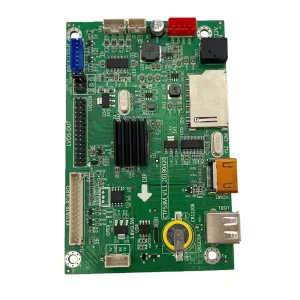
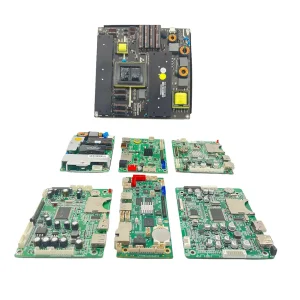
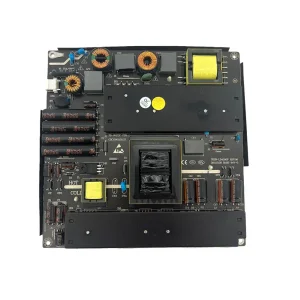
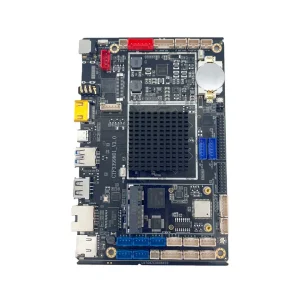
Explore additional manufactured boards, smart home controller assemblies, and industrial power modules backed by our complete engineering and SMT assembly infrastructure.