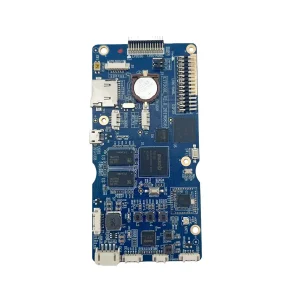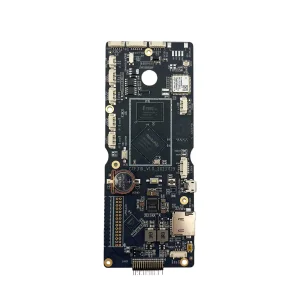
Featured Industrial PCBA & De-Coating Production Capabilities
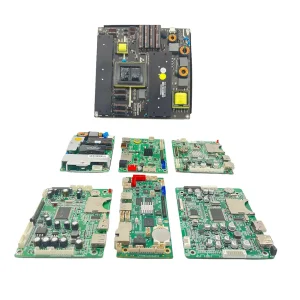
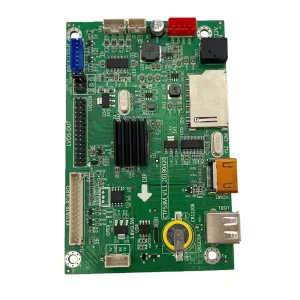
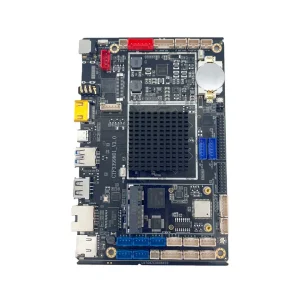
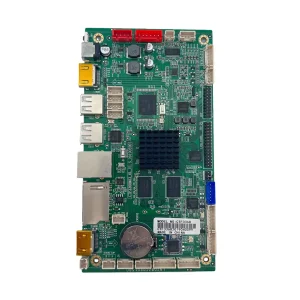
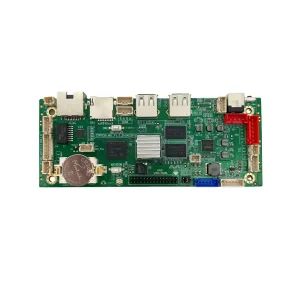
Full-process turnkey printed circuit board assemblies manufactured, tested, and selectively reworked using advanced coating stripping and recoating methodologies.
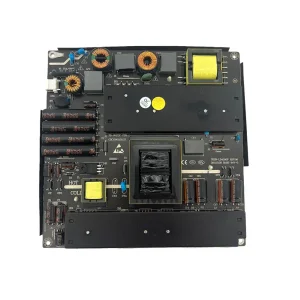
Engineering Principles of Substrate-Safe Conformal Coating Removal
Conformal coatings provide vital barriers against humidity, salt spray, fungal growth, and mechanical vibration. However, when complex PCBA modules encounter field failures, component obsolescence, engineering change orders (ECOs), or assembly anomalies, the coating transforms from a protective barrier into a formidable obstacle.
Substrate Delamination Prevention
Standard chemical strippers can easily swell epoxy FR-4 matrix resins, resulting in irreversible interlayer delamination, blistered solder masks, or dissolved silkscreen indicators. OEM facilities utilize formulation-specific swelling modulators that selectively break down the polymer chains of conformal coatings while leaving the underlying laminate passivated and structurally intact.
Micro-Interconnect Integrity
Ultra-fine pitch components such as 0.4mm BGA balls, WLCSP packages, and 0201 passives demand zero mechanical deflection during de-coating. The application of non-contact selective ablation or pH-neutral micro-abrasive media safeguards solder meniscus geometry and preserves the intermetallic compound (IMC) boundary against mechanical fatigue.
IPC-CC-830 Dielectric Restoration
Stripping residues compromise surface insulation resistance (SIR). Complete removal workflows mandate de-ionized ultrasonic flushing, localized chemical neutralizers, ionic chromatography validation, and baking cycles to eradicate moisture traps prior to spot-reapplication of conformal materials.
Conformal coating removal is rarely a one-size-fits-all procedure. The chemical cross-linking of Silicone (SR), Polyurethane (UR), Epoxy (ER), Acrylic (AR), and vapor-deposited Parylene (XY) necessitates distinct energy densities and chemical solvating affinities. OEM suppliers without multi-modal stripping capabilities routinely cause collateral damage to adjacent capacitors and integrated circuit passivations.
Comparative Matrix: Conformal Coating Stripping Technologies
Evaluating yield rates, thermal exposure profiles, chemical hazards, and cycle times across modern electronics remanufacturing operations.
| Removal Technology | Target Coating Chemistries | Precision & Selectivity | Collateral Damage Risks | Environmental / ESD Class | Production Throughput |
|---|---|---|---|---|---|
| Selective Laser Ablation (UV / CO2) | Parylene, Polyurethane, Epoxy, Silicone | Ultra-High (±10μm) | Virtually zero; strictly depth-controlled focal length | Non-chemical; Class 0 ESD Safe Chamber | High for selective rework (BGA/QFN sites) |
| Micro-Abrasive Blasting (Sodium Bicarb / Wheat Starch) | Epoxy, Silicone, Thick Polyurethane | Medium-High (Manual/Robotic) | Static generation if ungrounded; nozzle overspray | ESD ionization mandatory; particulate extraction | Fast local removal (1-3 mins per component) |
| Solvent Stripping (Immersion / Spot Gel) | Acrylic (AR), Select Polyurethanes | Low (Immersion) / Medium (Gel) | Solder mask swelling; component seal softening | VOC exhaust required; hazardous solvent recovery | Batch processing capable for full-board strip |
| Thermal Evaporation / Degradation | Thick Acrylics, Specific Silicones | Low-Medium | Thermal stress on adjacent solder joints; scorching | Fume extraction required; carbon residue risk | Moderate (suited for pin-point through-hole leads) |
| Atmospheric Plasma De-Coating | Ultra-thin coatings, Parylene C/N, Fluoropolymers | Extremely High (Atomic level) | Near-zero; low thermal signature (<60°C) | Green technology; zero solvent waste | Targeted cycle times; premium tooling |
Why Global Tier-1 Brands Partner with Shenzhen PCBA Rework Hubs
Beyond primary surface mount technology (SMT) assembly, Shenzhen and the Pearl River Delta offer an unmatched industrial ecosystem for reverse logistics, precision PCBA salvage, and authorized OEM coating removal.
Sub-Hour Tooling & Fixtures
When selective micro-blasting or laser ablation requires bespoke ESD-safe masking jigs, Shenzhen's localized CNC machining networks supply anodized aluminum and titanium masks within 24 to 48 hours, crushing prototype turnaround times.
Custom Solvent Chemistry
Proximity to advanced fine-chemical synthesis clusters enables China OEM manufacturers to formulate proprietary, eco-compliant, non-halogenated strippers designed explicitly for tough, moisture-cured polyurethane or cross-linked silicones.
Full Closed-Loop Traceability
Shenzhen facilities incorporate computerized MES tracking where every de-coated and reworked PCBA is serialized, photo-documented under UV luminescence, and checked via inline automated 3D optical and X-ray inspection.
IPC Master Certified Workforce
High-mix electronics salvaging cannot rely purely on automated algorithms. China's top-tier rework factories maintain deep benches of IPC-A-610 and IPC-7711/7721 certified rework specialists operating under strict ESD-safe cleanroom conditions.
Mission-Critical Application Scenarios & Sector Solutions
Where failure is not an option: Tailored de-coating workflows engineered for automotive powertrains, high-voltage renewable energy, aerospace avionics, and medical devices.
Automotive ECUs & EV Inverters
Under-the-hood electronics operate in high-temperature, oil-mist, and high-vibration environments, typically protected by thick silicone or heavy polyurethane coatings. Our selective stripping procedures allow micro-controllers, SiC MOSFET power switches, and gate drivers to be depotted, inspected via acoustic microscopy, and replaced without compromising the remaining protective envelope.
Avionics & Defense Flight Control
Class 3 flight electronics utilize thin, vacuum-deposited Parylene C or rigid epoxy. When silicon revisions or micro-crack soldering anomalies emerge, atmospheric plasma or localized UV laser ablation strips the Parylene without generating heat plumes that could compromise adjacent MIL-SPEC components or weaken multilayer dielectric prepregs.
Medical Diagnostic & Life-Support
Surgical tools, ventilators, and telemetry units require sterile, residue-free surfaces. Stripping operations in this sector eliminate carcinogenic VOCs, using ultrasonic micro-solvent baths followed by high-vacuum baking to guarantee zero solvent outgassing or cytotoxic chemical retention before boards return to cleanroom recoating lines.
Industrial PLCs & Variable Frequency Drives
Continuous operation in dusty, humid chemical manufacturing plants requires robust PCB conformal protection. In high-mix, low-volume scenarios, our automated micro-abrasive stations allow cost-effective component salvage, circuit debugging, and warranty repair of high-value industrial controllers.
Solar Inverters & Energy Storage (BMS)
Solar string inverters and industrial lithium battery energy storage systems (BESS) experience extreme diurnal thermal swings. De-coating operations enable field-returned BMS boards to undergo non-destructive semiconductor failure isolation, firmware probe attachment, and selective track modification.
Marine Radar & Subsea Telemetry
Salt fog causes swift galvanic corrosion if moisture penetrates coating voids. Factory rework entails localized chemical dissolution of damaged sections, microscopic inspection of copper tracks for dendritic growth, precision component replacement, and dual-layer recoating with stringent salt-spray validation.
Global Procurement Playbook: Selecting a Qualified De-Coating Partner
Procurement leaders and engineering managers must evaluate prospective electronics rework vendors on empirical quality gates rather than simple unit price quotation.
1. Metrology & Cleanliness Validation
Demand verification of ionic contamination levels. Does the supplier maintain Resistivity of Solvent Extract (ROSE) testing equipment capable of certifying cleanliness below 1.56 μg/cm² NaCl equivalent per IPC-TM-650? Inquire about FTIR spectroscopy used to verify 100% removal of silicone films that inhibit subsequent solder wetting.
2. ESD Prevention Infrastructure
Micro-abrasive media and gas flow create massive triboelectric charging. An OEM rework partner must verify continuous ionization nozzles, conductive wrist/heel grounding monitors, ESD-safe conductive worktops (<10^9 Ω), and daily electrostatic field audits adhering to ANSI/ESD S20.20 requirements.
3. Yield Guarantees & Traceability
Ensure contract terms define acceptable scrap rates (<0.5% for high-value boards) and specify optical inspection benchmarks under UV blacklight (365nm) to expose leftover fluorescent-doped coating residues. Ensure every board's post-rework thermal profile is archived for warranty auditability.
Frequently Asked Questions: Industrial De-Coating & PCBA Rework
Authoritative answers to critical engineering, procurement, and reliability questions encountered when commissioning conformal coating removal services.
Which conformal coating chemistry presents the highest removal difficulty?
How do factory engineers protect against electrostatic discharge (ESD) during micro-abrasive blasting?
Will chemical stripping agents compromise the underlying solder mask or silkscreen legend?
Can localized coating removal be performed for single-component replacement without stripping the entire board?
What post-removal inspection standards are utilized to guarantee zero residual cross-contamination?
What documentation and technical files are needed to quote an OEM conformal coating removal project?
Explore Related Turnkey PCBA Production Series
Combine precision coating removal with high-speed turnkey SMT assembly, box-build integration, and automated testing under one accountable roof.