Featured BMS & Turnkey Electronic Assembly Solutions
From single-cell ultra-miniature wearable modules to multi-string automotive-grade energy control boards, our Shenzhen facility drives turnkey SMT execution backed by two decades of industrial expertise.
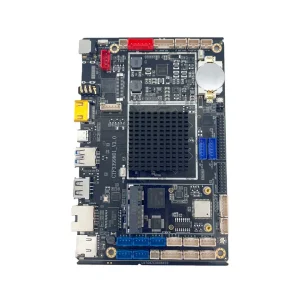
ODM One-Stop PCBA Manufacturing & PCB Assembly
Explore Capability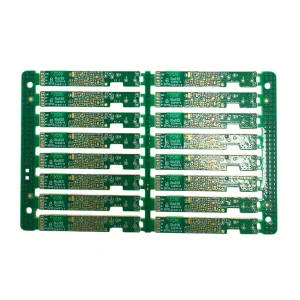
OEM Smart Bracelet PCBA OEM Manufacturing
Explore Capability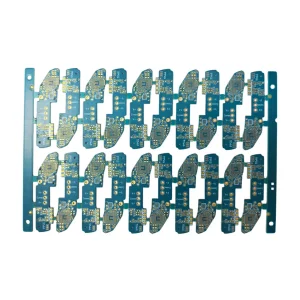
ODM Earphone Panel PCBA OEM ODM Service
Explore Capability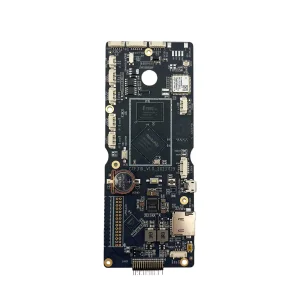
Custom Shenzhen SMT PCBA for Smart Product Manufacturing
Explore Capability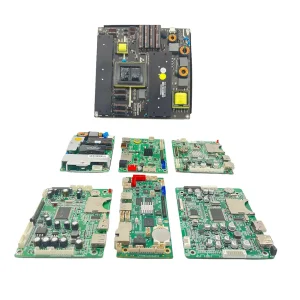
High-Quality OEM ODM PCBA for Electronic Products
Explore Capability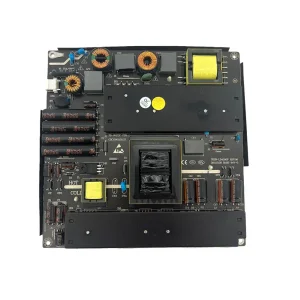
Best SMT Factory Power PCBA Production with DIP
Explore Capability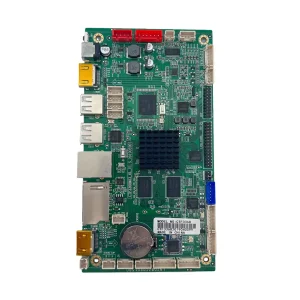
High-Quality Industrial Control PCBA Assembly Service
Explore Capability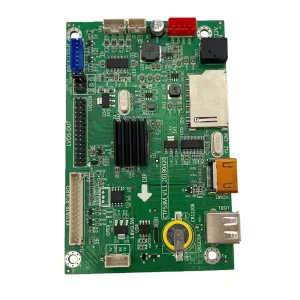
OEM Professional SMT PCBA Production for Electronics
Explore CapabilityGlobal BMS PCBA Landscape & Electrification Dynamics
As lithium-ion chemistries advance toward solid-state and sodium-ion formulations, the demand for high-integrity Battery Management System PCBAs has expanded beyond consumer cells into critical high-voltage utility storage and e-mobility.
The High-Voltage Transition
Commercial EVs and utility-scale Battery Energy Storage Systems (BESS) are shifting rapidly from 400V architecture to 800V and 1500V topologies. This demands PCBA manufacturing with strict creepage and clearance distances, high CTI (Comparative Tracking Index) laminate selection, and void-free conformal isolation.
Algorithmic Precision at Hardware Level
Modern State-of-Charge (SoC), State-of-Health (SoH), and State-of-Power (SoP) algorithms depend on millivolt-level ADC precision. Board manufacturing requires minimal trace impedance variance, stable reference planes, and advanced EMI shielding against inverter switching noise.
ASIL-C/D & Functional Safety
Functional safety under ISO 26262 requires zero-defect manufacturing methodologies. Our SMT factory incorporates 100% 3D SPI for solder volume control, dual AOI inspection stages, and real-time AXI (Automated X-Ray) for fine-pitch BGA current sense controllers.
BMS PCBA Engineering Roadmap & Manufacturing Execution
Shenzhen Aozite Technology combines advanced surface mount engineering with deep component metallurgy control to achieve thermal and electrical resilience in extreme battery enclosure environments.
Heavy Copper & High-Current Thermal Dissipation
BMS assemblies handling continuous 100A to 400A discharge rates require 3oz to 6oz outer/inner copper layers. Our vacuum reflow profiles mitigate thermal mass imbalance, preventing cold solder joints across high-power MOSFETs and terminal busbars.
Active/Passive Cell Balancing Assembly
We fabricate both passive bleed-resistor layouts and inductive/capacitive active balancing topologies. Placement precision down to 0201 passives and ultra-fine pitch QFN telemetry ICs ensures dense pack volume optimization without crosstalk.
Automated In-Line Conformal Coating
To combat moisture condensation, dendrite growth, and electrolyte vapor corrosion inside sealed battery packs, we utilize precision robotic selective spraying of acrylic, polyurethane, or silicone coatings with complete UV blacklight inspection.
Mission-Critical Application Scenarios & Sector Solutions
Battery management electronics encounter distinct electrical and mechanical stresses across different operating sectors. We configure our manufacturing flows to meet these specific operating standards.
1. Industrial Energy Storage Systems (BESS) & Containerized Micro-Grids
Rack-level and cluster-level master/slave BMS architectures. Our process incorporates isolated CAN FD, RS485, and Ethernet IP communications, alongside specialized DIP wave soldering for high-current relays, fuses, and current transformers that withstand continuous peak current loading.
2. Electric Light Vehicles (e-Bikes, e-Scooters, AGVs & Robotics)
High-vibration, space-constrained mobile platforms requiring 36V to 72V compact boards. Manufacturing emphasizes rugged potting-friendly layouts, reinforced through-hole anchors, and precision low-side/high-side MOSFET switching arrays with minimal on-resistance (RDSon).
3. Medical Back-Up Power & Portable Diagnostic Devices
Fail-safe redundant battery control for operating room equipment and portable ventilators. Builds are performed in strict accordance with IPC-A-610 Class 3 standards, incorporating 100% documented functional test fixture cycles (FCT) and serialized electronic traceability down to every single component reel.
Frequently Asked Questions for Overseas Sourcing
Clear technical answers addressing quality assurance, test fixtures, component procurement, and engineering collaboration for hardware and procurement directors.
How do you validate BMS PCBA high-current handling and thermal safety during production?
What files and data packages are necessary to commence an OEM BMS manufacturing quote?
How does your factory prevent counterfeit or sub-tier silicon chips in critical BMS front-end ICs?
Can Aozite support prototype BMS NPI runs before committing to high-volume production?
What manufacturing standards are applied to high-reliability energy management assemblies?
Explore Our Specialized PCBA Manufacturing Lines
Select a board category below to submit your design files for instant DFM review, engineering costing, and SMT production scheduling.
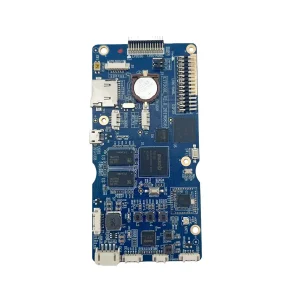
China Custom PCBA Production from Gerber & BOM Files
Request Quote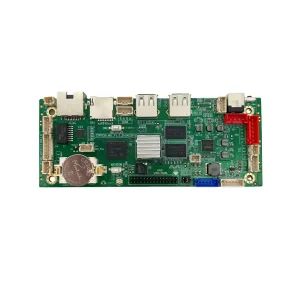
Custom High-Quality PCBA Assembly for IoT Control Boards
Request Quote
Turnkey PCB Assembly SMT & DIP Manufacturing
Request Quote
Wearable Low-Power BMS & Control PCBA
Request Quote
Miniature Single-Cell BMS Audio PCBA
Request Quote
High-Current Power Management PCBA with DIP
Request Quote
Industrial Automation Heavy Controller Board
Request Quote