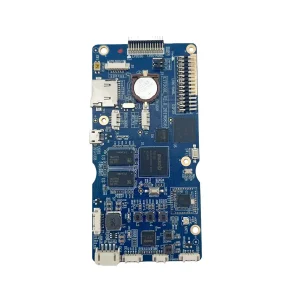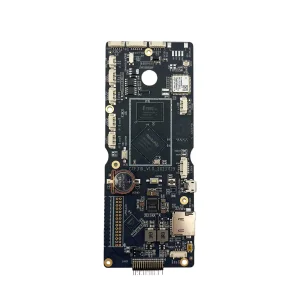
Precision SMT & DIP PCBA Production Portfolio
Explore our flagship surface mount assembly, high-current DIP through-hole manufacturing, and intelligent IoT hardware solutions verified under zero-defect quality protocols.
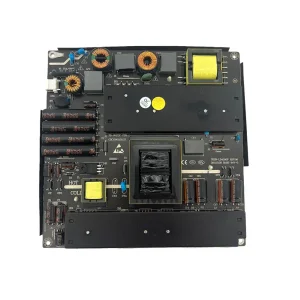
Engineering Marine Electronics PCBA: Surviving the Hostile Blue Ocean
Operating on oceanic vessels, offshore energy rigs, and autonomous surface platforms exposes electronics to a destructive convergence of moisture, chemical attacks, thermal cycling, and kinetic shock.
Galvanic & Saline Fog Resistance
Aerosolized sodium chloride, combined with ambient humidity above 95% condensing, accelerates copper dendrite growth and intermetallic solder joint corrosion within days if boards are left bare.
- Automated selective conformal coating (Acrylic, Silicone, Polyurethane, or Parylene) applied with micro-dispensing precision.
- Zero pinhole coverage verified under automated UV blacklight inspection stations.
- Hydrophobic nano-coatings on fine-pitch 0.3mm BGA and QFN interconnects.
Vibration & Kinetic Shock Mitigation
Two-stroke marine diesel powerplants, propeller cavitation, and heavy wave slams create continuous low-frequency harmonic resonance and high-G impulse shocks along ship bulkheads.
- Component staking using structural military-grade RTV silicones and two-part epoxies.
- Corner bonding and total underfill on heavy ball-grid arrays (BGA) and high-pin count microcontrollers.
- Through-hole anchor fillets adhering strictly to IPC-A-610 Class 3 barrel fill (>75% vertical fill).
Electromagnetic Immunity (IEC 60945)
High-power pulse radar transmitters (10kW+), satellite communication uplinks, and heavy propulsion motor drives introduce extreme EMI/EMC noise across shipboard electrical networks.
- Multi-layer stackups with dedicated ground shield planes and star grounding architectures.
- Opto-isolated CAN bus and RS-422/RS-485 transceiver PCBA sub-circuits rated up to 2.5kV isolation.
- Low-ESR ferrite bead filtering arrays engineered directly into high-speed serial trace lines.
Why Global Tier-1 Brands Source Marine PCBA from Our Shenzhen Hub
Shenzhen Aozite Technology combines deep maritime design engineering with the unmatchable velocity, scale, and component access of the world's premier electronics manufacturing cluster.
Hyper-Localized Supply Chain Agility
Over 90% of specialized raw materials—including TG170/TG180 FR4 laminates, aluminum-core heat dissipation boards, specialized marine connectors, and discrete semiconductors—are sourced within a 30-kilometer radius of our factory floor. This slashes prototyping turnaround from months to hours.
Complete Turnkey Lifecycle Traceability
Every maritime board is marked with a 2D laser matrix barcode linking back to reel-level BOM material batches, reflow thermal profiles, automated optical inspection (AOI) photos, and functional testing logs. When maritime classification societies audit your vessels, documentation is flawless.
30%–45% Direct Cost Rationalization
By integrating internal bare board sourcing, volume kitting agreements with top semiconductor authorized distributors, and fully automated SMT lines with 1.2M+ placements daily, we strip out middle-tier broker markups while strictly maintaining Western engineering standards.
Emerging Trends Transforming Modern Maritime PCBA
From smart zero-emission tugs to deep-sea seismic exploration drones, maritime PCBA manufacturing is rapidly moving from simple discrete controllers to ultra-dense edge-computing systems.
NMEA OneNet & High-Speed Marine Ethernet
Legacy CAN-based NMEA 2000 networks are integrating with gigabit Ethernet (NMEA OneNet) to stream real-time LiDAR, multi-beam sonar 3D imagery, and IP camera video across navigation consoles. We build high-speed differential pairs with strict 100Ω impedance tolerances.
Autonomous Surface Vessels (USV / ASV)
Unmanned marine systems demand edge AI accelerators, integrated multi-band RTK GNSS modules, and redundant inertial navigation systems (INS) mounted onto single ruggedized circuit board assemblies capable of surviving years unattended in harsh salt atmospheres.
Maritime Decarbonization & Hybrid BMS PCBA
Electric ferries and commercial vessels utilize massive lithium-iron-phosphate (LFP) energy storage systems. Our high-voltage Battery Management System (BMS) PCBA solutions integrate heavy copper (3oz–6oz) layers and galvanically isolated cell voltage monitoring ICs.
Mission-Critical Deployment Scenarios for Marine PCBA
Engineered precisely to match the thermal, electrical, and mechanical parameters of commercial marine, defense, and recreational vessel systems.
| Application Subsystem | Operational Environment | Key PCBA Engineering Specifications | Verification & Test Standard |
|---|---|---|---|
| ECDIS Navigation & Radar Processing | Wheelhouse bridge console; 24/7 continuous uptime | High-density HDI microvias, DDR4/DDR5 high-speed layout, low-noise LVDS display drivers | IEC 60945 bridge operational tests, 100% boundary scan testing |
| Hydroacoustic Sonar & Echo Sounders | Under-hull through-hull sensor transducer pods; immersed/wet | Potting-ready conformal coatings, high-voltage piezoceramic drive pulses, low-noise analog front-ends | Hydrostatic pressure cycling, IP68 vacuum sealing, SNR validation |
| Engine Room SCADA & Auxiliary Gensets | Bulkhead mount; temperatures up to +85°C, high oil vapour | TG180 FR-4 laminate, thick polyimide solder mask, heavy through-hole terminals for 30A current loops | IEC 60068-2-6 sinusoidal vibration, 48-hour continuous burn-in |
| Commercial Marine AIS Transponders | Exposed deck antennas, VHF marine radio transceiver pods | Controlled RF impedance (50Ω microstrip lines), gold-plated SMA/U.FL pads, tight shield cans | RF spectrum network analysis, harmonic emission compliance |
| Offshore Wind Farm Buoy Telemetry | Remote deep-sea moorings; zero maintenance for 5+ years | Ultra-low quiescent current standby modes, integrated solar MPPT chargers, satellite modem modules | Salt spray ASTM B117 (1,000h), -40°C cold boot validation |
End-to-End Quality Architecture & Enterprise Procurement
Overseas hardware leaders and supply chain directors rely on our transparent, audit-ready manufacturing gates from Gerber review to box-build delivery.
1. Proactive Marine DFM & DFT Analysis
Before stencils are cut, our process engineers conduct 48-point Design for Manufacturability (DFM) audits: solder pad geometry optimization, thermal relief tuning on heavy copper planes, component clearance for robotic coating dispensing, and dedicated testpoint placement for bed-of-nails ICT.
2. Counterfeit-Proof Component Sourcing
To safeguard marine critical electronics against gray-market silicon, we source solely through original component manufacturers (OCM) and tier-1 franchised distributors (Arrow, Avnet, Digi-Key, Mouser). Incoming stock passes XRF composition screening, decapsulation testing, and strict MSD bake conditioning.
3. Multi-Tier Optical, X-Ray & Functional Testing
Every board undergoes 3D Solder Paste Inspection (SPI) directly after screen printing. Post-reflow, high-resolution 3D AOI checks component offsets, polarization, and solder joint geometry. High-power 2D/3D X-Ray guarantees less than 10% solder voiding under critical BGA balls and bottom-terminated QFN thermal pads.
Frequently Asked Questions on Marine Electronics PCBA
In-depth technical answers addressing engineering challenges, production tolerances, conformal coating types, and international compliance.
Why is IPC-A-610 Class 3 mandatory for marine electronics PCBA compared to standard Class 2?
Which conformal coating chemistry is best suited for oceanic maritime applications?
• Polyurethane (UR): Excellent chemical and moisture barrier, high abrasion resistance, and impervious to diesel/fuel fumes. Ideal for engine room telemetry and under-hood controllers.
• Silicone (SR): Unmatched thermal flexibility (-40°C to +200°C) and superior vibration dampening. Perfect for bridge navigation displays and mast-mounted radar modules exposed to sunlight and freezing spray.
• Parylene (XY): Applied via vacuum vapor deposition; offers atomic-level pinhole-free conformity over complex 3D micro-components. Selected for deep-sea submersibles and underwater hydrophones where complete moisture exclusion is mandatory.
How do you handle component obsolescence for marine boards with 10–15 year product lifecycles?
Can you support full turnkey box-build assembly including IP67/IP68 marine enclosures?
What documentation and inspection reports are supplied with each export batch?
Industrial & Smart Electronics Manufacturing Solutions
Explore our full-process turnkey manufacturing services, handling everything from rapid Gerber prototyping to high-mix production runs.