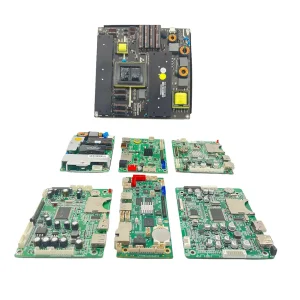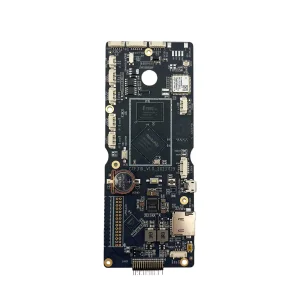
Precision PCBA Assemblies & ODM Series
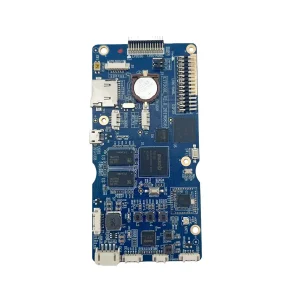
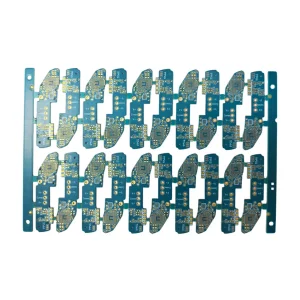
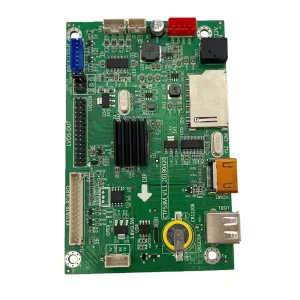
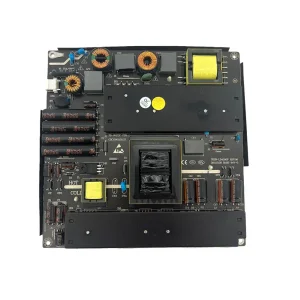
Fully verified assemblies passing rigorous post-wash and no-clean ionic residue thresholds under IPC-A-610 Class 2 & Class 3 benchmarks.
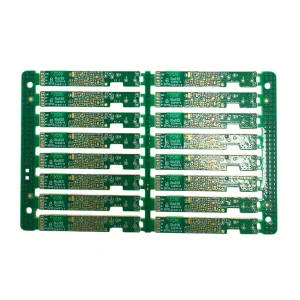
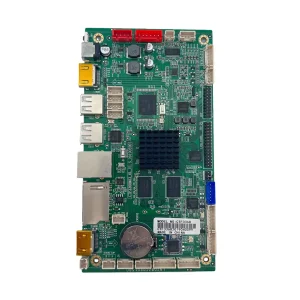
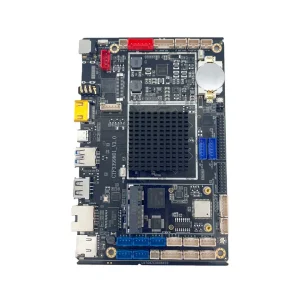
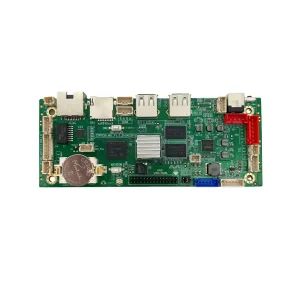
Industrial Cleanness & Ionic Contamination Dynamics
Modern surface mount technology (SMT) with ultra-fine pitch components, 01005 passives, and complex bottom-terminated components (BTC/QFN/BGA) has made ionic cleanliness testing paramount in avoiding catastrophic field failures.
Electrochemical Migration (ECM)
Residual flux activators (such as halides, bromides, chlorides) combine with atmospheric moisture and electrical bias to create conductive dendritic filaments between trace spacings, creating irreversible short circuits.
ROSE Testing vs. IC Chromatography
While standard Resistivity of Solvent Extract (ROSE) measures overall bulk conductivity based on IPC-TM-650 2.3.25, high-reliability applications leverage Ion Chromatography to distinguish specific corrosive species like SO₄²⁻ and Cl⁻.
Leakage Currents & Parasitic Resistance
Micro-current analog sensor circuits and high-frequency IoT boards suffer fatal signal attenuation or drift if hygroscopic salt traces alter designed surface insulation resistance (SIR) across bare board bridges.
The Shenzhen Ecosystem: Rapid Cleanness Loop
How localized supply chain integration within Shenzhen, China empowers global tier-1 brands with unmatched cycle speed and precision cleanliness controls.
Real-Time Chemical Profiling
Direct integration with chemistry formulators allows us to modify DI water temperature, ultrasonic wash agitation, and surfactant saponifier concentration within hours rather than waiting weeks for offshore third-party laboratory reports.
High-Mix Scalability
Equipped with 8 high-speed automated SMT lines and inline solvent extraction testers, our production facility transitions swiftly from rapid NPI prototypes to million-unit mass production without compromising wash validation protocols.
Cost-Effective Compliance
By conducting continuous batch-level ROSE testing in-house alongside automated optical inspection (AOI) and X-ray systems, ODM buyers eliminate excessive overseas third-party testing fees and avoid costly export transit holds.
| Parameters | Standard Commercial SMT | Aozite High-Reliability ODM | Aerospace / Medical Standards |
|---|---|---|---|
| Ionic Contamination Limit | < 3.0 μg NaCl eq./cm² | < 0.75 μg NaCl eq./cm² | < 0.50 μg NaCl eq./cm² |
| Testing Method | Spot Check Sample | Lot-by-Lot ROSE + Periodic IC | 100% Inline SIR Monitoring |
| Wash Technology | Standard No-Clean Only | Multi-Stage DI Water Ultrasonic Wash | Closed-Loop Vapor Degreasing |
| Audit Traceability | Basic Shipping Manifest | Individual Serial Batch Reports | FAA / FDA Lifetime Archival |
Industrial & Environmental Deployment Scenarios
Where ionic cleanliness translates directly into catastrophic failure prevention and prolonged operational MTBF.
Automotive Battery BMS
Battery management systems exposed to wide thermal excursions and condensing humidity demand ultra-low halide traces to prevent creepage currents in 800V architecture.
Implantable & Diagnostic Medical
Class 3 patient monitoring equipment demands clinical surface hygiene to avoid conformal coating delamination and false analog biosensor readouts.
5G & Millimeter-Wave Base Stations
Parasitic capacitance and high-frequency RF dielectric loss caused by conductive flux remnants lead to degraded signal-to-noise ratio in outdoor transceivers.
Severe Industrial Controls & PLCs
Harsh environments with corrosive sulfur, chlorine, and salt fog accelerate galvanic corrosion if PCBs are not thoroughly decontaminated prior to potting.
Shenzhen Aozite 8-Stage Cleanliness Production Workflow
Every PCBA lot manufactured in our factory adheres to rigorous, closed-loop inline quality checkpoints to eliminate contamination at its source.
Incoming QC
Component verification, MSD baking, ionic check of bare boards, and lot traceability labels.
Paste Printing + 3D SPI
Solder paste volume and height measured on every board with low-residue flux paste formulation.
High-Speed Placement
Fine-pitch ICs, BGA, QFN and 0201 passives placed automatically across 8 high-speed SMT lines.
Reflow Soldering
Board-specific thermal profiles for lead-free reliability, ensuring optimal flux activator breakdown.
AOI & X-Ray
Optical joint inspection plus X-ray for hidden BGA joints, void checks, and solder ball clearance.
DIP Assembly
Through-hole insertion and selective/wave soldering with controlled flux spray precision.
FCT & Cleanness Test
Functional circuit testing to your firmware followed by lot-by-lot ROSE ionic contamination extraction.
Box Build & Packing
Conformal coating, enclosure assembly, and vacuum-sealed ESD-safe export packaging.
Future Trends & International Procurement Priorities
Why Tier-1 OEM/ODM buyers are shifting procurement specifications from simple visual standards to quantitative ionic cleanliness guarantees.
Transition to IPC-J-STD-001 Rev H
The electronics industry has officially phased out the historic "universal 1.56 μg/cm² limit" as a sole pass/fail metric. Modern standards require manufacturing process characterization and objective cleanliness evidence based on component standoffs.
Conformal Coating Adhesion
Conformal coatings (acrylic, polyurethane, silicone, parylene) fail through delamination, blistering, and mealing if surface salts are present. Procurement departments now require pre-coating ionic test validation to guarantee zero field warranty returns.
Digital Audit & Data Transparency
Overseas buyers increasingly insist on digital test logging. At Aozite, our ROSE test extraction curves are time-stamped and attached directly to shipment lots, providing audit-proof compliance for ISO 9001 and automotive IATF 16949 reviews.
ODM Ionic Contamination Testing Q&A
Detailed answers covering test methodologies, turnaround times, standards, and engineering validation.
What is an Ionic Contamination Test and why is it necessary?
What international standards govern ionic cleanliness on PCBAs?
How does Aozite ensure low ionic contamination on no-clean assemblies?
What files do you need to evaluate an ODM PCBA project?
Can overseas buyers audit your Shenzhen factory and testing labs?
Do you provide sample certificates and batch test logs with shipments?
Complete ODM & Turnkey PCBA Solutions
High-precision surface mount, through-hole assembly, and functional circuit verification backed by our Shenzhen facility.