Featured Industrial & Precision PCBA Solutions
Explore our turnkey PCBA product portfolio ranging from industrial automation boards to ultra-compact IoT smart modules, engineered with 100% full-process traceability.
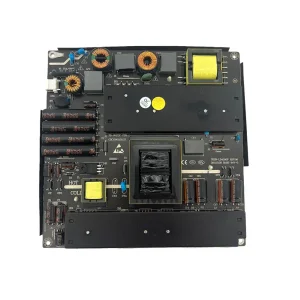
SMT Factory Power PCBA Production with DIP
Explore Board Details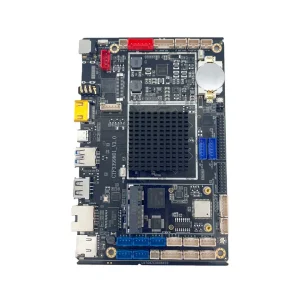
ODM One-stop PCBA Manufacturing & Assembly
Explore Board Details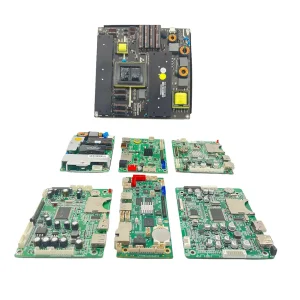
OEM ODM PCBA for All Electronic Products
Explore Board Details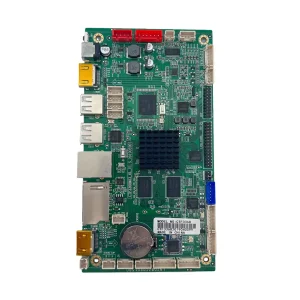
Industrial Control PCBA Assembly & Processing
Explore Board Details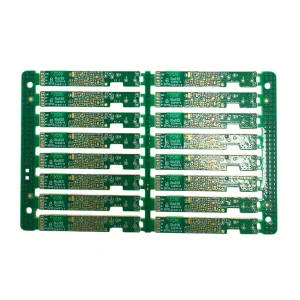
Smart Bracelet PCBA OEM Manufacturing
Explore Board Details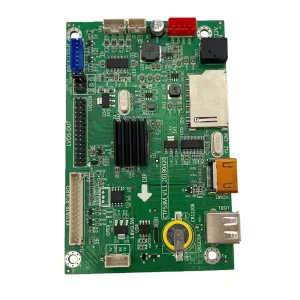
Professional SMT PCBA Production Service
Explore Board Details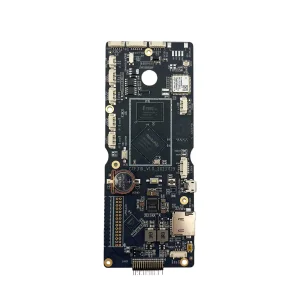
Shenzhen SMT PCBA for Smart Products
Explore Board Details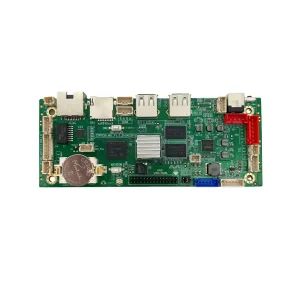
High-Quality PCBA for IoT Control Boards
Explore Board DetailsGlobal Landscape of Industrial Control PCBA Engineering
Unlike consumer-grade printed circuit assemblies with short operating lifespans and mild operating parameters, Industrial Control PCBAs govern vital infrastructure: robotics, programmable logic controllers (PLCs), high-voltage motor drives, renewable power inverters, and IIoT gateways. These boards face constant thermal shocks, mechanical vibration, corrosive moisture, and high electromagnetic interference (EMI).
IPC-A-610 Class 3 Industrial Reliability
Meeting critical industrial equipment demands requires adherence to Class 3 high-reliability standards. Solder joint fill requirements exceed 75% on plated through-holes (PTH), void ratios in ball grid arrays (BGAs) remain strictly sub-15%, and thermal profiling ensures resilient intermetallic compound (IMC) thickness.
Substrate Selection & Thermal Management
Heavy industrial workloads leverage high-Tg FR4 substrates (Tg > 170°C), metal-backed aluminum cores, and Rogers ceramics. Controlled coefficient of thermal expansion (CTE) matching mitigates micro-fractures in large ceramic capacitors and flip-chip microcontrollers subjected to extreme cyclical heat shifts.
Advanced Conformal Coating & Potting
To safeguard circuits against sulfurized atmospheres, saltwater mist, and dust ingress, automated selective robotic spray systems apply acrylic, polyurethane, or silicone coatings (IPC-CC-830B certified) with micron-precision masking around connectors and gold-finger contacts.
The Shenzhen Advantage: Engineering Density & Agile Sourcing
Global industrial procurement managers face significant friction when sourcing components across fragmented suppliers. Operating in Shenzhen gives our engineering teams unmatched agility and physical proximity to raw materials, drastically reducing new product introduction (NPI) cycles.
Same-Day Supply Network
Direct connections with authorized silicon distributors (TI, STMicro, Infineon, NXP) and regional fabricators allow passive reel pulls, custom metal stencils, and multi-layer FR4 bare boards to be kitted in under 24 hours.
High-Mix SMT Flexibility
Equipped with 8 automated SMT lines utilizing Yamaha and Panasonic high-speed placement heads, line changeovers take less than 20 minutes, accommodating low-volume high-mix (LVHM) runs up to mass production seamlessly.
DFM Cost Reduction
Our veteran process engineering team conducts exhaustive Design for Manufacturability (DFM) reviews to identify obsolete parts, suggest drop-in alternates, optimize panelization, and reduce production costs before tooling begins.
End-to-End Traceability
Each manufactured PCBA receives laser-etched 2D DataMatrix codes, binding solder paste inspection (SPI), automated optical inspection (AOI), X-ray joints, and functional test (FCT) log data for transparent quality verification.
Industrial PCBA Deployment Scenarios
Real-world operational reliability depends on matching PCB assembly techniques directly to the operational stresses of the end environment.
Factory Automation & PLCs
Heavy industrial factories demand high noise-immunity and isolation. We manufacture multi-layer PLCs with optocoupler isolation, CAN bus, Profinet, and RS485 communication boards with dedicated ground planes that protect controllers from high-voltage transient surges.
Power Distribution & Inverters
Switching modules, photovoltaic inverters, and high-wattage power supplies combine heavy copper traces (up to 4oz) with wave-soldered through-hole components (DIP). Thermal relief vias and solid core potting maintain steady dissipations under load.
Smart IIoT Gateways & Edge Nodes
Compact processing nodes require integration of high-density interconnects (HDI), fine-pitch BGA packages, micro-vias, and low-power RF interfaces (LoRa, NB-IoT, Wi-Fi 6, 5G). Our precision SMT lines achieve void-free joints with controlled impedance matching.
Technological Horizons Shaping Industrial Electronics
The industrial PCBA sector is shifting toward higher processing power, integrated sensor architectures, and demanding eco-compliance standards.
Edge AI Integration
Industrial hardware is shifting from centralized computing to localized inference. Next-generation PCBAs feature System-on-Modules (SoM) and neural accelerators with strict layout guidelines for power integrity and heat sinking.
Wide-Bandgap Semiconductors
The transition to Silicon Carbide (SiC) and Gallium Nitride (GaN) components allows power supplies to operate at higher switching speeds and voltages, demanding tighter PCB trace parasitic control and specialized solder chemistries.
Hardware-Level Security
Securing industrial networks begins at the circuit level. Industrial clients increasingly mandate on-board cryptographic root-of-trust hardware chips, physical anti-tamper traces, and secure automated firmware flashing in assembly.
Green Manufacturing
Compliance with EU RoHS, REACH, and WEEE standards requires non-toxic flux removal, zero-halogen laminates, and low-temperature soldering alloys that lower carbon footprints while maintaining solder joint strength.
Full-Cycle Industrial Quality Verification
To safeguard critical operations, every circuit board passes through eight validation gateways during the manufacturing process.
IQC Material Audit
Incoming components undergo pin-level verification, digital microscope analysis, and humidity checking in dry cabinets.
Inline 3D SPI
Laser-guided 3D solder paste inspection monitors height, area, and offset on pads prior to component placement.
High-Speed SMT
Precision dual-gantry placement accommodates micro-footprints (down to 0201) and large fine-pitch industrial packages.
10-Zone Reflow
Nitrogen-purged multi-zone reflow ovens apply custom thermal profiles for lead-free reliability and minimal delta-T.
Dual 3D AOI
Automated optical inspection post-placement and post-reflow screens for solder bridging, misalignment, and tombstoning.
AXI X-Ray Inspection
High-resolution transmission X-ray inspects hidden BGA solder balls, QFN ground pads, and internal through-hole barrels.
FCT & Boundary Scan
Custom bed-of-nails fixtures flash customer firmware, verify analog/digital I/O, and test communication interfaces.
Burn-In & Stress Testing
Extended thermal chamber aging (typically 48 to 72 hours under full operational voltage) weeds out infant mortality defects.
Global Procurement Checklist: Selecting an ODM Industrial Partner
Procurement directors and supply chain managers evaluating China-based PCBA partners can mitigate operational risks by assessing four key factors.
Authorized Sourcing Paths
Insist on strict traceability with Manufacturers' Certificate of Conformance (CoC). Ensure that authorized supply chains and certified testing channels are used to avoid counterfeit or re-marked components.
Engineering Support Depth
A true ODM supplier provides comprehensive hardware schematic optimization, thermal simulation, component lifecycle analysis, and second-source recommendations rather than simple assemble-to-print handling.
Transparent Cost Modeling
Work with partners offering transparent billing across PCB raw boards, BOM components, SMT placement points, testing fixtures (NRE), and coating processes to eliminate hidden export or handling markups.
IP & Firmware Security
Verify that the manufacturing facility operates isolated programming environments, encrypted data servers, and comprehensive non-disclosure protections for your proprietary intellectual property.
Frequently Asked Questions on Industrial PCBA
Clear engineering and commercial answers to help overseas procurement teams qualify manufacturing capabilities.
What is the standard lead time for an industrial NPI prototype?
For turnkey NPI (New Product Introduction), standard lead time is 7 to 12 working days once Gerber and BOM datasets are approved. Fast-turn options can deliver bare-board fabrication and initial SMT assembly in as few as 72 hours for urgent engineering verification.
How do you guarantee component authenticity and prevent counterfeits?
We procure directly through factory-franchised global distributors (DigiKey, Mouser, Element14, Arrow) or certified original component manufacturers. Critical components undergo microscopic inspection, lot date verification, and X-ray de-lidding for anti-counterfeit assurance.
Can you manufacture boards under IPC-A-610 Class 3 specifications?
Yes. We support IPC Class 3 standards for automotive, medical, and mission-critical industrial applications. Production includes strict thermal profiling, AOI inspection, automated optical barrel fill verification, and detailed microsection analysis.
What test engineering files are required for custom FCT fixtures?
We require your functional test specification document, schematics with test-point designators, compiled binary firmware, pinout connection requirements, and desired test coverage parameters. Our in-house tooling team can construct complete bed-of-nails fixtures.
Do you support partial turnkey or consigned component assembly?
Yes. We provide flexible engagement models: full turnkey (we procure PCB and all components), partial turnkey (you consign proprietary ASICs/microcontrollers while we supply common passives), and complete consigned kitting.
How are long-term lifecycle obsolescence risks addressed?
During initial DFM reviews, our engineers assess component lifecycle status (Active, NRND, or EOL). If an End-of-Life component is detected, we offer form-fit-function pin-compatible alternate recommendations to ensure multi-year lifecycle stability.
Explore Complete PCBA Assembly & Production Options
From rapid prototyping from raw Gerber/BOM files to specialized audio and wearable electronics, review our core assembly capabilities.
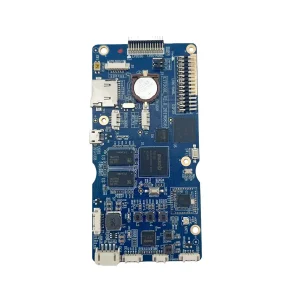
Custom PCBA from Gerber & BOM Files
Request Manufacturing Quote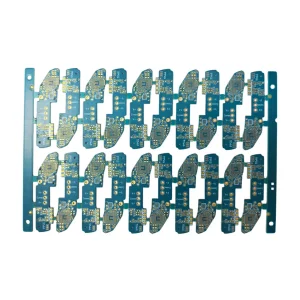
ODM Earphone Panel PCBA OEM/ODM Service
Request Manufacturing Quote
Industrial Control PCBA Assembly & Processing
Request Manufacturing Quote
SMT Factory Power PCBA with DIP Assembly
Request Manufacturing Quote
ODM Turnkey PCBA Manufacturing Service
Request Manufacturing Quote
Custom Shenzhen SMT PCBA for Smart Products
Request Manufacturing Quote
Custom PCBA Assembly for IoT Control Boards
Request Manufacturing Quote