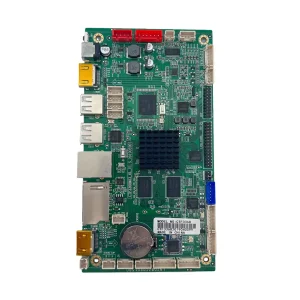
High-Quality Industrial Control PCBA Assembly & Processing Service Supplier, Suppliers
Learn Specifications →Explore our surface-mount and mixed-technology assemblies manufactured with optimized water-soluble organic acid (OR) flux systems, engineered for zero dendrite growth and maximum surface insulation resistance.
High-Quality Industrial Control PCBA Assembly & Processing Service Supplier, Suppliers
Learn Specifications →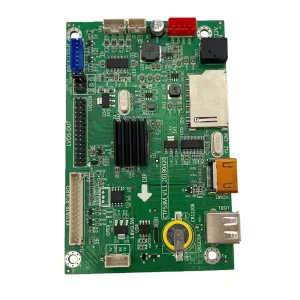
OEM Professional SMT PCBA Production for Electronics Manufacturers, Supplier
Learn Specifications →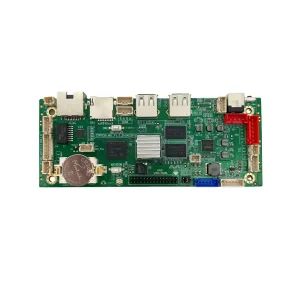
Custom High-quality PCBA Assembly for IoT Control Boards Supplier, Factory
Learn Specifications →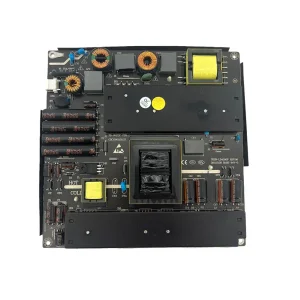
Best SMT Factory Power PCBA Production with DIP Supplier, Suppliers
Learn Specifications →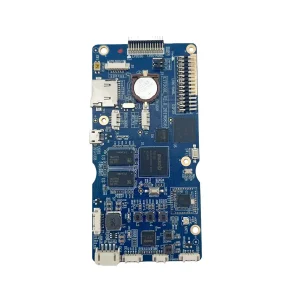
China Custom PCBA Production from Gerber & BOM Files Service, Factories
Learn Specifications →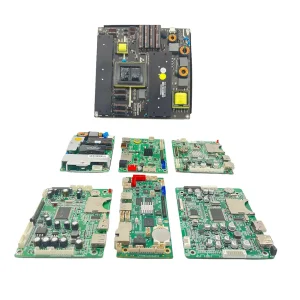
High-Quality OEM ODM PCBA for All Electronic Products Service, Factory
Learn Specifications →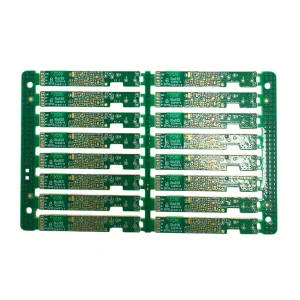
OEM Smart Bracelet PCBA OEM Manufacturing Factories, Factory
Learn Specifications →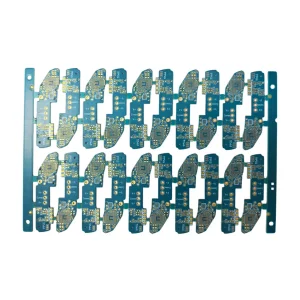
ODM Earphone Panel PCBA OEM ODM Service Supplier, Factory
Learn Specifications →Why mission-critical hardware designs are abandoning standard "No-Clean" chemistry in favor of high-activation Organic Acid (OA) water-washable soldering processes.
Water-soluble fluxes utilize organic acid activators that exhibit significantly higher chemical activity than rosin-based (ROL0/ROL1) fluxes. This ensures complete wetting across oxidized copper, nickel-palladium-gold (ENEPIG), and immersion silver pads, mitigating solder balling and voiding under high-density BGAs.
No-clean flux leaves benign rosin residues; however, in harsh outdoor or high-humidity environments, unreacted activators can trap moisture, inducing electrochemical migration (ECM) and parasitic leakage currents. Water-wash assembly extracts 100% of ionic salts, safeguarding circuits from dendritic failures.
Residual flux creates surface tension mismatches, leading to delamination, orange peels, and micro-voids during conformal coating or potting. A pristine, deionized-water-washed surface provides optimal dyne levels (>44 dynes/cm) for parylene, silicone, polyurethane, and acrylic bond integrity.
| Soldering Metric / Quality Parameter | Standard No-Clean Flux PCBA | Engineered Water Soluble Flux PCBA (Aozite Standard) |
|---|---|---|
| Flux Activator Chemistry | Low-activity rosin/resin-based (ROL0 / ROL1) | High-activity Organic Acid (ORM0 / ORH1) |
| Post-Reflow Residue | Amber translucent non-conductive residue | Completely stripped via multi-stage DI aqueous wash |
| Ionic Cleanliness Level | Typically 1.5 – 3.0 μg NaCl eq./cm² | ≤ 0.75 μg NaCl eq./cm² (Exceeds IPC-A-610 Class 3) |
| RF Signal Integrity (10GHz+) | Parasitic capacitance and dielectric loss possible | Zero dielectric distortion; clean substrate trace margins |
| Potting / Coating Interfacial Shear | Risk of localized flaking and blistering | 100% molecular bond adhesion to substrate and solder fillets |
The manufacturing complexity of water-wash PCB assembly demands a synchronized supply chain, massive DI water treatment infrastructure, and rigorous process discipline.
Based in Shenzhen’s Bantian electronic cluster, Shenzhen Aozite Technology leverages immediate access to raw PCB fabrication plants, moisture-sensitive microcomponents, and certified chemical suppliers, shrinking lead times from weeks to days.
Proper water-soluble flux processing requires closed-loop deionized water systems (>15 MΩ·cm resistivity). Our facility features continuous online deionization, chemical filtration, and compliant eco-friendly wastewater recycling meeting international RoHS/REACH environmental mandates.
Water-soluble flux is hygroscopic and corrosively active until washed. Our process engineers maintain tight "wash windows" (≤ 2 hours between reflow and wash), precision reflow delta profiles (±2.5°C), and automated ionic contamination testing on every batch.
Operating 8 modern SMT lines equipped with Yamaha and Panasonic high-speed mounters, automated stencil printers with inline 3D SPI, and inline aqueous spray washers, we effortlessly shift from 5-piece prototypes to runs of hundreds of thousands.
Three overarching technical vectors are driving hardware OEMs worldwide toward water-soluble flux PCBA processes.
As components shrink to 01005 passives, 0.3mm pitch BGAs, and flip-chip CSPs, the clearance under component bodies reaches sub-50 microns. No-clean flux outgassing leaves trapped residues that cannot be visually inspected. Aqueous batch washes drive pressurized micro-droplets under low-standoff packages to eliminate bridging risk.
Modern power converters operating at elevated voltages (800V+ EV architectures) and ultra-high switching frequencies (MHz range) suffer dielectric breakdowns if conductive flux residues remain between closely spaced high-voltage copper conductors. Water-soluble assembly provides pristine isolation.
Aerospace, automotive, and medical bodies (IPC J-STD-001, ISO 13485) have transitioned from simple ROSE (Resistivity of Solvent Extract) testing to localized ion chromatography. Water-soluble flux assemblies consistently beat the <0.1 μg/cm² chloride threshold required by mission-critical systems.
Deploying specialized water-soluble flux chemistries across high-consequence industries where field failures cannot happen.
Engine control modules, Battery Management Systems (BMS), and onboard chargers undergo severe thermal shocks (-40°C to +125°C). Water-wash assembly prevents thermal-cycling solder-joint cracking caused by trapped flux acid embrittlement.
Patient monitoring devices and diagnostic blood analyzers demand absolute biochemical inertness. Deionized water washing eliminates volatile chemical outgassing, ensuring zero toxicity and unmatched sensor accuracy.
PLCs, servo drives, and robotic controllers deployed in humid chemical, oil, and dust atmospheres require secondary conformal coatings. Our zero-residue substrate guarantees optimal coating wetting indices with zero peeling over 10-year service lifespans.
Water-soluble organic acid flux is inherently corrosive if not cleaned properly. International procurement teams evaluate suppliers on these mandatory controls:
Organic acid residue must be dissolved within 4 hours maximum post-reflow. Aozite enforces a mandatory 120-minute line-to-wash threshold, utilizing automated conveyer integration to eliminate any risk of unwashed active halides attacking exposed copper.
Our multi-chamber in-line washers utilize variable-angle oscillating spray nozzles up to 60 PSI, cascading through heated wash (60°C), isolation rinse, and high-velocity forced-air knife drying to evacuate moisture trapped beneath micro-BGAs.
Every single shift production lot is tested via an automated ionic contamination system. Lots are validated to have an ionic cleanliness level lower than 0.75 μg NaCl equivalent/cm² before transitioning to functional test or shipping.
Not every component survives an aqueous wash. Our veteran DFM team vets all BOM items during quotation to ensure non-sealed parts (buzzers, open trimmers, unsealed switches) are either process-sealed or shifted to post-wash selective hand soldering.
Critical considerations for engineering teams evaluating water-wash assembly for their next product generation.
Browse our turnkey assembly and manufacturing capabilities across consumer, commercial, IoT, and high-performance industrial electronics platforms.
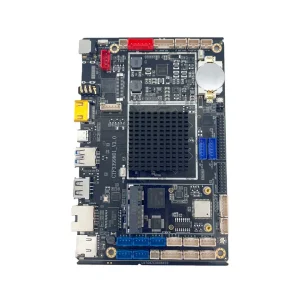
ODM One-stop PCBA Manufacturing & PCB Assembly Manufacturers, Suppliers
Learn Specifications →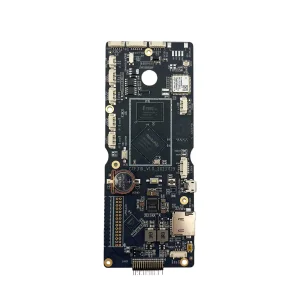
Custom Shenzhen SMT PCBA for Smart Product Manufacturing Service, Factory
Learn Specifications →
High-Quality Industrial Control PCBA Assembly & Processing Service Supplier, Suppliers
Learn Specifications →
OEM Professional SMT PCBA Production for Electronics Manufacturers, Supplier
Learn Specifications →
Custom High-quality PCBA Assembly for IoT Control Boards Supplier, Factory
Learn Specifications →
Best SMT Factory Power PCBA Production with DIP Supplier, Suppliers
Learn Specifications →
China Custom PCBA Production from Gerber & BOM Files Service, Factories
Learn Specifications →
High-Quality OEM ODM PCBA for All Electronic Products Service, Factory
Learn Specifications →