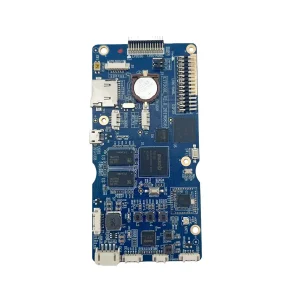
Industrial Portfolios
High-Reliability PCBA & Solder Mask Integrated Assemblies
Explore production-grade boards and integrated assemblies leveraging UV-blocking barrier formulations, ultra-dense SMT line setups, and end-to-end turnkey manufacturing.
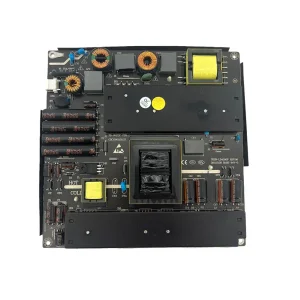
Power PCBA Production with DIP & High-Current Trace Protection
Explore Engineering Specs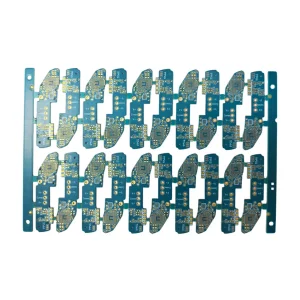
Miniature Audio & Wearable Earphone Panel PCBA Solutions
Explore Engineering Specs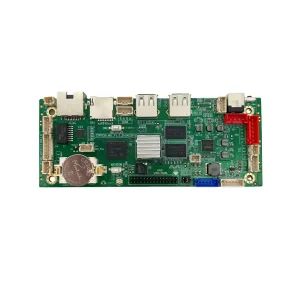
High-Density IoT Control Boards with Integrated RF Shielding
Explore Engineering Specs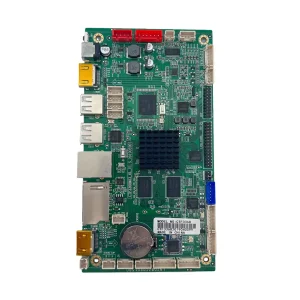
Industrial Control PCBA Assemblies for Heavy Automation Systems
Explore Engineering Specs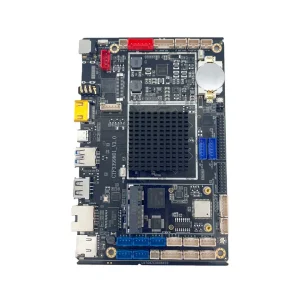
One-Stop Turnkey PCBA Production & Finished Box Build Systems
Explore Engineering Specs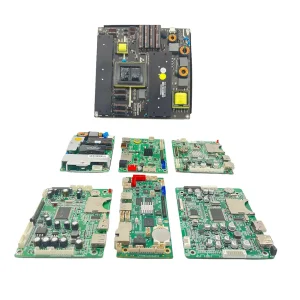
Enterprise OEM/ODM Electronic Circuit Assemblies & Processing
Explore Engineering Specs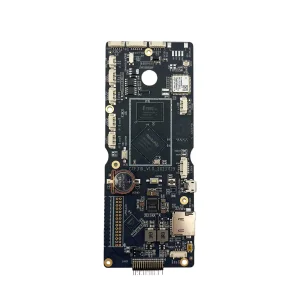
High-Precision Surface Mount Assemblies for Smart Hardware
Explore Engineering Specs
Engineering Deep Dive
The Photochemical Architecture of UV-Blocking Solder Resist
In ultra-fine pitch interconnects and mission-critical hardware, standard Liquid Photoimageable (LPI) solder masks often suffer from light bleeding, scattering, and optical transparency degradation under harsh exposure spectra.
Optical Density & UV Absorption
UV blocking solder resist integrates specialized photo-absorbers that attenuate wavelengths between 310 nm and 405 nm. This prevents undesired core degradation and optical transmission when exposed to intense UV sanitization, laser profiling, or outdoor sunlight irradiation.
Physics SpecHigh Solder Dam Resolution
Eliminating internal lateral scattering allows for crisp, micro-dimensioned solder mask dams down to 2.0 mils (0.05 mm) without footings or undercuts. Crucial for 0.35 mm pitch Micro-BGAs, CSP components, and QFN ground slugs to prevent molten solder bridging.
LDI ReadyAnti-Yellowing & Thermal Ageing
Enhanced with high-purity alicyclic epoxy backbones, UV-blocking solder resist resists discoloration, flaking, and dielectric breakdown through multi-cycle lead-free SAC305 reflow profiles topping 260°C and accelerated HAST thermal testing.
260°C Reflow
Vertical Deployments
Macro-Industry Solutions Powered by UV-Shielded Polymers
Strategic deployment matrix highlighting how specific vertical markets utilize UV-blocking chemistry to achieve extreme lifecycle durability and dielectric isolation.
Automotive & Electric Drivetrains
Battery Management Systems (BMS) and SiC inverter modules face aggressive thermal shocks and electromagnetic stresses. UV-shielded masks protect copper layers from catalytic oxidation and dendritic silver/tin migration over 15-year vehicle lifespans.
AEC-Q100 AlignedMedical Sterilization & Diagnostics
Surgical instrumentation and diagnostic sensors routinely undergo repeated ultraviolet germicidal irradiation (UVGI) and autoclave cycles. Conventional resists decompose; our UV-blocking matrices retain 100% adhesion and surface insulation resistance (SIR).
ISO 13485Continuous 24/7 Industrial Automation
Programmable logic controllers (PLCs), high-voltage frequency converters, and industrial IoT gateways operating in corrosive chemical vapor atmospheres require uniform conformal coatings on top of ruggedized, non-porous solder mask dams.
IPC Class 3
Smart Manufacturing Engine
China Industry 4.0: Supply Chain Agility & Yield Precision
Combining automated Laser Direct Imaging (LDI), closed-loop chemical monitoring, and real-time SPC analytics within our Shenzhen manufacturing center.
Automated Laser Direct Imaging (LDI)
Digitally transfer circuit masks directly to UV-sensitive resist coatings without film phototools. Achieves ±10 µm registration accuracy, completely removing misregistration on oversized 24-layer motherboards.
Closed-Loop Chemical Viscosity Control
Continuous dynamic viscosity monitoring in climate-controlled cleanrooms prevents pinholes, micro-voids, and edge thinning over high-aspect-ratio blind microvias.
Shenzhen Component Supply Proximity
Direct adjacency to Huaqiangbei and direct original manufacturer channels enables same-day BOM procurement, emergency substitution validations, and total cycle-time minimization.
1.2M+
SMT Placements Per Day
< 0.05mm
Minimum Solder Mask Dam
99.2%
First-Pass Assembly Yield
800+
Global OEM Clients Served
Engineering Evaluation
Material Engineering Roadmap & Performance Roadmap
A quantifiable technical benchmark contrasting conventional LPI solder resist systems against high-performance UV blocking and thermal-cured barrier systems.
| Evaluation Parameter | Standard LPI Resist | High-Precision LDI Resist | Next-Gen UV Blocking Barrier |
|---|---|---|---|
| Optical Wavelength Absorption | Transmissive > 350 nm | Moderate cutoff ~380 nm | Total Absorption (300 nm – 410 nm) |
| Minimum Solder Dam Width | 0.08 mm (3.15 mil) | 0.06 mm (2.36 mil) | 0.045 mm (1.77 mil) |
| Dielectric Breakdown Voltage | > 1200 V/mil | > 1400 V/mil | > 1800 V/mil |
| Delta E (Yellowing at 260°C x 3) | ΔE > 4.5 (Noticeable) | ΔE > 2.5 (Moderate) | ΔE < 0.8 (Imperceptible) |
| Chemical Resistance (ENIG, Imm-Ag) | Standard Adhesion (4B) | High Adhesion (5B) | Zero-Bleed High Adhesion (5B+) |
| Surface Insulation Resistance (SIR) | 1.0 x 10¹⁰ Ω | 2.5 x 10¹¹ Ω | > 5.0 x 10¹² Ω |
Reliability & Governance
Global Enterprise Sourcing & Compliance Verification
Addressing the stringent vendor qualification demands of aerospace, automotive tier-1, and medical electronics supply chains.
IPC-SM-840E Class H Compliance
All formulations and cured coupons undergo qualification for moisture absorption, dielectric breakdown, solvent resistance, and flammability under UL94 V-0 standards.
CertifiedRoHS, REACH & Halogen-Free Mandates
Strict elimination of hazardous chemicals, phthalates, and restricted flame retardants. Certified compliance documentation supplied with every production lot to facilitate frictionless EU/US customs clearance.
Eco-ConsciousFull Lot Traceability & DFM Support
Every board panel is laser-etched with high-resolution DataMatrix 2D barcodes tracing raw laminate batches, solder mask lot numbers, exposure energies, and SMT reflow profile curves.
End-to-End Audit
Procurement Knowledge Base
Frequently Asked Questions on UV Mask Technology & SMT Assembly
Comprehensive engineering insights for hardware project leaders, component engineers, and strategic procurement managers.
Why is UV blocking capability essential in high-density multi-layer boards?
During secondary processing (such as automated optical inspection, conformal coating curing, and UV sanitization) or when exposed to high-frequency optoelectronic fields, stray UV light penetrates standard masks, initiating secondary curing or premature embrittlement of dielectric resins. UV blocking additives prevent subsurface photochemical degradation.
Does a UV blocking mask alter the required thermal reflow profile?
No. Our UV blocking formulations are cross-linked utilizing conventional two-component thermal bake systems post-exposure. The mask comfortably withstands standard IPC/JEDEC J-STD-020 lead-free reflow profiles up to peak temperatures of 260°C without blistering, outgassing, or delamination.
What files are mandatory for our DFM team to audit an assembly RFQ?
We require RS-274X or ODB++ Gerber data, structured BOM with original manufacturer part numbers (MPNs), pick-and-place centroid coordinates, and an assembly master drawing indicating special solder dam clearances or surface finish preferences (ENIG, Immersion Tin, OSP).
How does UV blocking solder resist prevent micro-bridging on ultra-fine QFNs?
By suppressing light diffraction during Laser Direct Imaging (LDI), the mask eliminates light bleed along the pad boundaries. This ensures straight sidewalls and sharp solder resist dams down to 0.05 mm between fine-pitch pads, effectively isolating solder paste deposits during reflow.
Can overseas engineering teams request remote video process audits?
Yes. We host live, interactive video audits spanning incoming chemical quality control, cleanroom coating lines, multi-angle AOI checkpoints, and functional circuit test (FCT) stations, accompanied by real-time documentation reviews.
What is the typical shelf life and storage protocol for UV mask treated boards?
Vacuum-sealed boards coated with high-barrier UV-blocking solder resist maintain a shelf-life exceeding 12 months under standard warehouse conditions (<30°C, <60% RH), retaining excellent solderability and peel strength.
Advanced Hardware Catalog
Standard & Custom Electronic Production Capabilities
From rapid NPI prototypes to high-volume multi-line production runs, explore our complete turnkey manufacturing portfolio.
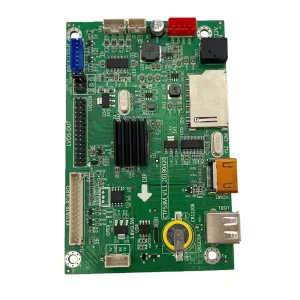
OEM Professional SMT PCBA Production for Electronics Manufacturers
Explore Engineering Specs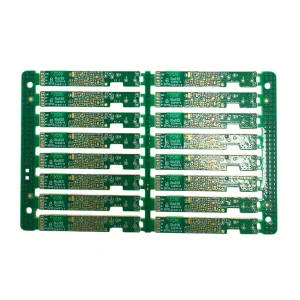
OEM Smart Bracelet PCBA OEM Manufacturing & Integration
Explore Engineering Specs
Precision Gerber & BOM Build-to-Print Manufacturing
Explore Engineering Specs
Industrial Power Supply Inverter PCBA Assembly Lines
Explore Engineering Specs
Ultra-Dense Bluetooth Acoustic Processing Modules
Explore Engineering Specs
Multi-Sensor IoT Smart Gateway Motherboards
Explore Engineering Specs
Ruggedized PLC & Motor Controller Circuit Boards
Explore Engineering Specs