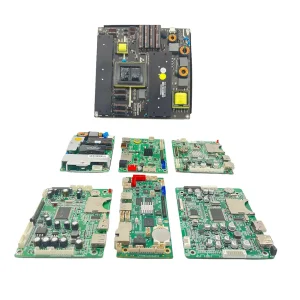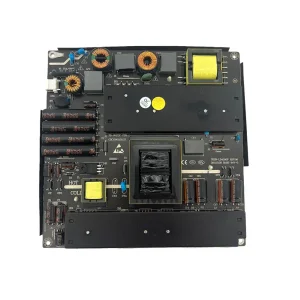
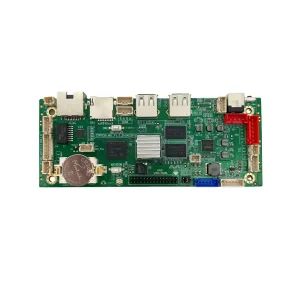
Integrated SMT & Coating Lines
Featured Industrial PCBA Solutions Engineered for Mission-Critical Reliability
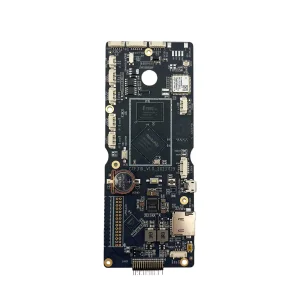
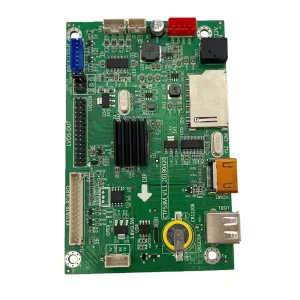
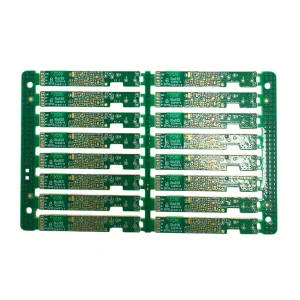
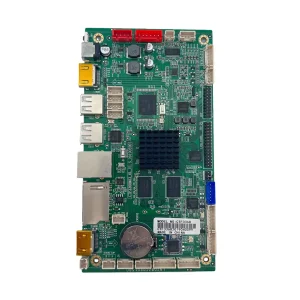
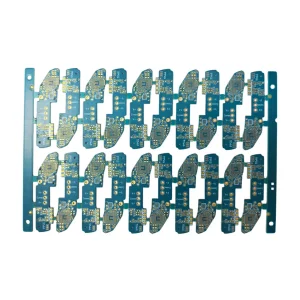
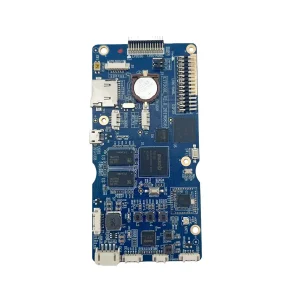
Explore our production-ready assemblies. Each custom board is built to withstand extreme thermal hysteresis, dielectric breakdown, and chemical attack via automated silicone encapsulation.

Industry White Paper · Global Analysis
State of Silicone (SR) Conformal Coating in High-Reliability PCBA Manufacturing
As modern mission-critical electronics proliferate across automotive EV powertrains, smart energy grids, marine telematics, and hyperscale outdoor compute nodes, the boundary between consumer-grade assembly and military-tier ruggedization has evaporated. Silicone conformal coating (IPC-CC-830C Type SR) represents the premier chemical barrier when thermal dynamics exceed the tolerances of conventional acrylics and polyurethanes.
Thermal Hysteresis Tolerance
Unlike standard acrylic resins (AR) that embrittle and delaminate below -40°C or liquefy above +130°C, silicone coatings maintain an elastomeric matrix functional across -65°C to +200°C continuous service, buffering mechanical solder joints against destructive CTE (Coefficient of Thermal Expansion) mismatch.
High-Voltage Dielectric Barrier
With breakdown strengths exceeding 15 kV/mm, silicone formulations suppress parasitic surface creepage and dendritic silver growth across fine-pitch SMD IC footprints (down to 0.4mm pitch) in sustained 95% condensing relative humidity environments.
Vibration & Kinetic Damping
The thick cross-linking capability of silicone (typically specified at 50μm to 210μm dry film thickness) acts as a microscopic shock absorber for heavy through-hole DIP parts, chokes, and ceramic capacitors subjected to multi-axis mechanical shock.
Material Benchmark: Silicone (SR) vs. Conventional Conformal Chemistries
| Property Parameter | Silicone Resin (SR) | Acrylic Resin (AR) | Polyurethane (UR) | Parylene (XY) |
|---|---|---|---|---|
| Operating Temperature | -65°C to +200°C | -40°C to +125°C | -40°C to +130°C | -200°C to +150°C |
| Elasticity & Stress Relief | Superior (Rubber-like) | Low (Brittle) | Moderate (Rigid) | High (Thin film) |
| Moisture / Salt Spray Resistance | Exceptional Hydrophobic | Acceptable | High | Exceptional |
| Reworkability & Solder-Through | Localized Mechanical / Stripper | Solvent Soluble (Easy) | Difficult (Thermal Strip) | Extremely Difficult (Plasma) |
| Process Cost & Scalability | High Throughput Automated | Low Cost / Fast Dry | Moderate / Slow Cure | Very High / Vacuum Chamber |
Shenzhen Industrial Ecosystem
Shenzhen Operational Agility: Transforming Gerber & BOM into Ruggedized Hardware
Operating from Shenzhen's core tech corridor gives our manufacturing facilities a structural competitive edge. By consolidating high-speed Surface Mount Technology (SMT), automated robotic selective silicone coating, and precision testing under one roof, we eliminate overseas supply lag.
// ECOSYSTEM VELOCITY
Sub-Hour Component Sourcing
Direct supply line links with certified distributors across Huaqiangbei and regional franchised agents empower our procurement desk to execute 100% genuine BOM matching, obsolete component alternatives, and custom raw PCB kitting within 24-48 hours.
// AUTOMATED PRECISION
Multi-Axis Selective Spraying
We deploy high-precision robotic dispensing platforms equipped with non-atomized film coat valves and micro-dispensing needles. This enables boundary exclusion zones around microswitches, RF shielding cans, optical sensors, and test pads without manual masking tape overhead.
// INLINE CURING & QC
UV-Traceable Curing & Automated AOI
Every silicone formulation features UV-fluorescing indicators. Following inline multi-stage infrared thermal ovens or moisture-accelerated curing chambers, 100% of panels undergo Blacklight Automated Optical Inspection (AOI) to verify zero bubble entrapment, edge feathering, or capillary voiding.
Real-World Operational Capacity
Factory Verification Metrics & Audit Compliance
Our quality governance follows strict IPC-A-610 Class 2 / Class 3 criteria with end-to-end traceability from bare substrate to final box build.
8
High-Speed SMT Placement Lines
1.2M+
Placement Points Per Day
99.2%
First-Pass Yield (FPY) Standard
100+
Export Destination Countries
Localized Application Matrix
Engineering Use Cases Demanding Silicone Conformal Protection
Standard assembly fails when ambient humidity condenses or internal power dissipation sparks thermal shock waves. Silicone conformal coating is engineered for specific localized deployment scenarios:
Automotive EV Powertrain & BMS
Battery Management Systems (BMS), high-voltage onboard DC-DC converters, and inverter gate drivers experience violent thermal spikes near cooling channels. Silicone conformal coating resists battery electrolyte vapors, brake fluid mist, and engine bay thermal cycling up to 180°C.
Offshore Wind & Solar Inverters
Coastal and marine power generation setups endure aggressive salt-laden atmospheres, cyclic marine dew, and UV-degradation. Silicone provides a chemical shield, impeding copper trace galvanic corrosion and sulfur vulcanization.
Subsea & Mining Industrial Telematics
Heavy machinery operating in deep underground extraction or submersed marine probes requires vibration dissipation across sensitive crystal oscillators, BGA microcontrollers, and high-frequency RF communication front-ends.
Future Market Trends
Evolving Sourcing Demands: What Tier-1 Global Procurement Teams Require
Procurement directors across North America, Europe, and Asia-Pacific are moving away from fragmented vendor models toward integrated turnkey manufacturing partnerships that mitigate supply risk, guarantee compliance, and deliver traceable documentation.
Low-VOC & Solvent-Free Formulations
Global environmental mandates (RoHS, REACH, California Proposition 65) drive rapid transition toward 100% solids, UV-curable, and moisture-activated silicone chemistries. Our factory utilizes green chemistries that eradicate volatile solvent emissions while reducing thermal cure cycles.
BGA Underfill & Edge Filleting Integration
With component pitch miniaturization (01005 passives and 0.35mm BGA balls), global buyers demand selective dual-head dispensing robots capable of depositing low-viscosity capillary underfill followed immediately by silicone surface encapsulation.
End-to-End MES Traceability
Enterprise procurement requires complete data custody. Our Manufacturing Execution System (MES) links component batch numbers, solder paste lot profiles, SMT feeder positions, and silicone coating dry-film thickness measurements to a laser-etched 2D DataMatrix code on each board.
Procurement Knowledge Base
Frequently Asked Technical & Sourcing Questions (FAQ)
Authoritative engineering answers regarding design rules, film thickness validation, masking protocols, and prototyping lead times.
What is the standard recommended dry film thickness for silicone coating?
Under IPC-CC-830C and IPC-A-610 standards, the nominal dry film thickness (DFT) for silicone resin (Type SR) is between 0.05mm and 0.21mm (50μm to 210μm). Thinner films may leave sharp component leads exposed, while excessively thick applications may induce mechanical cracking during rapid thermal cycling.
How do you handle keep-out zones to avoid component contamination?
We use high-precision programmable selective coating valves with edge resolution tolerances of ±0.5mm. Connectors, tactile switches, potentiometers, RF ground shields, and optical sensors are designated as keep-out zones in the CAD profile, eliminating capillary migration without expensive hand-taping.
Can silicone-coated PCBA assemblies be reworked in the field?
Yes. Although silicone does not dissolve in mild solvents like acrylic, localized rework is performed either by mechanical scraping, specialized stripping pastes, or soldering directly through soft silicone films using localized exhaust extraction, followed by manual silicone brush re-encapsulation.
What files are required to initiate an engineering quote and DFM check?
To deliver a comprehensive DFM and quotation, we require: (1) Gerber RS-274X or ODB++ files, (2) Detailed Bill of Materials (BOM) with manufacturer part numbers, (3) Pick-and-Place (centroid) coordinates, and (4) Conformal coating assembly drawings specifying exact keep-out boundaries and thickness tolerances.
How do you verify bubble-free adhesion and complete cure?
Our process integrates multi-spectrum UV fluorophores in the silicone resin. Cured assemblies pass through automated optical inspection (AOI) chambers under 365nm UV excitation. Any shadow effects, wetting pinholes, or delamination zones immediately flag the unit for engineer review.
Can overseas engineering teams inspect production lines in real time?
Yes. We host real-time high-definition video factory audits covering incoming component inspection (IQC), ESD cleanroom workshops, 3D SPI and AOI stations, selective coating lines, and final Functional Circuit Testing (FCT) benches before dispatch.
Complete Turnkey SMT Portfolio
Explore Specialized PCBA Manufacturing Capabilities
From high-speed surface-mount placement of ultra-dense microcontrollers to heavy-current through-hole wave soldering, discover how our custom production lines support global OEM brands.