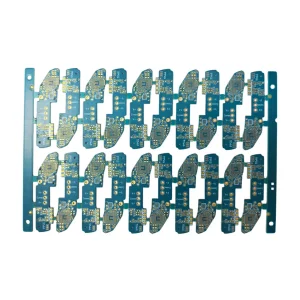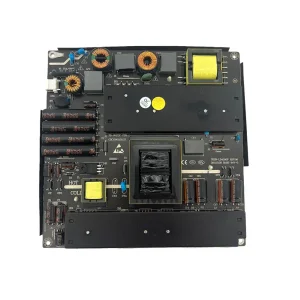
High-Quality PCBA + Enclosure Assembly Service & Factory
Precision SMT/DIP placement, component procurement, tooling, custom mechanical enclosure fabrication, and certified box-build assembly within an integrated engineering ecosystem.
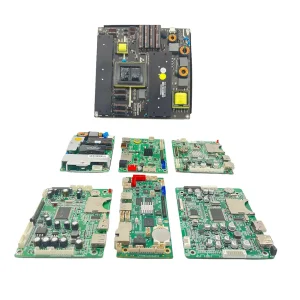
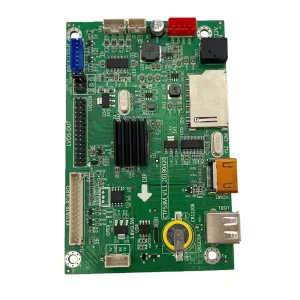
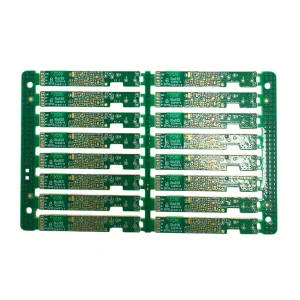
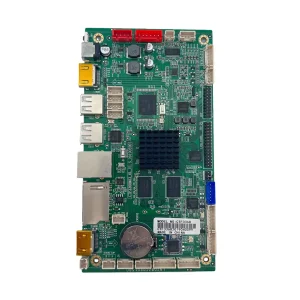
Featured Turnkey PCBA Configurations
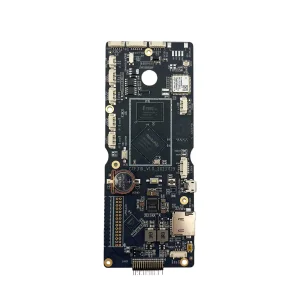
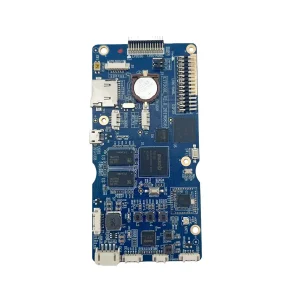
Explore production-ready circuit board assemblies built to tight tolerances, featuring rapid NPI tooling, high-precision placement, and rigorous functional verification.
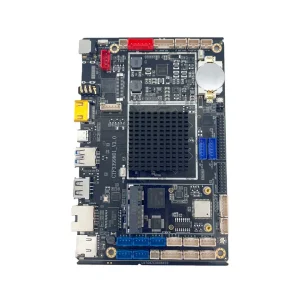
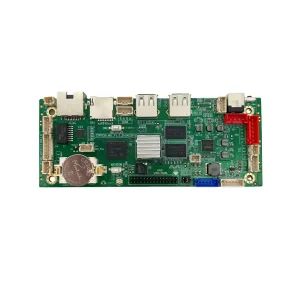
Commercial & Industrial Realities: Global PCBA + Enclosure Assembly
The electronics manufacturing landscape has shifted from isolated board stuffing to unified systems integration. OEMs are abandoning split-vendor models in favor of end-to-end PCBA + Enclosure Assembly partners.
Supply Chain Consolidation
Dividing production between PCB fabricators, assembly houses, plastic injection molders, and metal stamping shops creates compounded logistical risks, misaligned tolerances, and finger-pointing during assembly failures. Integrated box-build factories collapse these friction points into one unified quality management agreement.
- Single Point of Accountability
- Zero Trans-Shipment Lag
- Unified BOM Cost Optimization
Mechanical & Thermal Fit (DFMA)
Modern product cycles do not permit iterative post-production mechanical adjustments. Integrated PCBA and enclosure engineering utilizes Design for Manufacturing and Assembly (DFMA) to validate thermal dissipation pads, boss locations, connector overhangs, and snap-fit tolerances before tooling steel is cut.
- 3D Interference Checking
- Simulated Thermal Dissipation
- Screw Boss & Rib Structural Integrity
Turnkey Quality Assurance
A bare board passing AOI can still fail inside its final casing due to cable pinch, ESD events, heat accumulation, or screw torquing strain. Complete box-build facilities conduct final Functional Circuit Testing (FCT), environmental burn-in, and ingress testing inside the closed enclosure.
- Full Functional In-Casing Tests
- Hi-Pot & Dielectric Testing
- IP65-IP68 Ingress Validation
Engineering Paradigm Shifts: Industry Trends & Roadmap
Technical requirements for modern embedded hardware demand cross-disciplinary coordination between chemical, mechanical, and electronic process engineers.
1. Advanced Miniaturization & High-Density Interconnects (HDI)
The ubiquity of edge computing, wearable health monitors, and compact IoT devices has forced component pitch down to 0.35mm and passive sizes down to 0201 and 01005 metrics. When paired with high layer-count HDI micro-via structures, traditional casing clearance buffers vanish. Modern box-build lines demand automated optical 3D measurement machines to ensure printed assemblies align within hundredths of a millimeter of the enclosure's internal locating pins.
2. Severe Environment Packaging & Conformal Protection
Industrial automation, automotive sensor suites, and outdoor grid communications cannot rely solely on the outer enclosure shell for protection. High-reliability manufacturing integrates robotic conformal coating (acrylic, polyurethane, silicone, or parylene), automated UV curing, and potting workflows directly ahead of enclosure fastening. This creates double-barrier environmental resilience resistant to salt spray, thermal shock (-40°C to +125°C), high humidity, and violent operational vibration.
3. EMI/EMC Mitigation via Combined Casing Architecture
As switching frequencies exceed several gigahertz in 5G and industrial RF control units, electromagnetic interference (EMI) cannot be mitigated solely at the PCB trace routing stage. Full-service PCBA + Enclosure assembly factories apply internal conductive nickel/copper shielding coatings via vacuum metallization, selective metal shielding cans snapped into SMT spring clips, and integrated conductive elastomeric gaskets that compress during final robotic enclosure torqueing.
Localized Application Scenarios & Industrial Solutions
Custom-engineered board-plus-casing configurations tailored to the operational demands and regulatory certifications of key global market sectors.
| Industrial Sector | Typical PCBA Characteristics | Enclosure Material & Tooling | Critical Quality Standard |
|---|---|---|---|
| Industrial Control & Robotics | Heavy copper (3oz-6oz), mixed SMT + DIP, opto-isolated inputs, terminal blocks | Extruded aluminum (6063-T5) with DIN-rail mount brackets or CNC-milled chassis | IPC-A-610 Class 3, UL 508A, 24/7 continuous operational stability |
| Automotive & New Energy (EV) | Automotive MCUs, BMS balancing circuits, high vibration resistance, thermal vias | Die-cast aluminum (ADC12) with integrated silicone sealing channels and pressure vents | IATF 16949 compliant routing, AEC-Q qualified passives, X-Ray BGA voids <15% |
| Medical & Diagnostic Instruments | Precision analog instrumentation, multi-channel biosensing, gold-plated contacts | Medical-grade antimicrobial injection molded ABS/PC (UL94-V0 flame retardant) | ISO 13485 cleanroom assembly, biocompatibility, strict lot batch tracking |
| Outdoor IoT & Telemetry | Ultra-low power sleep states, integrated BLE/LoRa/Cellular antenna matching | UV-stabilized Polycarbonate (Makrolon) with sonic-welded or silicone O-ring seals | IP67/IP68 ingress rating, solar exposure resistance, drop shock absorption |
Aerospace & Defense
Rigid-flex multi-layer boards housed in ruggedized, nickel-plated enclosures built to sustain atmospheric decompression and severe G-force shock vectors.
Power Conversion
High-wattage SMPS assemblies integrating heat sinks, heavy magnetics, and ventilated sheet-metal enclosures engineered with isolated creepage gaps.
Consumer Smart Home
Aesthetic consumer enclosures featuring ultra-thin wall plastic injection, ultrasonic welding, laser engraving, light guide pipes, and automated final packaging.
Turnkey Lifecycle
Full-spectrum engineering engagement from prototype NPI, DFM, PCB fabrication, and procurement to tooling creation, SMT, assembly, and box-build distribution.
Manufacturing Execution Roadmap: Zero-Defect Framework
Aozite enforces a closed-loop quality verification architecture from incoming components to final encased box assembly packaging.
Phase 1: Engineering DFM & Material IQC
Every gerber package and 3D STEP assembly undergoes strict DFM/DFA scrutiny. Incoming bare boards undergo IPC-6012 validation. ICs and components undergo microscopic inspection, solderability testing, and moisture-barrier baking to prevent delamination during reflow.
Phase 2: Closed-Loop SMT & DIP Placement
Utilizing high-speed pick-and-place lines calibrated for fine-pitch BGAs and micro-passives. In-line 3D SPI (Solder Paste Inspection) ensures precise paste volume. Following 10-zone reflow soldering, 3D AOI and real-time X-Ray verify ball alignment, solder wetting, and void percentage.
Phase 3: Mechanical Fit & Box-Build Integration
PCBA boards are married to custom plastic, sheet metal, or die-cast enclosures via calibrated electric screwdrivers with recorded torque curves. Harnesses, display panels, buttons, and battery cells are seated with rigorous mechanical alignment checks.
Engineering & Procurement FAQ
Direct technical answers addressing design tolerances, tooling execution, and turnkey testing logistics.
What files are required for a complete PCBA + Enclosure quotation?
How do you prevent mechanical interference between PCBA and enclosure?
Can you manufacture both metal and plastic custom enclosures in-house?
What functional testing (FCT) methods are performed after enclosure boxing?
What quality and workmanship standards are enforced across production?
How do you handle prototype batches versus high-volume production?
Industrial PCBA & Turnkey Assemblies
Review additional precision-manufactured PCBA lines built for diverse industrial, consumer audio, and power distribution applications.