
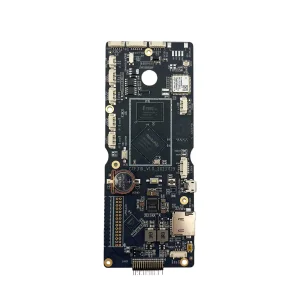
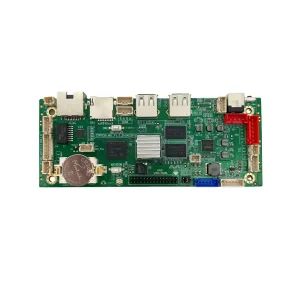
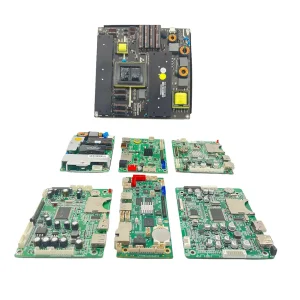
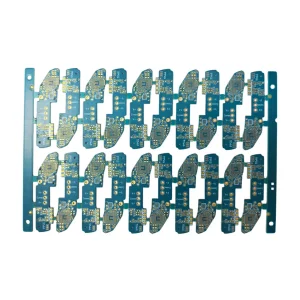
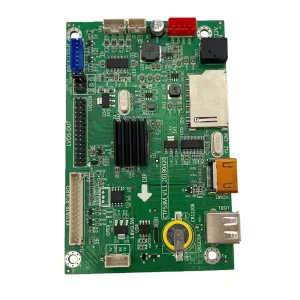
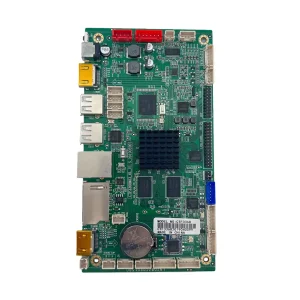
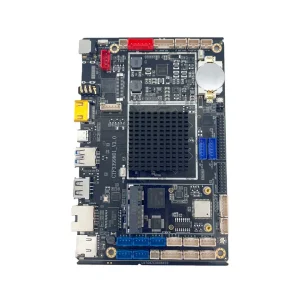
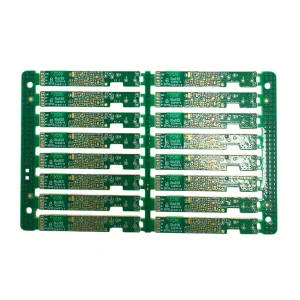
Precision SMT PCBA Assemblies Protected by MSL-Certified Processes
Directly manufactured in our advanced ESD and humidity-controlled facility. Every board lot is packaged with certified high-quality Moisture Indicator Cards and industrial-grade desiccants before global dispatch.
The Critical Role of Moisture Indicator Cards (MIC) in Microelectronics
In modern SMT electronics manufacturing and semiconductor encapsulation, entrapped ambient moisture is the silent catalyst of catastrophic package failure, micro-cracking, and the destructive "popcorn effect" during lead-free reflow.
Moisture Sensitivity Level (MSL)
Per IPC/JEDEC J-STD-020 and J-STD-033D, non-hermetic solid-state surface mount devices (SMDs) absorb atmospheric water vapor. When subjected to the rapid thermal spikes of reflow soldering (reaching 245°C–260°C), internal moisture undergoes explosive phase transitions into high-pressure steam, tearing apart die-attach paddles, gold wire bonds, and internal resin laminations.
Reversible Chemical Colorimetry
A genuine high-quality Moisture Indicator Card serves as a calibrated visual hygrometer. Impregnated with moisture-sensitive salts (traditionally cobaltous chloride, or modern eco-friendly copper/organic chelates), each spot transitions chromatically (e.g., Brown to Azure Blue, or Deep Blue to Lavender Pink) exactly when relative humidity crosses calibrated thresholds, remaining 100% reversible upon desiccation.
The Barrier Packaging Triad
An indicator card cannot operate in isolation. It forms the authoritative verification component within a closed "Dry Pack" system: comprising an aluminized Moisture Barrier Bag (MBB with WVTR < 0.005 g/m²/24hr), calibrated bentonite clay or molecular sieve desiccants (MIL-D-3464E), and the Moisture Indicator Card placed directly above the desiccant pouch for immediate unsealing inspection.
Global Enterprise Procurement Requirements for Tier-1 Manufacturing
When global electronics procurement managers audit Moisture Indicator Card manufacturers and turnkey PCBA partners, standard commodity-grade blotter paper is strictly rejected. High-reliability manufacturing lines evaluate vendors across six non-negotiable vectors.
1. Calibrated RH Threshold Precision
Cards intended for semiconductor SMT packaging must possess strict spot thresholds: typically 5%, 10%, and 60% RH (for Level 2 to Level 5a devices per J-STD-033D), or 10%, 20%, 30%, 40%, 50%, 60% for military apparatus. The chemical shift must occur within a precise tolerance of ±2.5% RH at 23°C ± 1°C without spot-edge blooming or premature fading.
2. Zero Corrosion & Sulfur-Free Substrate
Inferior indicator cards utilize pulp papers with residual acidic sulfates or volatile sulfur compounds. Under sealed packaging, these outgas, tarnishing immersion silver (ImAg), copper pads, and gold wire bonds on adjacent PCBA assemblies. Certified MIC factories utilize ultra-pure, sulfur-free, neutral-pH cellulose blotting cardstock certified under ASTM D130.
3. Cobalt Dichloride & REACH Compliance
Due to European Chemicals Agency (ECHA) SVHC declarations identifying Cobalt Dichloride (CoCl2) as a carcinogen and reproductive toxicant, global OEMs demand Cobalt-Free and Halogen-Free Moisture Indicator Cards. Leading factories deploy advanced organo-metallic complexes that meet EU RoHS (2011/65/EU) and REACH Annex XVII regulations.
4. Traceability & Batch Certificate of Analysis (CoA)
Enterprise buyers require per-lot testing documentation. Every airtight tin can of indicator cards must feature lot-specific QR codes linking to environmental chamber test logs, demonstrating colorimetric absorption and desorption curves calibrated against traceable chilled-mirror hygrometers.
5. Hermetic Can Packaging & Shelf Life
Factory packaging of the indicator cards themselves must ensure indefinite shelf life prior to opening. Tier-1 factories pack cards in seam-welded tinplate cans with desiccant pillows, sealed with vulcanized or polyurethane gasket lids, ensuring an unopened shelf life of 24–36 months in ambient warehouse environments.
6. ESD Protective & Antistatic Behavior
When inserted directly alongside ultra-sensitive MOSFETs, radar front-ends, or CMOS image sensors, the indicator card cannot generate static charges. Material surface resistivity must reside within the static dissipative range (10^6 to 10^9 ohms/sq per ANSI/ESD S541), preventing electrostatic discharge upon handling.
Macro Industry Solutions: Protecting High-Reliability Ecosystems
How leading semiconductor, automotive, aerospace, and medical manufacturing clusters leverage precision Moisture Indicator Cards and turnkey PCBA engineering to eradicate defect recurrence.
BMS & ADAS System Integrity
Automotive Electronic Control Units (ECUs), Battery Management Systems (BMS), and LiDAR sensor modules operate under severe thermal cycling (-40°C to +125°C). Any latent moisture trapped in ball-grid arrays (BGAs) during reflow leads to solder bridging or conductive anodic filament (CAF) growth. Certified 5-10-60% RH cards enforce stringent pre-assembly bake cycles before SMDs hit the high-speed placement line.
MIL-Spec Hermetic Assemblies
Mission-critical defense electronics demand adherence to MIL-I-8835A and MIL-STD-883. Multi-spot 6-spot cards (10% to 60%) monitor moisture saturation within avionics line-replaceable units (LRUs) and missile guidance packages. The guaranteed chemically inert backing prevents galvanic coupling across beryllium copper or gold-plated avionics chassis pins.
Bio-Compatible Equipment PCBA
In vitro diagnostic (IVD) consoles and implantable telemetry boards require bio-compatible, cleanroom-kitted moisture barriers. Our zero-halogen, non-toxic cobalt-free indicator cards eliminate toxic transfer risks to operator hands and sterile cleanrooms, ensuring full compliance with ISO 13485 medical device production environments.
01005 & Ultra-Fine Pitch BGA
Miniaturized wearable devices and IoT edge computing nodes feature 0.35mm pitch BGAs and 01005 passives. Micro-voiding inside bottom-terminated components is exacerbated by microscopic moisture absorption. Automated vision inspection reads MIC cards upon bag rupture to immediately quarantine lot moisture exceedances.
State-of-the-Art Factory Manufacturing & Calibration Methodology
How high-quality Moisture Indicator Card factories manufacture, impregnate, dry, and calibrate colorimetric cards to maintain microscopic chemical stability under fluctuating ambient conditions.
Stage 1: Precision Chemical Formulation
Raw chemical indicator salts are synthesized in temperature-controlled glass-lined reactors. For cobalt-free formulations, organic complexing agents and copper chelate solutions are measured with microgram precision to establish distinct thermodynamic equilibrium constants matching target relative humidities (5%, 10%, 60% RH).
Stage 2: Automated Micro-Dosing Impregnation
High-speed rotary dispensing heads inject exactly calibrated microliter droplets into circular debossed cavities on 300g/m² virgin cellulose paper. Automated pneumatic pressure maintains droplet diameter tolerances within ±0.1mm, ensuring zero bleeding or haloing across surrounding printed legends.
Stage 3: Multi-Zone Convection Desiccation
Impregnated card sheets traverse continuous nitrogen-purged drying tunnels running at 85°C to purge all volatile solvents without thermal degradation of the active indicator matrix. Moisture content of the card backing is driven below 1.5% prior to robotic punching into discrete 2x3 inch or strip configurations.
Stage 4: Spectrophotometric Chamber Calibration
Lot verification samples are transferred to programmable two-pressure humidity generators. Environmental chambers hold 5%, 10%, and 60% RH at 23°C. Spectrophotometers read the precise reflected CIE L*a*b* chromaticity values across the color change curve to guarantee distinct, unmistakable visual contrast for factory operators.
Stage 5: Hermetic Packaging Under N2 Blanket
Finished cards are mechanically counted, layered, and sealed into heavy-gauge tin cans under positive-pressure dry nitrogen atmosphere. Active desiccant packs are inserted, and double-seamed hermetic lids are mechanically rolled to prevent ambient atmospheric contact before end-user unsealing.
Stage 6: Comprehensive Batch Release & CoA
QA releases batch-specific certificates of compliance declaring zero detectable heavy metals, zero ionic contaminants, verified ESD dissipative values, and full compliance with JEDEC J-STD-033D, MIL-I-8835A, and EU REACH Regulation (EC) No 1907/2006.
Localized Global Support, Environmental Directives & Audit Compliance
Navigating international chemical bans, customs documentation, and supply chain resilience for electronic manufacturing operations across North America, Europe, and Asia-Pacific.
European ECHA & REACH Compliance
Under the EU's Registration, Evaluation, Authorisation and Restriction of Chemicals (REACH), Cobalt Dichloride (CAS No. 7646-79-9) is severely classified as an SVHC (Substance of Very High Concern). Importing electronics packages containing CoCl2 indicator cards requires burdensome hazardous chemical reporting. Our cobalt-free indicator cards exempt tier-1 electronics brands from mandatory SVHC supply chain declarations.
North American JEDEC & Defense Audits
For US and Canadian defense and aerospace contractors, conformance to IPC/JEDEC J-STD-033D and MIL-I-8835A is validated during DCMA facility audits. Our engineering documentation provides complete traceability from incoming raw chemical assays to outgoing finished goods dry-storage lots, ensuring seamless supplier qualification approval.
Regional Hub Storage & JIT Delivery
To mitigate container freight shipping delays, we support blanket purchasing agreements with forward stock storage in Shenzhen, Hong Kong, and international logistical hubs. High-volume SMT factories avoid costly production stoppages with Just-In-Time (JIT) dispatch of fresh, factory-sealed dry packaging supplies.
The Next Frontier: Smart Packaging & Automated Vision Inspection
As industry 4.0 automation and lights-out SMT factories eliminate human visual inspection, the traditional paper blotter is evolving into an intelligent, digitized moisture-tracking node.
Machine Vision (AVI) High-Contrast Dyes
Standard subtle blue-to-pink color transitions can cause ambiguity under varying factory LED illumination. Next-generation indicator chemistries yield high-delta chromatic shifts (e.g., bright yellow to deep magenta), optimized for robotic camera recognition at automated de-bagging stations with zero human error.
RFID & NFC Integrated Digital Humidity Tags
Embedded ultra-thin flexible printed circuits with capacitive polymer humidity sensors allow non-destructive RF interrogation through intact moisture barrier bags. SMT warehouse operators verify payload safety without compromising sealed MBB vacuum integrity.
AI-Driven Degradation Modeling
Integration of thermal-humidity mathematical models inside factory MES systems. Scanning the MIC status at bag opening automatically calculates the remaining floor life (Floor Life Clock) of partially exposed moisture-sensitive ICs, orchestrating automated dry cabinet replenishment.
Frequently Asked Questions: Moisture Sensitivity & Card Selection
Direct, technically rigorous answers to critical moisture barrier questions frequently audited by hardware engineering leads and global component procurement directors.
Explore Our High-Reliability PCBA Manufacturing Services
Combining complete SMT assembly lines, closed-loop 3D SPI and AOI inspection, and certified MSL-standard packaging to deliver zero-defect electronic hardware to clients across 100+ countries.