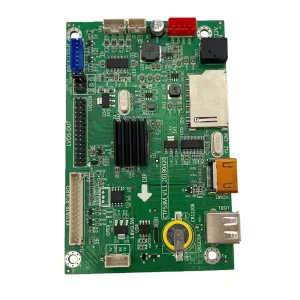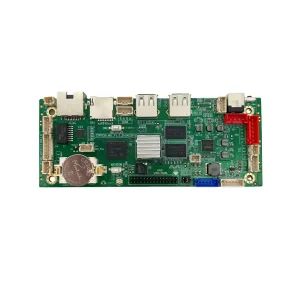
Featured PCBA Assemblies & Material Solutions
Enterprise-grade build-to-print assemblies configured with IPC Class 2/3 certified raw base laminates and component integrity.
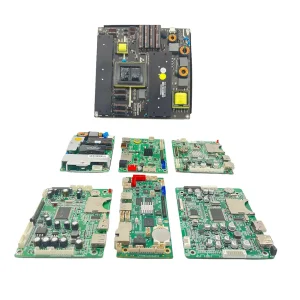
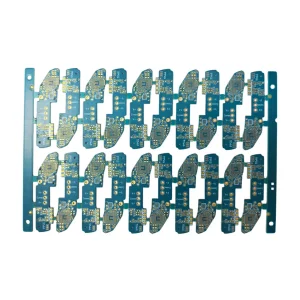
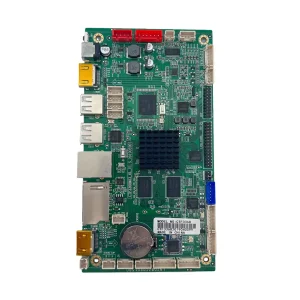
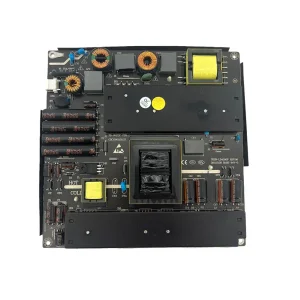
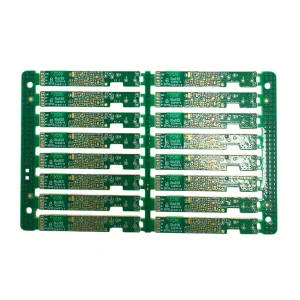
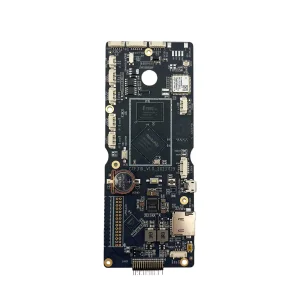
Material Selection Guide: Engineering Framework for PCBA Suppliers
In-depth dielectric, thermal, and conductive analysis for multi-layer HDI, automotive-grade electronics, and high-frequency communications.
Thermal Transition Dynamics (Tg & Td)
Specifying materials with a Glass Transition Temperature (Tg) ≥ 170°C prevents resin softening during lead-free SAC305 wave and reflow soldering cycles. Decomposition temperatures (Td) must exceed 340°C to ensure zero delamination under repeated thermal stress.
- Standard Tg (130-140°C) for basic consumer IoT devices
- Mid Tg (150-160°C) for continuous smart office infrastructure
- High Tg (>170°C) for automotive powertrain and industrial PLCs
Dielectric Constants (Dk & Df) Control
For high-speed digital boards and 5G wireless modules, controlling Dielectric Constant (Dk ≤ 3.6) and Low Loss Factor (Df ≤ 0.002) mitigates signal attenuation and ensures matched impedance across microstrip routing channels.
- PTFE & Ceramic hydrocarbon hybrids for sub-6GHz and radar
- Low-loss FR-4 variants (Shengyi S1000-2M, ITEQ IT-180A)
- Tight copper peel strength integrity to avoid via cracking
CTE Z-Axis Stability & Reliability
Thermal expansion mismatches cause microvia separation in multi-layer stackups. High-grade laminate selections maintain Z-Axis CTE ≤ 2.5% below Tg, ensuring via barrel plating survivability across thousands of operational shock cycles.
- Reduced z-axis strain across blind, buried, and staggered microvias
- Immunity against conductive anodic filament (CAF) migration
- Compatible with Halogen-Free UL94V-0 environmental mandates
Comprehensive PCB Substrate Parametric Benchmark
Comparative technical data designed to assist hardware architects and procurement managers in picking optimal laminates.
| Material Class | Typical Grades | Tg / Td (°C) | Dk @ 1GHz | Df @ 1GHz | Primary Industrial Use Cases |
|---|---|---|---|---|---|
| Standard FR-4 | FR4 S1141 / KB-6160 | 135 / 315 | 4.5 - 4.7 | 0.018 - 0.022 | Consumer Electronics & Toys |
| High-Tg Lead-Free FR-4 | Shengyi S1000-2M / IT-180A | 175 / 345 | 4.2 - 4.4 | 0.014 - 0.016 | Industrial Controls & Medical Boards |
| Halogen-Free Eco FR-4 | EM-828 / S1155G | 150 / 350 | 4.1 - 4.3 | 0.012 - 0.014 | Green Telecommunications & Wearables |
| High Frequency (Hydrocarbon) | Rogers 4350B / Taconic | >280 / 390 | 3.48 ± 0.05 | 0.0037 | 5G Antennas, Radar, IoT Gateways |
| Polyimide Flexible (PI) | DuPont Pyralux / Shengyi Flex | >250 / 380 | 3.2 - 3.4 | 0.0025 | Smart Wearables, Foldables, Medical Probes |
| Metal Core Substrate (MCPCB) | Bergquist / Aluminum 5052 | 130 - 150 | N/A (Dielectric) | N/A | High-Power LED Drivers & EV BMS |
Localized Application Scenarios & Sector Implementations
How precise material selection drives operational reliability across demanding geographic and functional environments.
Automotive & New Energy Vehicles
Under-the-hood microcontrollers and high-voltage Battery Management Systems (BMS) endure constant vibration, wide operating bands (-40°C to +125°C), and corrosive atmospheric exposure.
Engineering Formulation: IPC-6012DA Automotive Addendum Class 3 compliance, High-CTI (≥600V) laminate resin systems to prevent tracking, paired with Polyurethane conformal coating.
Medical Diagnostic & Health Monitoring
In-vitro diagnostic systems, portable ultrasound rigs, and continuous health monitors demand signal stability, electromagnetic shielding, and zero ionic contamination.
Engineering Formulation: Halogen-free base substrates featuring low outgassing characteristics, immersion gold (ENIG) surface finishes to ensure planar contact for fine-pitch BGA sensors.
Industrial Automation & Edge Gateways
Robotic controllers, programmable logic controllers (PLCs), and edge AI processors run 24/7 in extreme environments vulnerable to electrical surges and thermal shocks.
Engineering Formulation: Heavy copper (2oz - 4oz inner/outer) FR-4 stackups with aluminum thermal backplanes to dissipate heat away from critical SMT MOSFET switches and drivers.
China Factory Supply Chain Resilience & Shenzhen Efficiency
Shenzhen's manufacturing ecosystem provides end-to-end integration across materials, passive pass-throughs, and volume delivery.
1-Hour Ecosystem Radius
Our Shenzhen manufacturing hub sits in direct proximity to core laminate producers (Shengyi, Kingboard) and Tier-1 authorized electronics distributors, slashing standard material kitting timelines from weeks to under 48 hours.
Adaptive BOM Engineering
Deep engineering insight across domestic alternate active ICs and passive components guarantees uninterrupted production during silicon supply crunches, preserving form, fit, and operational compliance.
Rapid SMT Line Scalability
Equipped with 8 high-speed surface-mount lines capable of delivering over 1.2 million points daily, transitioning smoothly from rapid single-day prototyping batches to tens of thousands of finished production boards.
Closed-Loop Verification
Incoming raw material inspections (IQC), 3D Solder Paste Inspection (SPI), multi-axis AOI, inline AXI X-Ray for ball-grid arrays, and specialized Functional Circuit Testing (FCT) enforce a ≥98.5% first-pass yield rate.
Technology Roadmap: Next-Gen Materials & Assembly Horizons
Anticipating the demands of miniaturization, higher switching speeds, and severe thermodynamic constraints.
Ultra-Dense Any-Layer HDI & Substrate-Like PCB
As wearable form factors shrink, Substrate-Like PCBs (SLP) utilizing modified semi-additive processes (mSAP) allow trace lines and spaces below 30/30μm, paired with micro-filled vias for ultra-compact IoT hardware.
GaN & SiC Wide-Bandgap Thermal Substrates
High-efficiency power converters using Gallium Nitride (GaN) demand ultra-low thermal resistance. We are integrating direct-bonded copper (DBC) ceramic boards and silicon nitride (Si3N4) substrates for unmatched dissipation.
Green Circularity & Bio-Based Resins
Transitioning toward recyclable electronics, our testing facility is evaluating water-soluble bio-composite laminates that streamline component de-soldering at end-of-life while maintaining IPC-A-610 Class 2 compliance.
Localized Support, Traceability & International Compliance
Removing cross-border procurement risk via multi-standard audit preparedness, rigorous material traceability, and regional customs engineering.
RoHS, REACH & Conflict Mineral Assurances
Every batch of raw laminates, solder alloy (SAC305 lead-free), underfills, and passives ships with up-to-date third-party SGS chemical analysis certificates, satisfying European RoHS 2011/65/EU and REACH (EC 1907/2006) standards.
Complete Lot-Level Component Traceability
Every PCBA panel is laser-engraved with an individual 2D DataMatrix code tracking reel lot numbers, reflow thermal profiles, SMT feeder stations, operator IDs, and post-assembly functional test parameters for full audit confidence.
Global Logistics & Engineering Response
Our dedicated bilingual project engineering team provides 24-hour rapid DFM feedback. Shipments are packed in customized ESD-vacuum sealed enclosures with built-in desiccant bags and humidity indicator cards (HIC) for worldwide distribution.
Technical & Procurement FAQ
In-depth responses from our SMT manufacturing directors on material choices, quality control, and factory qualification.
What core files are required for a comprehensive PCBA quotation and DFM material review?
When should an engineer specify High-Tg FR-4 instead of standard FR-4 substrates?
How does Aozite maintain component authenticity and prevent counterfeit parts?
Can our engineering team audit your Shenzhen facility before confirming a volume run?
Verified Production Capabilities & PCBA Modules
Explore our active turnkey product categories, manufactured with precise thermal profiling and verified functional integrity.