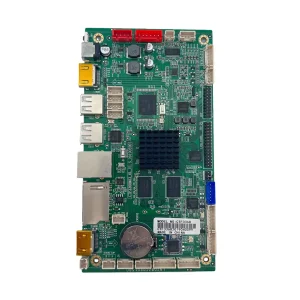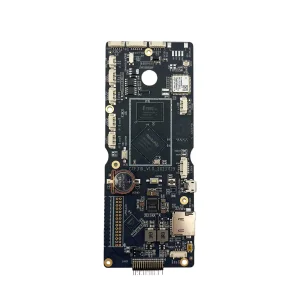
Qualified Assembly Lines & IPC-Compliant Production
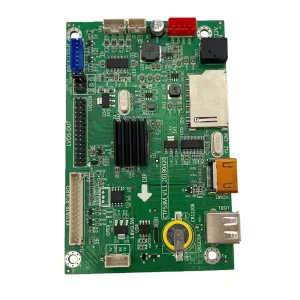
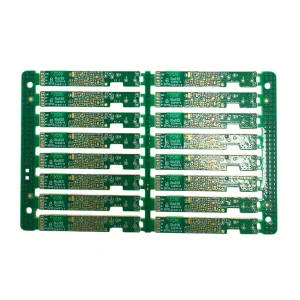
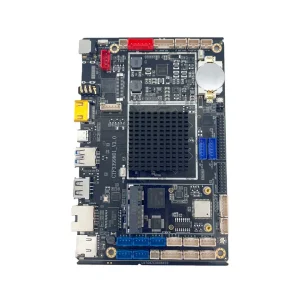
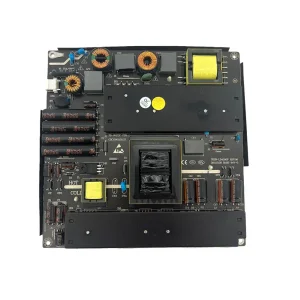
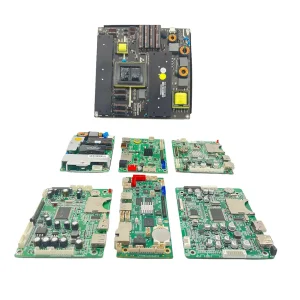
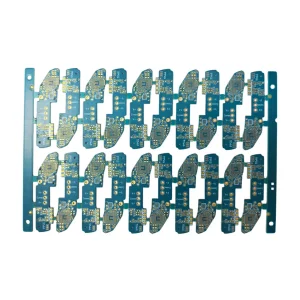
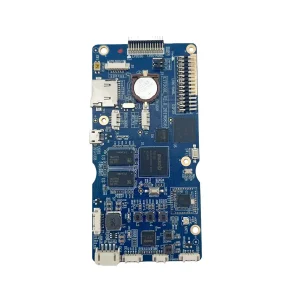
Explore our core turnkey SMT assemblies engineered on IPC-4101 certified copper-clad laminates, designed for mission-critical IoT, power, and smart electronics applications.
IPC-4101 Specification Standard: The Baseline of PCB Structural Integrity
The IPC-4101 specification standard ("Specification for Base Materials for Rigid and Multilayer Printed Boards") establishes the global thermodynamic, chemical, and electrical criteria for copper-clad laminates (CCL) and prepregs.
Thermal Thermodynamics (Tg, Td & T288)
IPC-4101 specifies Glass Transition Temperature (Tg), Decomposition Temperature (Td), and Time to Delamination (T260/T288). Selecting slash sheets like IPC-4101/126 (High Tg ≥ 170°C, phenolic cured) prevents micro-via cracks and z-axis rupture during multiple lead-free reflow cycles.
- Tg Range: Standard (130–140°C), Mid (150°C), High (≥170°C)
- Td (Decomposition): ≥340°C for RoHS SAC305 compliance
- Thermal expansion (CTE-z): Controlled to ≤3.5% (50–260°C)
Dielectric Properties & Signal Integrity
For high-frequency multi-gigabit routing, IPC-4101 classifies laminates by Dielectric Constant (Dk) and Dissipation Factor (Df). Managing resin-to-glass ratios and low-loss hydrocarbon/PTFE systems eliminates skin-effect attenuation and impedance skew.
- Dk stability from 1 MHz to 10 GHz (≤3.8 for RF)
- Df loss tangent control down to 0.002 for radar/5G
- CAF (Conductive Anodic Filament) resistance >1000 hours
Mechanical Adhesion & Chemical Robustness
Copper peel strength, moisture absorption rates (<0.15%), and flammability ratings (UL94 V-0) protect circuit architectures in corrosive, humid, or high-vibration automotive and industrial settings.
- Copper foil peel strength ≥1.05 N/mm after thermal stress
- Halogen-free chemistries: Br <900ppm, Cl <900ppm
- Solder float survival at 288°C >100 seconds
The Strategic Edge of Chinese IPC-4101 Base Material Factories
Shenzhen and the Pearl River Delta form the world's most concentrated electronics industrial cluster, integrating base copper foil synthesis, resin formulating, CCL lamination, and SMT assembly under a single metropolitan umbrella.
Tier-1 CCL Supply Access
Immediate upstream proximity to world-class laminate manufacturers (Shengyi Technology/SY, Kingboard/KB, Nanya) guarantees verified IPC-4101 slash sheet availability without long transoceanic lead times.
Ultra-Rapid Turnaround
Standard and specialized laminates (FR4-06, /24, /121, /126) are routed from local distribution warehouses directly to etching lines within 4 to 8 hours, facilitating fast-turn prototype fabrication.
Comprehensive Cost Optimization
Vertical raw material integration removes inter-country customs overhead, freight tariffs, and warehousing markups, delivering premium laminates at scale with 20% to 35% lower landed costs.
Rigid Quality Compliance
Shenzhen manufacturing ecosystems enforce closed-loop material validation. X-ray fluorescence, IPC thermal profiling, and ionic contamination tests are documented for ISO9001 and IATF 16949 audit compliance.
IPC-4101 Slash Sheet Specification Benchmark
Compare standard and high-performance base material classifications utilized in our high-density SMT and PCB manufacturing facilities.
| IPC-4101 Slash Sheet | Resin Chem / Reinforcement | Glass Transition (Tg) | Decomp Temp (Td) | Flame Retardant | Target SMT Applications |
|---|---|---|---|---|---|
| IPC-4101 /21 | Dicy-cured Epoxy / Woven E-glass | 130°C – 140°C | ≥ 310°C | Brominated (UL94 V-0) | Standard Consumer SMT |
| IPC-4101 /24 | Modified Epoxy / Woven E-glass | 150°C – 170°C | ≥ 330°C | Brominated | IoT & Industrial Controllers |
| IPC-4101 /126 | Phenolic Novolac Epoxy / E-glass | ≥ 170°C | ≥ 340°C | Halogenated, Lead-Free Compatible | Automotive, BGA, Multilayer |
| IPC-4101 /129 | Phenolic Novolac / Low-loss glass | ≥ 170°C | ≥ 340°C | Green Halogen-Free (<900ppm) | Medical Devices & Telecom |
| IPC-4101 /131 | High Performance Epoxy / Filler | ≥ 200°C | ≥ 360°C | Halogen-Free / Flame Retardant | High-Frequency 5G & Radar |
Emerging Paradigms in Base Material & PCBA Assembly
Next-generation electronic hardware requires base material engineering capable of operating at elevated thermal envelopes, higher frequency bands, and stricter environmental criteria.
Low-Loss Resins for High-Speed Digital
With PCIe 5.0/6.0 and 112G PAM4 optical interconnects, laminate design has evolved beyond standard FR-4 towards ultra-low loss materials featuring polyphenylene ether (PPE/PPO) blends and smooth copper foil profiles (VLP/HVLP) to limit signal attenuation.
Halogen-Free Eco-Compliance
Global environmental mandates (RoHS, REACH, WEEE) require materials meeting IPC-4101/99 and /130 standards, where bromine and chlorine are replaced by phosphorus and nitrogen flame retardants that generate low smoke toxicity during end-of-life thermal recycling.
Thermal Dispersion & Heavy Copper Hybridization
The proliferation of GaN and SiC power modules in EV inverters and high-density DC-DC converters necessitates thick copper CCLs (up to 6oz) paired with thermally conductive ceramic prepregs to dissipate heat through structural laminate planes.
Enterprise Solutions Across Industrial Verticals
From micro-wearables to 800V automotive inverters, our turnkey PCBA capabilities marry the right IPC-4101 base material with optimized surface-mount parameters.
Automotive & New Energy Vehicles
Under-the-hood engine compartments and high-voltage BMS systems encounter thermal oscillations from -40°C to +150°C. We deploy IPC-4101/126 laminates coupled with automated 3D X-Ray void inspection for void-free solder joints under automotive vibration stress.
- Battery Management Systems (BMS)
- On-Board Chargers (OBC) & DC-DC Converters
- ADAS Radar & Sensor Fusion Control
Medical Diagnostics & Patient Monitoring
Diagnostic imaging equipment and wearable biometric sensors demand high dielectric stability and zero ionic leakage. We use IPC-4101/129 halogen-free substrates with conformal coating processes to avoid conductive dendritic growth.
- In-Vitro Diagnostics (IVD) Systems
- Multiparameter Bedside Monitors
- Portable Ultrasound Front-End Boards
Industrial Automation & Edge Gateways
Operating continuously in harsh factory environments with electromagnetic interference and dust, our PLC and industrial PCBA builds use high-Tg laminates with moisture absorption <0.12% to maintain 24/7 reliability.
- Programmable Logic Controllers (PLCs)
- Servo Drive Power Stages (SMT + DIP)
- Industrial IoT Gateways & SCADA Transceivers
Global Enterprise Procurement Requirements
International procurement executives and hardware directors must balance quality, supply continuity, and compliance. Our Shenzhen facility addresses core overseas sourcing risks directly.
Transparent Supply Traceability
Global procurement teams require proof of genuine materials. Every laminate sheet utilized in our facility is backed by Certificates of Analysis (COA) specifying resin content, glass fabric style, and lot numbers linked to factory ERP tracking systems.
DFM & Stencil Thermal Balancing
Prior to cutting solder stencils or running SMT placement, senior process engineers run DFM checks on Gerber copper balance, panelization shear margins, and reflow profile simulations to prevent post-soldering board warpage.
Flexible Turnkey Delivery Models
Overseas clients can choose full turnkey procurement (BOM + PCB + assembly + testing), partial consignment of critical custom ICs, or pure surface-mount assembly, accommodating diverse intellectual property and supply chain preferences.
IPC-4101 Base Material & PCBA Assembly FAQ
Answers to common questions regarding laminate slash sheets, thermal handling, fabrication controls, and overseas manufacturing audits.
Why is IPC-4101/126 preferred over IPC-4101/21 in lead-free SMT assembly?
Lead-free soldering processes using SAC305 reach peak temperatures of 245°C to 260°C. Standard IPC-4101/21 laminates possess a Tg of 130–140°C and experience significant z-axis thermal expansion above Tg, which risks barrel cracks in plated through-holes (PTH). IPC-4101/126 features a Tg ≥ 170°C, a Td ≥ 340°C, and a phenolic-cured resin network that maintains structural stability through repeated reflow runs.
How does our Shenzhen factory verify incoming laminate authenticity?
Every batch of raw copper-clad laminate from suppliers like Shengyi or Kingboard undergoes incoming quality control (IQC). We audit the physical thickness, verify copper foil adhesion via peel strength testing, perform solder float tests at 288°C, and cross-examine manufacturer material certificates against IPC-4101 requirements.
What is the impact of moisture absorption on high-Tg multilayer boards?
Trapped moisture inside epoxy laminates vaporizes rapidly during reflow temperatures, causing internal delamination, blisters, or via barrel rupture. Our factory maintains strict humidity-controlled environments, bakes bare boards per IPC-1601 guidelines when required, and utilizes moisture barrier vacuum packaging with desiccant indicators for export shipping.
Can customers specify proprietary high-frequency laminates like Rogers or Taconic?
Yes. In addition to standard FR-4 sheets, our assembly facility regularly processes hybrid stackups combining Rogers 4350B/4003C or PTFE substrates with standard high-Tg FR-4 cores. Our engineering team calculates impedance tolerances and adjusts SMT reflow profiles to match mixed-material thermal dynamics.
What quality workmanship standards are maintained across production lines?
Our production floor operates under IPC-A-610 Class 2 standards by default, with Class 3 inspection protocols available for medical, aerospace, and automotive clients. SMT lines incorporate inline 3D SPI (Solder Paste Inspection), multi-angle AOI, and high-resolution transmission X-ray for BGA and QFN void detection below 15%.
How does base material selection affect PCB panel warpage during assembly?
Asymmetrical copper distribution and mismatched prepreg cure stages cause thermal warpage during wave soldering and reflow. Our DFM team evaluates stackup balance and ensures laminate CTE matching, keeping finished board bow and twist well under 0.75% (or 0.5% for fine-pitch BGA arrays) in compliance with IPC-TM-650.
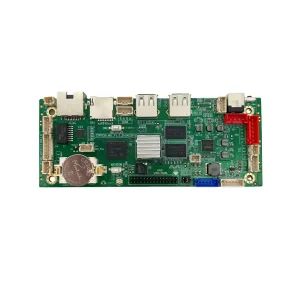
Integrated PCBA & SMT Assembly Solutions
Review additional production-ready electronic modules manufactured with qualified base materials, professional automated surface mounting, and comprehensive functional circuit testing.