Featured Immersion Tin Assembly & Turnkey PCBA Capabilities
Engineered directly from Gerber and BOM files to tested hardware, backed by automated high-speed SMT placement lines and precision chemical plating lines.
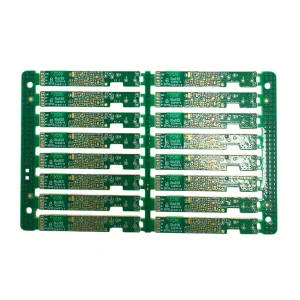
The Metallurgy and Chemical Deposition of Immersion Tin (ISn)
Immersion Tin is an electroless chemical displacement finish where copper atoms on the PCB trace undergo a redox displacement reaction with tin ions in an acidic bath, creating a planar, dense metallic tin layer (typically 0.8 to 1.2 μm).
Planar Coplanarity for Fine-Pitch
Unlike Hot Air Solder Leveling (HASL) which leaves irregular meniscus profiles on fine-pitch pads, immersion tin delivers exceptional surface flat coplanarity. This allows consistent solder paste deposit volumes during 3D SPI and zero component bridging for 0201 passives, 0.4mm pitch BGAs, and QFN ground pads.
- Pad coplanarity variation < 0.1 μm
- 100% flat surface for high-yield paste release
- Eliminates BGA tilting and solder voids
Intermetallic Compound (IMC) Kinetics
The natural thermodynamic formation of copper-tin intermetallic compounds (Cu6Sn5 η-phase and Cu3Sn ε-phase) requires tight process control. Our closed-loop chemical baths introduce organic grain refiners that minimize spontaneous tin whisker formation and delay IMC overgrowth to preserve pristine solderability.
- IPC-4554 compliant thickness control (0.8–1.2 μm)
- Anti-whisker chemistry dopants integrated
- Maintains solderability after 3x reflow passes
Press-Fit Pin Insertion Reliability
Immersion Tin is universally recognized as the premier interface for compliant press-fit pin connections (such as automotive backplanes and industrial power distribution). The ductile tin coating acts as a solid-state lubricant, eliminating barrel micro-cracks and hole wall copper stripping.
- Predictable insertion forces & low friction
- Gas-tight cold-welded contact boundary
- Zero brittle fracture risks seen in electroless nickel
Immersion Tin vs. ENIG vs. OSP vs. Lead-Free HASL
Evaluating electrical, chemical, and physical behaviors allows engineering teams to balance unit costs against mechanical coplanarity and RF insertion loss.
| Finish Parameter | Immersion Tin (ISn) | ENIG (Electroless Ni / Immersion Au) | Lead-Free HASL | OSP (Organic Solderability Preservative) |
|---|---|---|---|---|
| Surface Coplanarity | Flat (< 0.1 μm) | Flat (< 0.05 μm) | Uneven / Dome Meniscus | Flat |
| Press-Fit Pin Compatibility | Optimal (Self-Lubricating) | Fair (High friction, nickel cracking) | Poor (Uneven hole diameters) | Poor (High insertion force) |
| High Frequency / RF Skin Loss | Excellent (Low Magnetic Loss) | Moderate (Nickel layer exhibits skin-effect) | Fair | Excellent |
| Black Pad Risk | Zero (No Nickel Used) | Potential (Hyper-galvanic attack) | None | None |
| Shelf Life & Storage | 12 Months (Vacuum sealed + Desiccant) | 12–24 Months | 12–24 Months | 6–9 Months |
| Relative Cost Factor | Moderate-Economical | Premium (Due to Gold Content) | Low | Low |
China Factory Supply Chain Advantages in Shenzhen
Operating from Shenzhen—the core of global electronics manufacturing—enables our clients to compress NRE iterations from weeks to days with end-to-end component traceability.
Same-Day Chemical & Copper Sourcing
Our proximity to primary copper laminate vendors (Shengyi, ITEQ, Rogers) and specialty chemical suppliers allows continuous line replenishments with tight bath chemistry stability (Sn2+, free acid, and thiourea balances monitored by auto-titration every 2 hours).
Turnkey Component Kitting
Through established partnerships with certified franchised distributors (Arrow, Avnet, DigiKey China, Mouser) and original component manufacturers, we ensure 100% authentic active and passive components with CoCs and complete lot traceability numbers.
High-Capacity Scaling (1.2M+ Pts/Day)
With 8 automated SMT lines equipped with Yamaha and Panasonic high-speed pick-and-place equipment, 10-zone reflow ovens under nitrogen blanket, and inline 3D AOI/SPI, we smoothly transition your project from 5-piece prototypes to 100,000+ unit mass production batches.
Fulfilling Global Enterprise Sourcing & Compliance Demands
Cross-border procurement teams from North America, Europe, and Asia-Pacific require stringent regulatory frameworks, transparent engineering documentation, and robust packaging to mitigate maritime transit degradation.
Strict Regulatory Certification
All immersion tin formulations and assembled PCBA boards comply with RoHS 3 (EU 2015/863), REACH SVHC, and conflict minerals reporting requirements. Complete material declarations, UL 94V-0 flammability certificates, and mill test reports are delivered with every manufacturing batch.
Vacuum Hermetic Barrier Packaging
Tin finishes are sensitive to atmospheric moisture and atmospheric sulfur. We utilize military-grade ESD moisture barrier bags (MBB), industrial desiccants, and calibrated humidity indicator cards (HIC) with vacuum heat-sealing to guarantee 12 months of uncompromised solderability upon overseas arrival.
Bilingual DFM & Time-Zone Support
Dedicated English-speaking process engineers manage real-time DFM/DFA design rule checks. From pad geometry adjustments and solder mask clearance checks to alternate component selections, our response loop operates continuously across US and European business hours.
Mission-Critical Applications & Industry Trends
Immersion Tin has evolved from a simple lead-free alternative into a specialized finish engineered for high-frequency signal integrity, power electronics, and automotive environments.
Automotive ECUs & BMS Controllers
Automotive body control modules, electric vehicle Battery Management Systems (BMS), and inverter power distribution units rely heavily on compliant press-fit connectors. Immersion Tin prevents hole wall micro-cracking and guarantees structural contact resistance under severe mechanical vibrations.
5G, Telecom & High-Frequency Radar
Unlike ENIG where the ferromagnetic nickel underlayer causes substantial electromagnetic signal attenuation at frequencies above 10 GHz, immersion tin deposits pure diamagnetic tin directly over copper. This makes ISn the finish of choice for 24GHz/77GHz automotive radars and millimeter-wave 5G repeaters.
Industrial Automation & Solar Inverters
Industrial PLCs, motor servo drives, and solar string inverters combine heavy copper layers (2oz–6oz) with high-density SMT logic circuits. Immersion tin facilitates stable soldering of high-thermal-mass copper planes while preserving pad flatness for fine-pitch microcontrollers.
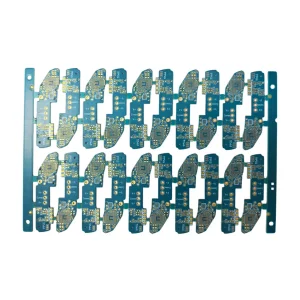
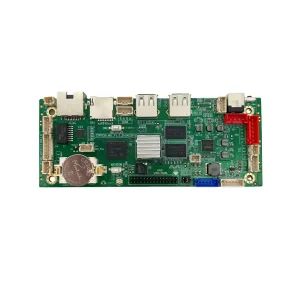
Specialized Immersion Tin PCB Assemblies & Box Builds
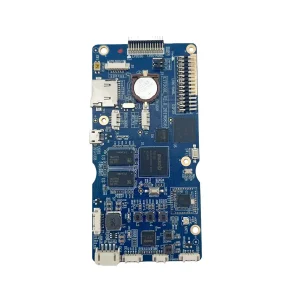
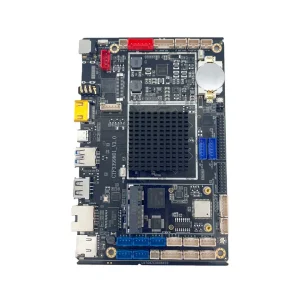
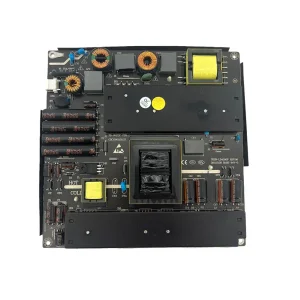
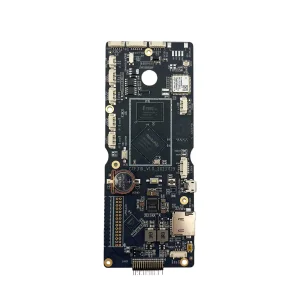
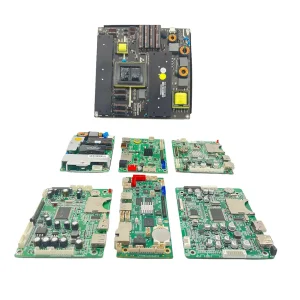
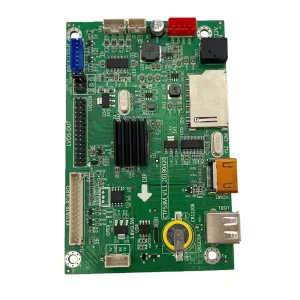
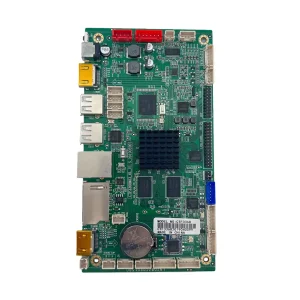
Our Shenzhen facility delivers complete end-to-end box build manufacturing, from bare PCB immersion plating to SMT placement, automated inspection, and functional verification.
Frequently Asked Questions: Immersion Tin PCB Finishing
Clear, authoritative technical answers addressing solderability shelf-life, whisker mitigation, chemical thickness control, and factory audit protocols.
What is the standard immersion tin thickness, and how is it verified?
According to IPC-4554 standards, the minimum recommended immersion tin thickness is 0.8 μm (32 μin), with an optimum production range of 0.9 to 1.2 μm. In our factory, thickness is non-destructively verified across test coupons using calibrated X-Ray Fluorescence (XRF) spectrometry at multiple points per panel.
How does your factory mitigate tin whisker growth risks?
Tin whiskers stem from compressive mechanical stress inside the tin layer caused by irregular copper diffusion. We employ modern organic grain-refining additives in our immersion baths that establish uniform equiaxed grain structures and maintain tightly controlled thickness (> 0.8 μm) to release compressive internal stresses.
What storage protocols ensure a 12-month shelf life for immersion tin PCBs?
Raw immersion tin boards must be stored in vacuum-sealed moisture barrier bags containing active desiccants and humidity indicator cards (HIC). Temperature should remain between 18°C–25°C with relative humidity < 50%. Once opened, assembly should be completed within 48 hours to prevent atmospheric oxidation.
Can immersion tin survive multiple reflow cycles during double-sided SMT?
Yes. When processed within the 0.9–1.2 μm window, immersion tin readily withstands up to 3 reflow profiles under nitrogen or air atmosphere. During the initial reflow, a portion of the tin converts into a protective Cu6Sn5 intermetallic layer while leaving sufficient free unreacted tin on top to provide robust solder wetting during secondary side reflow.
What files and data are required to receive a full turnkey quote?
Please submit RS-274X or ODB++ Gerber files including copper layers, solder mask, and drill tables, an Excel BOM specifying manufacturer part numbers and component designators, the centroid pick-and-place coordinate file, and assembly drawings indicating special immersion finish notes and testing specifications.
Do you support overseas third-party factory quality audits?
Yes. International clients are welcome to perform on-site technical audits at our Shenzhen facility or conduct live interactive video audits. We provide full visibility into chemical analysis logs, automated optical inspection records, X-ray solder joint checks, ESD containment logs, and IPC-A-610 Class 2/3 quality systems.