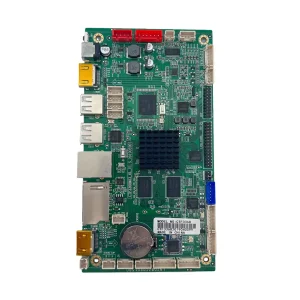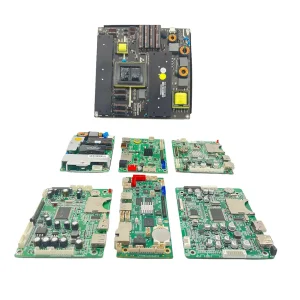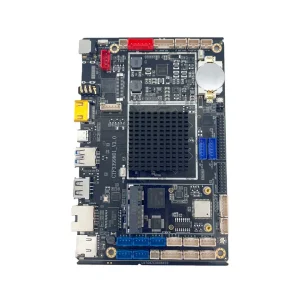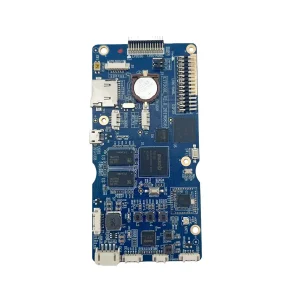
Precision PCBA Assemblies & Specialized Solutions
Engineered for high-reliability, long lifecycle endurance, and turnkey integration across consumer, commercial, and automotive ecosystems.
The Paradigm Shift in Automotive PCBA Manufacturing
From distributed micro-ECUs to centralized high-performance computing (HPC) zone controllers: navigating thermal stress, signal integrity, and automotive safety integrity levels (ASIL).
Zonal Architecture Transition
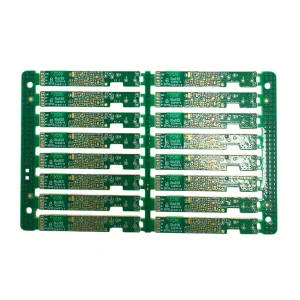
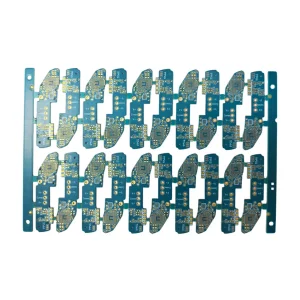
Modern electric vehicles are retiring decentralized controllers in favor of cross-domain body and cockpit controllers. This requires high-layer-count HDI boards (12 to 24 layers) capable of managing mixed-voltage signaling without crosstalk.
- Any-layer microvia laser drilling
- Differential pair impedance matching ±5%
- Ultra-dense 0.35mm pitch BGA placement
Thermal Dynamics in 800V SiC/GaN
Next-gen powertrains operating at 800V architectures demand revolutionary substrate thermal dissipation. Heavy-copper inlays and direct bonded copper (DBC) prevent thermal runaway in onboard chargers (OBC) and inverters.
- Heavy copper up to 6oz on inner/outer layers
- Ceramic & insulated metal substrate (IMS)
- Vacuum reflow soldering eliminating voids
Harsh Environment Survivability
Automotive electronics operate across extreme thermal fluctuations (-40°C to +150°C), continuous physical shock, and chemical exposure. Assembly protocols mandate IPC Class 3 and rigorous conformal coating barriers.
- Automated selective silicone/polyurethane coating
- Thermal cycling stress screening (-40°C to 125°C)
- High-potency anti-vibration staking & underfill
Global Enterprise Sourcing Architecture
Addressing the top operational bottlenecks faced by global automotive Tier-1 procurement leaders: allocation risk, obsolescence, and full traceability.
Lifecycle & PCN Governance
Proactive Product Change Notification (PCN) monitoring ensuring components meet a 10-15 year lifecycle window with zero unauthorized alternate part substitution.
AEC-Q Qualification Sourcing
Strict tier-level procurement of AEC-Q100 (ICs), AEC-Q101 (Discretes), and AEC-Q200 (Passives) directly via authorized franchised distributors with unbroken custody.
End-to-End Lot Traceability
Every individual circuit board is etched with a laser 2D DataMatrix code, binding reel lot numbers, reflow profiles, operator IDs, and 3D SPI/AOI scans into cloud MES.
Buffer Inventory & Hedging
Strategic safety stock agreements and rolling consignment storage mitigate geopolitical supply shocks and microchip lead-time volatility for sustained continuity.
Macro-Industry PCBA Engineering Solutions
Comprehensive manufacturing frameworks engineered to solve application-specific electrical, mechanical, and thermal challenges.
Battery Management Systems (BMS)
High-voltage battery assemblies mandate high-precision cell voltage monitoring down to millivolt thresholds with multi-channel galvanic isolation.
- Creepage & clearance spacing compliance (IEC 60664-1)
- High-voltage isolation testing up to 5kV DC
- Real-time CAN FD & Automotive Ethernet verification
ADAS LiDAR, Radar & Vision Systems
High-frequency RF signals operating at 77GHz and gigabit-rate image sensors necessitate absolute coplanarity and specialized low-loss PTFE substrates.
- Rogers / Megtron 6 hybrid substrate lamination
- Solder paste volume control (3D SPI) within ±3%
- Cleanroom optical sensor active alignment
Smart Cockpit & Domain Controllers
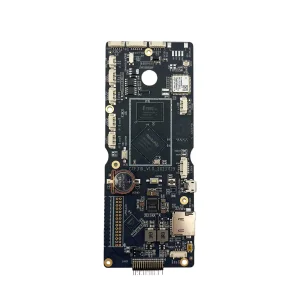
Consolidated infotainment, telematics, and digital instrumentation powered by multi-core processors dissipating up to 100W under dynamic loads.
- Vapor chamber integration and automated TIM dispensing
- Dual-sided SMT placement with staggered reflow
- High-speed memory routing (LPDDR5 / UFS)
Zero-Defect Quality Assurance Ecosystem
Built upon rigorous IATF 16949 methodologies and AI-driven automated optical and radiological inspections.
IATF 16949 / APQP
Comprehensive Advanced Product Quality Planning, PPAP Level 3 documentation, PFMEA risk reduction, and rigorous statistical process control (Cpk ≥ 1.67) applied across all automotive production runs.
3D Inline SPI + 3D AOI
100% inline volumetric solder paste measurement coupled with multi-angle 3D AOI eliminates bridging, tombstoning, insufficient wetting, and coplanarity deviations prior to encapsulation.
AXI 3D Computed Tomography
Automated X-ray inspection for bottom-terminated components (BTC), QFNs, and high-density BGAs, certifying solder void percentages stay beneath stringent automotive criteria (< 10%).
Automotive Electronics Roadmap (2025–2030)
Our long-term engineering investments to keep Tier-1 automotive brands ahead of future technological disruptions.
Embedded Die Packaging
Integrating passive and active power semiconductor dies directly inside inner PCB cores to minimize parasitic inductance and shrink footprint by 40%.
Photonic Interconnects
Deploying hybrid optical-electrical printed circuit boards to eliminate electromagnetic interference (EMI) in high-throughput autonomous driving supercomputers.
AI-Driven Predictive FCT
Machine-learning-assisted functional testing algorithms that dynamically simulate 10-year field stress conditions during end-of-line verification.
Circular Green Substrates
Adoption of fully recyclable, low-carbon bio-based epoxy resins and ultra-low water footprint metallurgy compliant with evolving EU battery & vehicle passports.
Frequently Asked Questions for Automotive PCBA Sourcing
Clear, direct answers regarding qualification standards, traceability, prototype-to-mass manufacturing, and lead-time guarantees.
What specific automotive certifications and workmanship standards govern production?
How is solder joint reliability guaranteed under harsh automotive vibration?
Can you support full PPAP (Production Part Approval Process) submissions?
What is your traceability depth in case of a field recall or quality inquiry?
How do you handle component obsolescence and supply chain shocks?
What files are required to initiate an engineering DFM review and quotation?
Explore Comprehensive Turnkey PCBA Production
Direct manufacturer engagement for rapid prototyping, medium batches, and volume automotive electronics assembly.