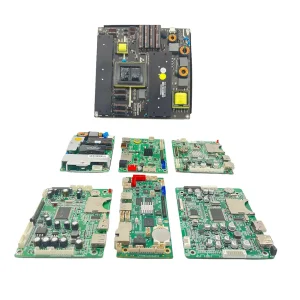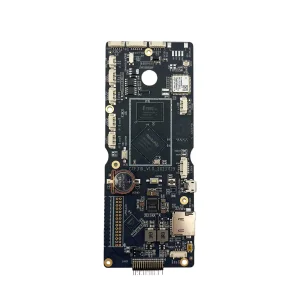
High-Reliability Automotive & Industrial PCBA Portfolio
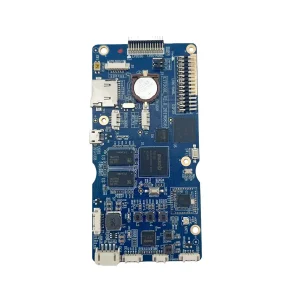
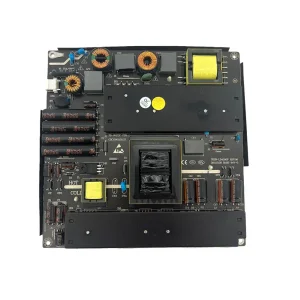
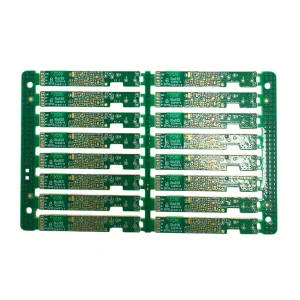
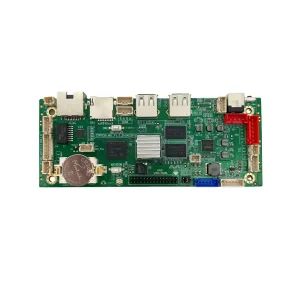
Explore our core turnkey electronics manufacturing offerings, supporting high-mix, high-density surface mount and through-hole integration with automotive-grade process validation.
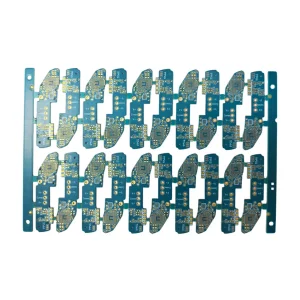
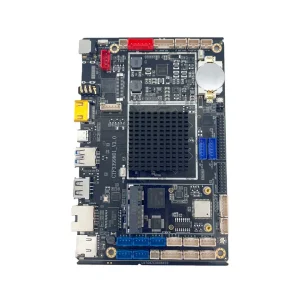
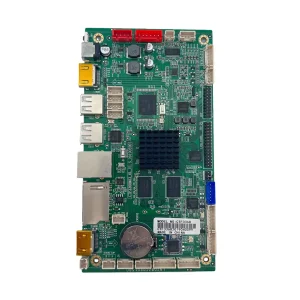
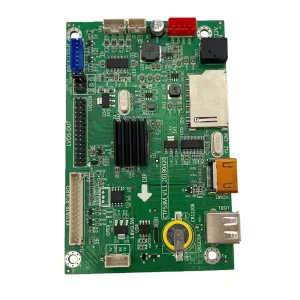
Global Commercial & Industrial Status of Automotive AEC-Q200 PCB Solutions
The rapid evolution toward Software-Defined Vehicles (SDVs), 800V high-voltage EV battery platforms, and Autonomous Driving compute domains is fundamentally transforming the automotive printed circuit board supply chain.
Global Electrification Dynamic
By 2030, electric drivetrains and autonomous domain controllers will account for more than 50% of the entire electronic bill-of-materials (BOM) in modern passenger cars. Inverters, On-Board Chargers (OBC), and DC-DC converters operating at 800V demand passive components compliant with the AEC-Q200 stress test qualification.
- Rapid adoption of wide bandgap semiconductors (SiC & GaN).
- Stringent thermal expansion coefficient (CTE) board matching.
- Extreme voltage transient and high-frequency noise suppression.
AEC-Q200 Stress Test Matrix
Unlike standard consumer passives, AEC-Q200 certifies that passive electronics (capacitors, inductors, resistors, transformers, and quartz crystals) withstand catastrophic vibration, mechanical shock, and temperature cycling from -40°C to +125°C or +150°C.
- High Temperature Exposure (Storage) up to 1,000 hours.
- Temperature Cycling (1,000 thermal shock cycles).
- Moisture Resistance (85°C/85% RH biased testing).
Supply Chain Resiliency
Global original equipment manufacturers (OEMs) and Tier-1 integrators face severe component allocation bottlenecks. Shenzhen Aozite bridges this by maintaining a direct franchised component supply network with verifiable CoC (Certificate of Conformance) authentication.
- Traceability down to individual reel barcoding and lot codes.
- Counterfeit prevention via inline optical and chemical verification.
- Dual-sourcing strategic alternatives for high-reliability passives.
Automotive PCB System Solutions Across Vehicle Domains
AEC-Q200 passive qualification is not a singular checkbox; it defines how power systems, microcontrollers, and communication buses interact under the harshest environmental constraints.
Powertrain & Battery (BMS)
High-voltage battery management systems demand isolation transformers, current sense shunt resistors, and ceramic capacitors rated for 1000V+ surges with high CTI (Comparative Tracking Index) laminates.
- Heavy copper (3oz - 6oz) power dissipation layers.
- Zero delamination under rapid cyclic thermal loading.
- Ultra-precise shunt resistor assembly for SoC monitoring.
ADAS & Sensor Fusion
Radar (77GHz/79GHz), LiDAR, and vision control units demand ultra-low loss hydrocarbon substrates (Rogers/Taconic) hybrid-stacked with FR4, housing AEC-Q200 high-frequency inductors.
- Tight impedance tolerance within ±5% on RF traces.
- Micro-via reliability under high aspect ratio drilling.
- Fine-pitch BGA placement (0.35mm pitch) via 3D SPI and AXI.
Smart Cockpit & Infotainment
Modern digital clusters and infotainment head units incorporate multi-core SoCs, Gigabit Ethernet, and multi-display driving circuits requiring clean power distribution networks (PDN).
- AEC-Q200 decoupling capacitors with low ESL/ESR.
- High-density interconnect (HDI) Any-Layer microvia tech.
- EMI/EMC compliance via multi-shield ground plane design.
Body Control & Telematics
BCMs and T-Boxes (V2X modules) run continuous vehicle bus communication (CAN-FD, LIN, Automotive Ethernet) under variable chassis vibrations and voltage ripples.
- Common mode chokes validated to AEC-Q200 Table 5.
- Conformal coating (silicone, polyurethane) for damp heat.
- DIP wave soldering with high-joint shear strength.
Zero-Defect Quality Assurance & Audit-Ready Governance
Aozite bridges Chinese manufacturing agility with international automotive compliance frameworks. Our quality architecture adheres to the zero-defect culture required by Western and Asian automotive tiers.
IATF 16949 / ISO 9001 / IPC-A-610 Class 3
Workmanship strictly complies with IPC-A-610 Class 3 (High-Performance Electronic Products). We employ rigorous 3D Solder Paste Inspection (SPI), automated inline optical inspection (AOI), and non-destructive 3D X-Ray (AXI) to inspect hidden solder voids in AEC-Q200 chip resistors and QFN/BGA ground slugs.
Void ratio control strictly kept below 15% (industry standard allows up to 25%), preventing thermal hot-spots under sustained high electrical loads.
Closed-Loop MES Full Lot Traceability
Our intelligent Manufacturing Execution System (MES) maps every board's 2D DataMatrix code directly to specific component batches, reflow thermal profile logs, machine feeder slots, and individual operator IDs.
If an AEC-Q200 passive supplier issues an alert, affected boards are pinpointed within minutes, isolating quality liabilities and eliminating broad-scale inventory recalls.
Bilingual Engineering & Audit Readiness
Located in Shenzhen's core tech zone, our export engineering directors bring 20+ years of direct SMT experience. We support international remote video line audits, PPAP Level 3 document packages, FMEA, Control Plans, and IMDS registration.
Direct communication with English-fluent project managers eliminates translation bottlenecks during initial Design For Manufacturing (DFM) reviews.
| Automotive Capability Parameter | Aozite Industrial Standard | AEC-Q200 / Automotive Benchmark |
|---|---|---|
| Target Workmanship Class | IPC-A-610 Class 3 / J-STD-001 Automotive Addendum | Class 2 or Class 3 depending on zone |
| Passive Component Package Support | 01005, 0201, 0402, 0603 up to custom power inductors | Full AEC-Q200 Table 1-14 verification |
| Inline Soldering Quality Inspection | 100% 3D SPI (Koh Young) + 100% Multi-angle 3D AOI | Sample or Statistical Process Control |
| BGA / QFN Hidden Solder Void Ratio | Controlled to < 15% via vacuum reflow oven optional | IPC Class 3 standard: < 25% |
| Operating Temperature Testing Range | -40°C to +150°C (Grade 0 / Grade 1 environmental chambers) | Grade 0 (-40°C to +150°C), Grade 1 (-40°C to +125°C) |
| Environmental Protection | Automated Selective Conformal Coating (Acrylic / Polyurethane / Silicone) | IPC-CC-830B / UL94V-0 Moisture & Fungus Proof |
Localized Automotive Application Scenarios
Where failure is not an option: Real-world engineering implementations assembled with zero-defect AEC-Q200 passive verification at our facility.
Under-the-Hood Power Conversion
Engine compartment temperatures regularly spike past 125°C. For DC-DC converters and high-power motor drivers, we assemble AEC-Q200 Grade 0 passives onto high-Tg FR-4 (Tg > 170°C) and heavy copper substrates, preventing dielectric thermal breakdown under rapid switching transients.
Chassis Stability & Electronic Braking
Electronic Stability Control (ESC) and Brake-by-Wire actuators demand continuous structural integrity under intense road shock. We integrate AEC-Q200 validated anti-sulfuration chip resistors and shielded wirewound inductors with specialized flexible termination (soft termination) to prevent crack propagation.
Telematics, V2X & Autonomous Radars
High-speed wireless communication modules and ultra-wideband millimeter radar PCBA require exceptionally low insertion loss and zero jitter. Aozite processes high-frequency RF laminates paired with AEC-Q200 qualified temperature-compensated crystal oscillators (TCXO) and RF multilayer capacitors.
Next-Generation Automotive Electronics Roadmap (2025–2030)
How Aozite is advancing SMT placement tolerances, material capabilities, and automated inspection systems to serve the next generation of autonomous and electrified mobility.
800V EV Architecture & Class 3 SMT
Full implementation of vacuum-assisted vapor phase and nitrogen reflow ovens. Routine handling of high-creepage layout rules and 100% 3D SPI/AOI closed-loop feedback systems.
Central Compute Domain Integration
Adoption of ultra-fine pitch placement (sub-0.3mm BGA), 14+ layer High-Density Interconnect (HDI) boards with copper microvia filling for central autonomous driving controllers.
Embedded Passive Substrates
Integrating AEC-Q200 qualified capacitance and resistance layers directly into inner PCB core layers, drastically decreasing surface parasitic inductance and saving vital board space.
AI Predictive Quality Modeling
Deploying AI computer vision across all SMT lines to predict solder joint micro-fissures in real time, shifting from reactive inspection to deterministic defect prevention.
Frequently Asked Questions on Automotive AEC-Q200 PCBA
Clear, definitive answers on component qualification, testing regimes, audit documentation, and production parameters for engineering and sourcing managers.
What is the explicit difference between AEC-Q100, AEC-Q101, and AEC-Q200?
The Automotive Electronics Council (AEC) establishes specific qualification standards per component category: AEC-Q100 applies strictly to integrated circuits (ICs) like MCUs and SoCs; AEC-Q101 applies to discrete semiconductors (diodes, MOSFETs, transistors); and AEC-Q200 defines the comprehensive stress test suite for passive components (capacitors, resistors, inductors, crystals, and chokes). Our PCBA assembly facility verifies compliance across all three tiers during the BOM engineering review.
How does Aozite prevent passive component solder cracking under severe vibration?
To combat solder fatigue from vehicle chassis vibration, we recommend and implement components with flexible terminations (soft polymer terminations beneath the outer tin plating). In manufacturing, we customize the SMT stencil aperture geometry and reflow heating curve to ensure optimal solder meniscus height (wetting angle < 40°) conforming strictly to IPC-A-610 Class 3 specifications.
Can you provide PPAP documentation for overseas automotive tier qualification?
Yes. We support Production Part Approval Process (PPAP) submissions up to Level 3. This comprehensive package includes Design/Process FMEA, Process Flow Charts, Control Plans, Measurement System Analysis (MSA/Gage R&R), Initial Process Capability Studies (Cpk > 1.67), Dimensional Results, Material Certifications, and Ballooned Drawings.
How are moisture-sensitive components handled prior to reflow assembly?
All active and passive inventory is handled in strict accordance with IPC/JEDEC J-STD-033. High-risk components are stored in constant-humidity dry storage cabinets (< 5% RH). Any reels exceeding factory floor-life limits undergo calibrated, recorded vacuum baking prior to SMT loading to eliminate the risk of internal delamination or the dreaded "popcorning" effect during reflow.
What files and data inputs are required to initiate an automotive turnkey PCBA quotation?
We require: 1) Gerber files (RS-274X) or ODB++ format including fabrication drawings with stack-up details; 2) Complete BOM specifying Manufacturer Part Numbers (MPN) to verify AEC-Q grade designations; 3) Pick-and-Place (centroid) XY coordinate data; and 4) Functional Circuit Testing (FCT) guidelines, test specifications, and target firmware.
Do you support remote and third-party facility audits for European and American buyers?
Absolutely. Buyers regularly conduct VDA 6.3 or custom process audits at our Shenzhen facility. We offer multi-camera HD live video audits covering incoming IQA inspection, ESD-safe SMT lines, nitrogen reflow zones, 3D AOI/AXI inspection, and cleanroom conformal coating rooms. Audit history records and third-party certifications are available upon request.
Explore Turnkey PCBA Production & Assembly Capabilities
From rapid engineering prototypes to scaled OEM/ODM series production. Choose an assembly category to review specific fabrication tolerances and process options.