Direct Production Line Assemblies
Featured Acrylic Coated PCBA Product Implementations
High-reliability Surface Mount Technology (SMT) and Dual In-line Package (DIP) turnkey assemblies deployed with precision acrylic conformal coating chemistry for moisture, fungus, and electrostatic isolation.
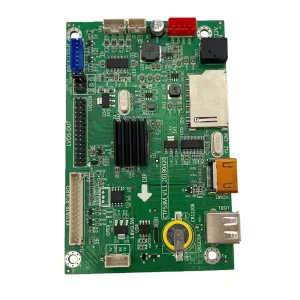
Custom Shenzhen SMT PCBA for Smart Product Manufacturing Service, Factory
Configure Assembly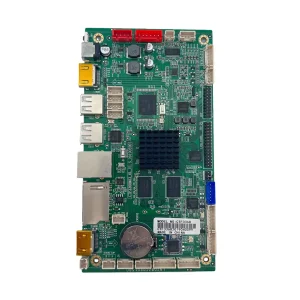
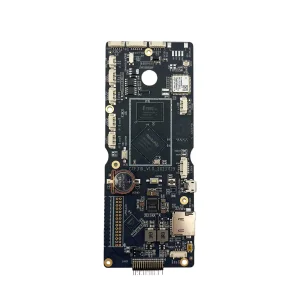
High-Quality Industrial Control PCBA Assembly & Processing Service Supplier, Suppliers
Configure Assembly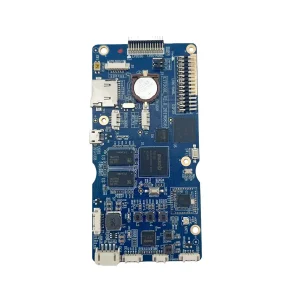
China Custom PCBA Production from Gerber & BOM Files Service, Factories
Configure Assembly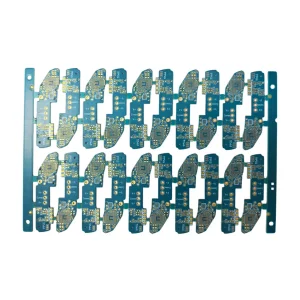
ODM Earphone Panel PCBA OEM ODM Service Supplier, Factory
Configure Assembly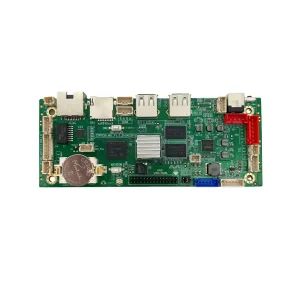
Custom High-quality PCBA Assembly for IoT Control Boards Supplier, Factory
Configure Assembly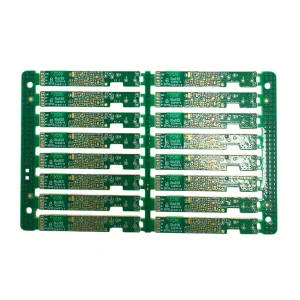
OEM Smart Bracelet PCBA OEM Manufacturing Factories, Factory
Configure Assembly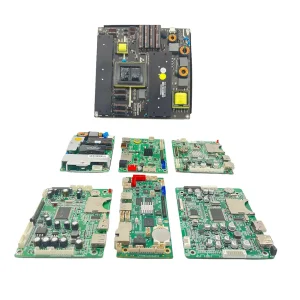
High-Quality OEM ODM PCBA for All Electronic Products Service, Factory
Configure Assembly
Engineering White Paper & Standards
Physics & Chemistry of Acrylic Conformal Passivation
Acrylic resins (IPC Type AR) represent the international benchmark for reworkable, cost-effective environmental dielectric barriers, maintaining high dielectric withstand voltage (DWV) across thermal cycling regimes of -65°C to +125°C.
Dielectric Strength & SIR Integrity
Operating in accordance with IPC-CC-830C and MIL-I-46058C, acrylic formulations produce exceptional Surface Insulation Resistance (SIR) values above 1.0 × 10¹² Ω. This stops dendritic conductive growth and electrochemical migration under continuous electrical stress in condensing atmospheric states.
- Dielectric Withstand: >1500V AC per mil thickness
- Dissipation Factor: 0.01 @ 1 MHz operational band
Automated Selective Robotic Deposition
Eliminating traditional labor-intensive masking taps, our factory utilizes high-axis computer numerical control (CNC) selective atomizing film coaters. Calibrated non-atomized dispense valves map coating boundaries to an accuracy of ±0.05 mm, keeping zero-coating keep-out zones clear.
- Zero-touch exclusion: Connectors, test pads, RF shields
- Wet-film target: 50–100 μm; Dry-film target: 25–75 μm
UV Traceability & Class 3 Inspection
Industrial acrylic resins include a fluorescent optical brightener that fluoresces under ultraviolet radiation (365 nm UV-A blacklight). Post-cure inspection uses inline automated optical inspection (AOI) to trace meniscus coverage, bridging, bubble entrapment, and edge-pullback.
- IPC-A-610 Class 2 & Class 3 structural compliance
- Automated solvent de-masking & rework compatibility
8 Lines
High-Speed SMT Placement Capacity
1.2M+
SMT Daily Placement Points
98.5%
First-Pass Yield (Closed Loop SPI/AOI)
100+
Global Export Destination Markets
Market Intelligence & Material Analysis
Global Industry Status & Chemical Roadmap
Electronic systems exposed to harsh environments encounter accelerated failure rates due to humidity, salt spray, and atmospheric contaminants. Here is how Acrylic (Type AR) compares with Silicone (SR), Polyurethane (UR), and Parylene (XY) for OEM/ODM hardware architecture.
| Property / Characteristic | Acrylic Resin (Type AR) | Silicone Resin (Type SR) | Polyurethane Resin (Type UR) | Parylene (Type XY) |
|---|---|---|---|---|
| Reworkability & Stripping | Easy: Dissolves cleanly with standard solvents | Difficult: Requires mechanical scraping or specialized strippers | Difficult: High solvent resistance, requires thermal stripping | Very Difficult: Abrasion/plasma burning required |
| Operating Temperature | -65°C to +125°C | -65°C to +200°C | -65°C to +125°C | -200°C to +150°C |
| Moisture / Humidity Resistance | Excellent: Low moisture vapor transmission | Moderate: Vapor permeable but water repellent | Superior: Outstanding humidity and fuel block | Maximum: Pin-hole free pin-point barrier |
| Curing Cycle Time | Fast: 10–30 min thermal / flash evaporation | Medium: Moisture cure (24 hours) or thermal | Slow: Extended thermal or multi-hour room cure | Ultra-Slow: Chemical vapor deposition chambers |
| Cost-to-Yield Ratio | Optimized: High-speed inline throughput | High: Material expense + lengthy ovens | Medium-High: Curing bottleneck | Highest: Vacuum chamber batch tooling |
Industrial Deployments
Localized Application Scenarios & Demands
Electronic equipment operates across varying climates and chemical conditions worldwide. Precision acrylic coating ensures long service life across these challenging environments.
Tropical Maritime & High-Humidity Zones
Deployed widely across Southeast Asian and Gulf industrial networks, infrastructure electronics face constant condensation and salt spray. Acrylic passivation creates a hydrophobic surface that limits moisture ingress, keeping leakage current within permissible tolerances.
- Coastal Smart Grid Meters & Solar Inverters
- Marine Navigation & Harbor Communications
Automated Factory & Industrial Edge Nodes
Heavy equipment floors in North America and Western Europe expose control nodes to airborne oils, conductive carbon dust, and fluctuating indoor temperatures. Coated control boards maintain signal clarity without particulate-induced shorts.
- Variable Frequency Drives (VFD) & Servo Drives
- Industrial IoT Gateway Controllers
High-Density Consumer & Wearable Hardware
Wearables and audio systems face frequent contact with human perspiration, body salts, and outdoor rain. Thin, uniform acrylic coating films safeguard densely packed 0201 passives and fine-pitch ICs while preserving RF antenna performance.
- Smart Watches & Biometric Monitors
- TWS Bluetooth Audio Earphone Panels
Total Solution Strategy
Macro Turnkey PCBA Solutions: DFM to Field Reliability
High-yield acrylic conformal coating relies on thorough integration throughout the electronics manufacturing process, starting from the original Gerber layout.
Step 1: DFM & Keep-Out Mapping
During Gerber and BOM validation, engineers establish explicit non-coating zones: board-to-board connectors, RF test points, tactile switches, and MEMS microphone barometric ports. Automated dispensing paths are generated to maintain clean separation boundaries.
- Component distance analysis for capillary prevention
- Solder mask compatibility verification
Step 2: Cleanliness & Flux Residue Control
Interfacial adhesion depends on board cleanliness. We track no-clean flux residues using ionic contamination testers, aiming for <1.5 μg/cm² NaCl equivalent. For critical assemblies, inline deionized aqueous wash systems remove particulate matter prior to resin application.
- Deionized water pressure spray profiling
- Zero delamination & Mealing bubble reduction
Step 3: Thermal Profile & Flash De-Gas
To prevent solvent entrapment and orange-peel wrinkling, coated boards enter a flash-off tunnel with low-velocity extraction, followed by progressive convection heating up to 80°C. This ensures thorough curing without thermal stress on fine-pitch components.
- Precision VOC solvent release ventilation
- Consistent dry-film thickness verification
Technology Trajectory
Coating Technology Roadmap: 2026 to 2030
PCBA protection is evolving rapidly alongside miniaturization, higher switching frequencies, and tighter environmental regulations. Key manufacturing initiatives guiding our upcoming production cycles include:
AI Computer Vision Inspection (AOI)
Transitioning from manual blacklight inspection to multi-camera neural network AOI. Real-time inference tracks edge wetting, fillet profiles on IC leads, and detects micro-voids as small as 15 μm across high-density circuit assemblies.
- Real-time defect classification & thickness profiling
- Automated closed-loop feedback to spray heads
Low-VOC & Bio-Based Formulations
Anticipating tighter global environmental policies like RoHS and REACH revisions, we are validating water-based and bio-derived acrylic carriers that reduce solvent emissions by over 70% while maintaining high dielectric strength and chemical isolation.
- Compliance with European VOC Emission Directives
- Low-odor formulation for cleanroom production
Nano-Composite Thermal Dissipation
Next-generation acrylic blends integrate sub-micron ceramic platelets (AlN / BN) to enhance thermal conductivity past 0.8 W/m·K. This supports improved heat dissipation away from high-power SMT components without compromising electrical isolation.
- Optimized for GaN and SiC power controllers
- Mitigates thermal hotspots on dense boards
Engineering Help Center
Acrylic Conformal Coating PCBA: Technical FAQ
Answers to critical engineering and procurement questions on material qualifications, manufacturing tolerances, rework parameters, and factory audits.
Why choose Acrylic (AR) conformal coating over Silicone (SR) or Polyurethane (UR)?
Acrylic resin (Type AR) provides a dependable balance between moisture isolation, dielectric performance, curing speed, and easy reworkability. Unlike silicones, which can migrate and cause solderability issues nearby, or cross-linked polyurethanes that require aggressive chemical or thermal stripping, acrylic dissolves cleanly in mild solvents like ethyl lactate or acetone. This makes it an ideal, cost-effective choice for industrial, automotive cabin, and consumer electronics where field repair and modification are key requirements.
How do you safeguard sensitive components from accidental coating ingress?
Our manufacturing line uses programmable multi-axis robotic dispensers (PVA and Nordson Asymtek) fitted with non-atomized film coaters and needle jetting heads. Before production, keep-out areas such as board connectors, DIP switches, optical sensors, audio ports, and ground contact pads are programmed directly into CAD coordinates. The system maintains a safe keep-out margin (typically 0.5 mm to 1.0 mm), preventing resin migration via capillary action onto sensitive contact surfaces.
What thickness standards are maintained, and how is dry-film thickness validated?
In accordance with IPC-A-610 Class 2 and Class 3 (as well as IPC-CC-830C), the target dry-film thickness for Type AR acrylic coatings is 0.03 mm to 0.08 mm (30 to 80 microns; approx. 1.2 to 3.2 mils). Thickness is verified in-process using non-destructive eddy-current and ultrasonic gauges on metallic and laminate coupons, alongside wet-film comb gauges on wet lines to monitor consistency.
Can acrylic conformal coating boards withstand high-humidity, marine, or salt-mist conditions?
Yes. Premium acrylic resins pass ASTM B117 5% salt spray tests for 168+ hours and maintain Surface Insulation Resistance (SIR) in humidity tests (e.g., 85°C/85% RH for 168 hours per IPC-TM-650 Method 2.6.3.7). This protective layer isolates vulnerable solder fillets, copper traces, and component terminations from humidity, salt spray, and atmospheric contaminants that trigger electrochemical dendritic shorts.
What file packages and specifications are needed to initiate a turnkey PCBA quote?
To prepare a comprehensive turnkey PCBA and selective conformal coating quote, please provide:
1. Gerber files (RS-274X, ODB++) with solder mask and fabrication drill data.
2. Bill of Materials (BOM) including manufacturer part numbers, descriptions, footprints, and designators.
3. Pick-and-place centroid coordinates (X, Y, rotation).
4. Conformal coating drawing specifying areas requiring coating, keep-out regions, target thickness, and acceptable inspection classes.
Verified Production Catalog
Featured Industrial PCBA Portfolio
Browse turnkey PCB assembly categories, from high-density wearable circuits to high-power industrial power supplies.
OEM Professional SMT PCBA Production for Electronics Manufacturers, Supplier
Request Production Quote
Custom Shenzhen SMT PCBA for Smart Product Manufacturing Service, Factory
Request Production Quote
High-Quality Industrial Control PCBA Assembly & Processing Service Supplier, Suppliers
Request Production Quote
China Custom PCBA Production from Gerber & BOM Files Service, Factories
Request Production Quote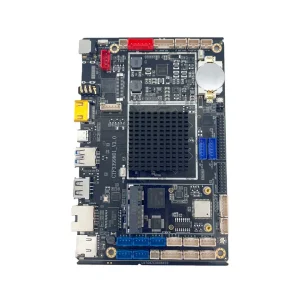
ODM One-stop PCBA Manufacturing & PCB Assembly Manufacturers, Suppliers
Request Production Quote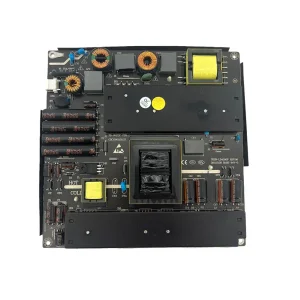
Best SMT Factory Power PCBA Production with DIP Supplier, Suppliers
Request Production Quote
Custom High-quality PCBA Assembly for IoT Control Boards Supplier, Factory
Request Production Quote