High-Reliability PCBA Lineup & Production Portfolios
Explore our specialized electronic manufacturing solutions engineered to withstand demanding outdoor electrical transients, temperature fluctuations, and continuous 24/7 mission-critical operations.
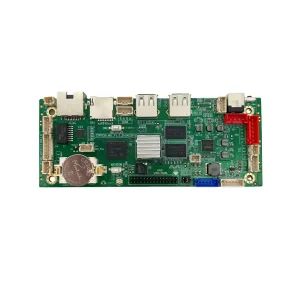
Custom High-quality PCBA Assembly for IoT Control Boards Supplier, Factory
View Product Details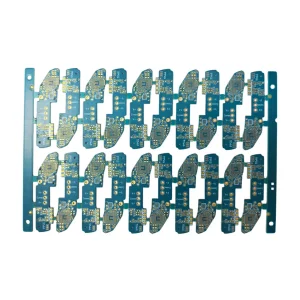
ODM Earphone Panel PCBA OEM ODM Service Supplier, Factory
View Product Details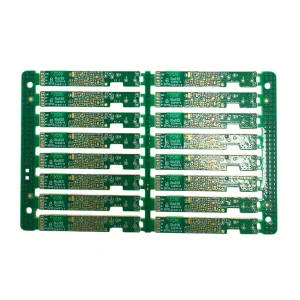
OEM Smart Bracelet PCBA OEM Manufacturing Factories, Factory
View Product Details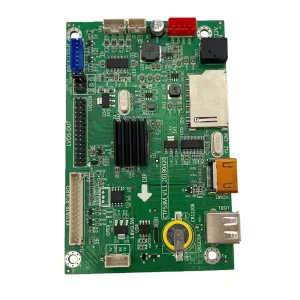
OEM Professional SMT PCBA Production for Electronics Manufacturers, Supplier
View Product Details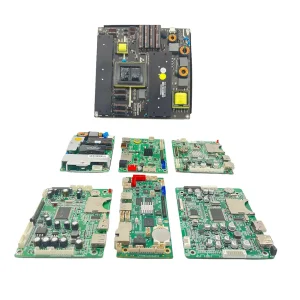
High-Quality OEM ODM PCBA for All Electronic Products Service, Factory
View Product Details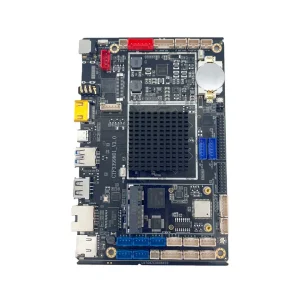
ODM One-stop PCBA Manufacturing & PCB Assembly Manufacturers, Suppliers
View Product Details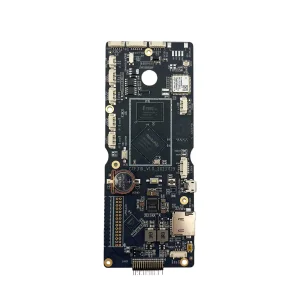
Custom Shenzhen SMT PCBA for Smart Product Manufacturing Service, Factory
View Product Details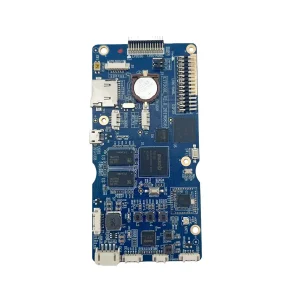
China Custom PCBA Production from Gerber & BOM Files Service, Factories
View Product DetailsGlobal Landscape & Evolution of Traffic Signal PCBA Hardware
Traffic Light Controller Printed Circuit Board Assemblies (PCBA) have progressed from legacy electromechanical relay timers into edge-AI compute clusters orchestrating real-time vehicular flow, pedestrian safety, and connected vehicle networks.
Edge AI & Dynamic Actuation
Modern roadside infrastructure shifts away from isolated fixed-time tables toward real-time adaptive systems (SCOOT, SCATS, Webster optimization). Traffic signal controllers now integrate multi-core SoCs, neural processing units (NPUs), and low-latency bus architectures directly onto the mainboard PCBA.
- Real-time LiDAR & radar array processing
- Direct neural inferencing at intersection level
- Sub-millisecond vehicle count & classification
C-V2X & Connected Mobility Hubs
Cellular Vehicle-to-Everything (C-V2X) and DSRC communication demand ruggedized transceiver boards installed within roadside cabinets (NEMA TS2, Caltrans 170/2070, and ATC architectures) capable of operating under extreme RF interference and environmental stress.
- Ultra-low latency SPaT (Signal Phase & Timing) broadcast
- Hardware-level HSM cryptographic key storage
- Autonomous vehicle lane-level prioritization
Zero-Downtime Hardware Safeguards
A signal malfunction directly endangers public safety. Hardware controllers feature dedicated conflict monitoring units (CMUs) and malfunction management units (MMUs) executed on physically isolated PCB planes to intercept conflicting green/walk phase sequences immediately.
- Hardware optical interlocks & voltage sensing
- Dual-redundant watchdog microcontroller units
- Galvanic isolation on all I/O field terminals
Traffic Light Controller PCBA Architecture Breakdown
Traffic control cabinets incorporate multiple interconnected PCBA modules. Each PCB serves an exacting physical, electrical, and computational role inside harsh outdoor roadside enclosures.
Master Processor Board
Houses industrial ARM Cortex-A or RISC-V compute engines running real-time Linux or RTOS. Manages signal scheduling, transit priority, and Ethernet/RS-485 telemetry.
- Multi-layer impedance-controlled FR-4
- BGA mounting with underfill protection
- Industrial temp rating (-40°C to +85°C)
Solid-State Switch Modules
Executes AC/DC high-current switching for high-flux LED signal heads. Employs robust triacs or Opto-isolated solid-state relays (SSRs) designed to dissipate heat safely.
- Heavy 3oz/4oz copper inner/outer layers
- Optocoupler isolation rated at 5kV RMS
- Snubber circuits for inductive spike damping
Conflict Monitor (MMU) PCBA
The safety supervisor board. Constantly measures voltage and phase currents across all channel outputs to physically disengage drivers during conflicting green indications.
- Fail-safe hardware-isolated circuit paths
- High-precision analog-to-digital sampling
- Non-volatile event logger EEPROM/FRAM
Sensor & Telemetry Hub
Interfaces with inductive pavement loops, roadside cameras, radar detectors, emergency preemption sirens, and 5G cellular modems backhauling to traffic operation centers.
- TVS diode transient clamping arrays
- Isolated CAN-bus, RS-485, and SFP ports
- Integrated power-over-Ethernet (PoE+) circuits
Engineering Rigor & Factory Process Validation
Roadside electronics are expected to deliver a 10 to 15-year operational lifecycle without hardware drift. Our Shenzhen production center deploys closed-loop IPC Class 2 and Class 3 manufacturing standards.
DFM & Traceability Inception
Every Gerber package and BOM is scrutinized for solder bridge risks, creepage distances according to IEC 60664, and thermal dissipation on power tracks. Full barcode laser-marking provides component-to-reel traceability.
Precision SMT & 3D SPI
High-speed surface-mount placement supporting components down to 0201 passives and ultra-fine pitch BGAs. 100% 3D Solder Paste Inspection (SPI) guarantees volumetric solder consistency prior to component placement.
Automated AOI & 3D X-Ray
Multi-angle inline Automated Optical Inspection (AOI) identifies tombstoning, skew, and solder voids. High-resolution 3D X-ray systems inspect hidden ball grid array joints and QFN ground slugs.
Burn-In & Conformal Coating
Robotic selective conformal coating (polyurethane, acrylic, or silicone) shields boards from sulfuric acid, moisture, and road dust. Boards undergo thermal cycle stress testing (-40°C to +85°C) to eliminate infant mortality.
Traffic Signal Controller PCBA Engineering Specifications
Direct comparison of manufacturing tolerances and electrical capabilities configured for Intelligent Transportation System (ITS) Original Equipment Manufacturers.
| Specification Parameter | Standard Commercial Grade | Aozite ITS Traffic Controller PCBA Standard | Engineering Benefit |
|---|---|---|---|
| Base Substrate & Tg | Standard FR-4 (Tg 130°C - 140°C) | High-Tg FR-4 (Tg 170°C - 180°C), Shengyi/Isola | Prevents z-axis delamination and barrel cracking during prolonged outdoor thermal cycling. |
| Assembly Workmanship | IPC-A-610 Class 2 | IPC-A-610 Class 3 / J-STD-001 with Complete Audit Records | Guarantees highest joint fill percentage, continuous reliability, and non-interrupted roadside operation. |
| Copper Layer Thickness | 1.0 oz (35 µm) | 2.0 oz – 4.0 oz Inner/Outer Layers | Dissipates continuous high-amperage draw of halogen/LED arrays without localized heat traps. |
| Surface Finish (HASL/ENIG) | Lead-free HASL | Electroless Nickel Immersion Gold (ENIG, Au ≥ 2-3 µ"), ENIPIG | Superior coplanarity for fine-pitch microcontrollers and immune to oxidation over 10+ years. |
| Environmental Protection | Uncoated or Manual Dip | Automated Robotic Selective Spray Conformal Coating (IPC-CC-830B) | Prevents dendrite growth, sulfur corrosion, high humidity salt-fog breakdown, and dust shorts. |
| Surge & Transient Protection | Basic Onboard Resistors | Compliant with NEMA TS2-2016 & EN 50556 Lightning Surge Clamping | Withstands direct high-voltage line spikes caused by close lightning strikes on signal gantries. |
Worldwide Deployment Scenarios & Localized Compliance
Traffic environments differ vastly between high-latitude sub-zero winters, coastal tropical salt spray, and scorching desert hubs. Our PCBA engineering adapts to international cabinet standards.
North America (NEMA TS2 & ATC)
Engineered for standard NEMA TS1/TS2 Type 1 and Type 2 cabinets as well as 332/336 Caltrans 170/2070 and Advanced Transportation Controller (ATC) architectures. Features precision bus backplanes, card-rack form factors, and isolated BIU (Bus Interface Unit) communications.
- NEMA TS2 shock & vibration rated
- SDLC serial bus signal integrity
- FCC Part 15 Class A electromagnetic shielding
Europe & UK (EN 12675 & TOPAS)
Tailored for European junction controllers adhering to EN 50556, EN 12675, and UK TOPAS specifications. Focuses on low carbon emissions, 42V AC extra-low voltage (ELV) LED switching architectures, and optical phase monitoring for pedestrian countdown facilities.
- ELV (Extra Low Voltage) safety isolation
- RoHS 3 & REACH compliant chemical supply
- CE marking and EN 50293 EMC conformity
Asia-Pacific, Latin America & Middle East
Designed for multi-phase complex intersections experiencing volatile municipal power grids, monsoons, and extreme ambient cabinet heat reaching 75°C+. Incorporates wide-input DC power conditioning, integrated solar-battery inverter controllers, and resilient cellular modems.
- Wide operating range: 85V - 265V AC or 12V/24V DC
- Tropical anti-fungal, anti-sulfur PCB varnish
- Surge suppression exceeding 6kV / 3kA
The Future: Next-Generation Intelligent Traffic Hardware
Anticipating the convergence of autonomous driving, roadside edge-computing, and smart-city data mesh networks through proactive hardware innovation.
Embedded NPU Acceleration
Integrating high-efficiency Neural Processing Units (NPUs) directly into local signal controllers to process real-time 4K camera feeds for pedestrian intent prediction and automatic emergency vehicle clearance.
Zero-Trust Roadside Security
Hardware root-of-trust (RoT) TPM 2.0 cryptographic microchips embedded onto the PCB substrate to prevent unauthorized firmware injections and guard municipal networks against remote physical cyber intrusion.
Direct V2I Low-Latency RF
Co-packaging 5G RedCap and direct C-V2X PC5 transceivers on low-loss high-frequency PCB substrates (Rogers/Megtron) with integrated phased-array antenna connections for real-time vehicular messaging.
Predictive Health Telemetry
Onboard edge sensor telemetry tracks capacitor degradation, trace temperatures, voltage ripple, and vibration signatures, transmitting preventive maintenance alerts prior to physical intersection signal blackout.
Frequently Asked Questions (FAQ)
Detailed engineering and sourcing clarifications regarding traffic light controller PCBA fabrication, standards, testing protocols, and volume lead times.
How does Aozite guarantee high-voltage surge safety on traffic signal PCBAs?
Roadside cabinets are prone to inductive kickback and lightning-induced voltage surges. We integrate multi-stage suppression networks featuring metal oxide varistors (MOVs), gas discharge tubes (GDTs), and transient voltage suppression (TVS) diodes directly into our PCB designs. We enforce strict creepage and clearance distances matching IPC-2221 standards and perform high-potential (Hi-Pot) surge testing up to 2.5kV-6kV.
Can you produce PCBAs compliant with NEMA TS2 or Caltrans 2070 standards?
Yes. We manufacture both full form-factor boards and modular card-rack assemblies compatible with NEMA TS2 Type 1/Type 2, ATC (Advanced Transportation Controller), and 170/2070 rack enclosures. We match exact bus pinouts (SDLC, RS-485, Ethernet) and ensure PCB mechanical thickness tolerances (±10%) to guarantee seamless field maintenance card insertions.
What conformal coating options do you apply for outdoor traffic signal durability?
We deploy automated selective robotic conformal coating systems using UL-certified acrylic (HumiSeal), silicone, or polyurethane resins. Every board is coated to an exact thickness of 50-100 µm according to IPC-CC-830B, safeguarding all SMT and through-hole joints against humidity, conductive road dust, industrial sulfur, and coastal salt fog while avoiding keep-out zones like test pins and connectors.
What documentation and files are needed to begin turnkey PCBA production?
To provide a formal DFM review and quotation within 24 hours, our engineering desk requires your PCB Gerber files (RS-274X or ODB++ format), an itemized Bill of Materials (BOM) including manufacturer part numbers, pick-and-place (centroid) data, and testing requirements (functional test specs, firmware flashing files, or test fixture guidelines).
How do you inspect concealed BGA joints and power inductors on traffic boards?
We employ high-resolution closed-tube 3D X-Ray Inspection (AXI) capable of multi-angle tilting. This enables us to inspect ball-grid arrays, fine-pitch QFN ground pads, and heavy copper power switches for solder voiding percentages, bridging, and insufficient wetting, ensuring void rates remain strictly below 15% in compliance with IPC Class 3.
Do you handle long-lifecycle electronic component sourcing for municipal projects?
Yes. Traffic control infrastructure projects often require 5 to 10 years of consistent component availability. Our Shenzhen supply chain team sources directly from authorized global semiconductor distributors (TI, ADI, NXP, ST, Microchip) with full manufacturer Certificates of Conformance (CoC), actively proposing pin-compatible alternatives to avoid unexpected End-of-Life (EOL) obsolescence.
Featured Turnkey Electronics Manufacturing Lines
Explore additional high-precision PCB assembly capabilities across consumer, industrial automation, telecommunications, and IoT smart control hardware.
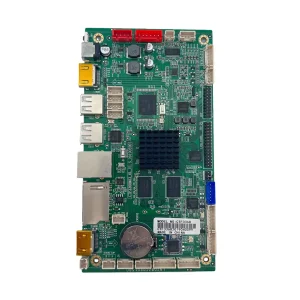
High-Quality Industrial Control PCBA Assembly & Processing Service Supplier, Suppliers
View Product Details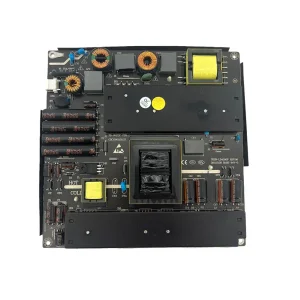
Best SMT Factory Power PCBA Production with DIP Supplier, Suppliers
View Product Details
Custom High-quality PCBA Assembly for IoT Control Boards Supplier, Factory
View Product Details
ODM Earphone Panel PCBA OEM ODM Service Supplier, Factory
View Product Details
OEM Smart Bracelet PCBA OEM Manufacturing Factories, Factory
View Product Details
OEM Professional SMT PCBA Production for Electronics Manufacturers, Supplier
View Product Details
ODM One-stop PCBA Manufacturing & PCB Assembly Manufacturers, Suppliers
View Product Details