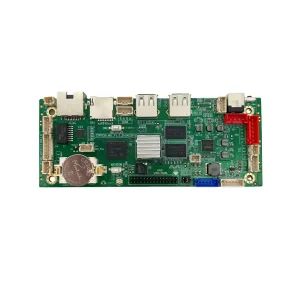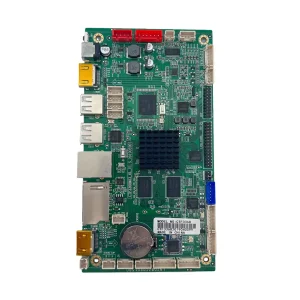
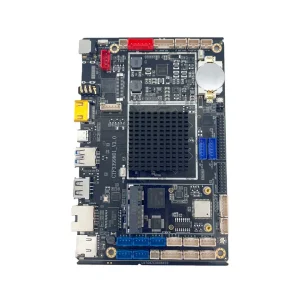
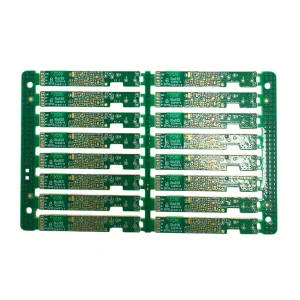
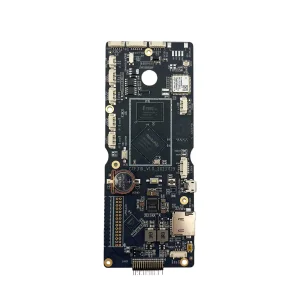
Featured Thermal-Resilient PCBA Solutions
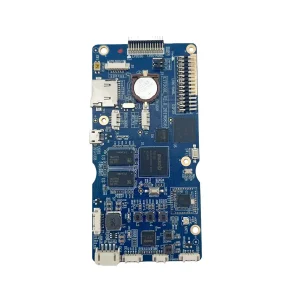
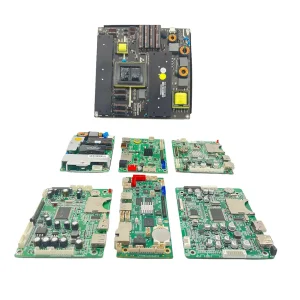
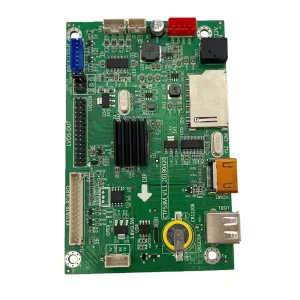
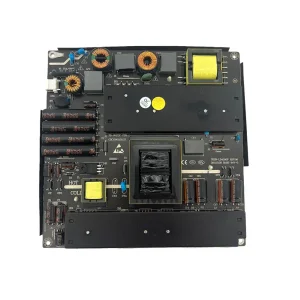
Explore our turnkey OEM/ODM manufactured assemblies, fabricated with tightly controlled decomposition temperature substrates and robust lead-free reflow profiles.
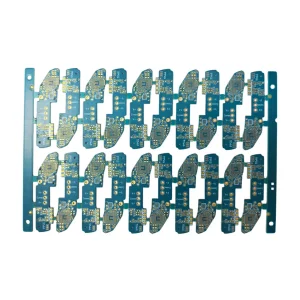
Demystifying Td (Decomposition Temperature): The True Metric of Thermal Survivability
While Glass Transition Temperature (Tg) indicates reversible structural phase softening, Decomposition Temperature (Td) represents an irreversible, permanent chemical bond degradation threshold. Understanding IPC-TM-650 2.4.24.6 measurement is paramount for zero-defect lead-free manufacturing.
Thermogravimetric Analysis (TGA)
Defined under ASTM E1131 and IPC-TM-650 Method 2.4.24.6, Td marks the temperature at which the base resin matrix loses 2% or 5% of its original mass through irreversible thermal volatilization. Unlike physical expansion shifts, mass loss above 2% initiates immediate delamination risk and micro-cracking across plated through-hole (PTH) barrels.
Lead-Free Reflow Dynamics (SAC305)
The global RoHS mandate elevated peak soldering profiles from 215°C (SnPb) to 245°C–260°C. In multi-lamination HDI and thick multi-layer backplanes (>2.4mm), boards experience prolonged liquidus exposure. Standard FR4 (Td ~300°C–315°C) rapidly exhausts its thermal degradation budget, demanding high-Td laminates (Td ≥ 340°C–360°C).
Z-Axis CTE & T260/T288 Correlation
Td correlates directly with long-term time-to-delamination metrics (T260, T288, and T300). Substrates engineered with tailored polymer crosslinking maintain structural integrity against Z-axis out-of-plane coefficient of thermal expansion (CTE) mismatches, shielding copper vias from post-assembly shear fractures during field thermal cycling.
| Substrate Classification | Typical Resin System | Tg (DMA / TMA) | Td (5% Loss, IPC-TM-650) | T288 Survivability | Primary Industrial Use Case |
|---|---|---|---|---|---|
| Standard FR-4 | Dicy-cured Difunctional Epoxy | 130°C – 140°C | 300°C – 315°C | < 5 minutes | Consumer Disposables |
| Mid-Range Lead-Free FR-4 | Phenolic Novolac Epoxy | 150°C – 160°C | 330°C – 340°C | 15 – 25 minutes | IoT & Smart Devices |
| High-Performance Lead-Free | Phenolic Cured Multi-functional | 170°C – 180°C | 345°C – 360°C | ≥ 35 minutes | Automotive & Industrial |
| High-Speed Low Loss (PPO/PPE) | Modified Polyphenylene Oxide | 180°C – 200°C | 380°C – 390°C | > 60 minutes | AI Servers & 5G Telecom |
| Polyimide / Advanced Ceramic | Addition Polyimide Resin | 250°C – 280°C | 390°C – 420°C | > 120 minutes | Aerospace & Downhole |
Localized Application Scenarios Demanding Custom Td Engineering
High-performance electronics are increasingly pushed to continuous operating boundaries where ambient thermal stress merges with internal dissipated heat flux. Our custom Td substrate services support stringent operating envelopes across global sectors.
EV Under-The-Hood & Inverters
Electric vehicle traction inverters, 800V DC/DC converters, and on-board chargers (OBC) leverage wide-bandgap SiC/GaN semiconductors. Operating in localized environments exceeding 140°C ambient alongside heavy copper loads requires custom Td ≥ 360°C laminates to eliminate interlayer separation under severe engine bay shock.
AI Data Center Accelerator Backplanes
High-density 32+ layer AI server boards experience multiple lamination press cycles during fabrication, followed by intense BGA rework and peak TDPs surpassing 1000W per socket. Substrates with custom Td ≥ 380°C and ultra-low z-axis CTE preserve signal integrity across high-speed PAM4 channels.
Aerospace & LEO Satellite Payloads
Low Earth Orbit satellites experience rapid thermal cycling from -65°C to +125°C every 90 minutes. Substrate degassing, mass loss, and resin decomposition can cause payload optical coating contamination. Custom polyimide and hydrocarbon hybrids with verified low-outgassing and Td ≥ 400°C ensure zero mission drift.
High-Power Industrial Automation & Smart Grid
Continuous 24/7 duty cycles in steel mills, solar central inverters, and heavy-duty VFD motor controllers require boards resilient to sustained thermal soaking. Our customized high-decomposition-temperature glass fabrics mitigate Conductive Anodic Filament (CAF) migration under sustained 1500V system biases.
Technology Roadmap: The Evolution of Thermal Decomposition Boundaries
As chip packaging approaches sub-micron micro-via architectures and heterogeneous multi-die packaging (CoWoS, chiplets), classical FR-4 formulations are reaching fundamental limits. Aozite engineers are developing tomorrow's high-temperature baseline.
Modified Bismaleimide Triazine (BT)
Formulating next-gen BT resin blends allows us to deliver Td thresholds of 385°C with ultra-flat frequency response, crucial for 112Gbps/224Gbps serdes designs demanding extreme wirebond reliability and moisture insensitivity.
Bio-Based Zero-Halogen Curing
Replacing standard brominated flame retardants with organophosphorus and bio-renewable novolacs eliminates corrosive halogen vapor evolution during thermal breakdown while pushing baseline Td past 365°C under RoHS/REACH compliance.
Nano-Silica Ceramic Hybrids
Incorporating functionalized, sub-micron spherical silica particles into the prepreg resin network reduces volumetric shrinkage during lamination, achieving anisotropic thermal conductivity and suppressing resin dissociation up to 395°C.
In-Situ Micro-TGA Analytics
Transitioning from destructive destructive batch testing to digital-twin laser flash and micro-dielectric spectral scanning during lamination, guaranteeing exact post-cure crosslink density verification across every production panel.
Shenzhen Supply Chain Resilience & Direct-From-Source Efficiency
Based in Longgang District, Shenzhen—the core of the Pearl River Delta electronics triangle—Aozite integrates instantaneous raw laminate access, automated surface-mount execution, and direct factory pricing without distributor latency.
Same-Day CCL Material Allocation
Because our facility sits alongside the central distribution hubs of leading laminate producers (Shengyi, Isola, Panasonic, Ventec, ITEQ), we procure verified specialty high-Td and low-loss prepregs in hours, whereas overseas assemblers endure 4–8 week import lead times.
Closed-Loop Engineering DFM
Our 20+ year engineering veterans perform exhaustive Design For Manufacturing (DFM) checks on your Gerber, ODB++, and BOM files within 12 hours. We optimize copper balance, thermal relief spoke widths, and via-in-pad fill methods to prevent localized hotspots and laminate blistering.
8 High-Speed SMT Lines (1.2M+ Daily)
Equipped with state-of-the-art automated placement machinery, 10-zone nitrogen reflow ovens, inline 3D SPI, and 3D AOI/AXI inspection, we scale smoothly from initial NPI rapid prototypes to 100,000+ unit mass production runs with zero process transfer friction.
Global Sourcing Dynamics: Mitigating Thermal Risk in the Lead-Free Era
As western OEMs implement nearshoring and dual-sourcing strategies, the commercial reality remains: selecting the lowest unit price without validating raw laminate Td certifications triggers catastrophic field failure rates during warranty cycles.
The True Cost of Latent Thermal Degradation
Substrates that undergo micro-delamination during secondary reflow or selective soldering often pass initial bed-of-nails and flying probe tests. However, in the field, moisture ingression and vibration induce open circuits in inner microvias. Sourcing certified high-Td materials mitigates costly product recalls.
Mitigating Laminate Substitution Traps
Unregulated brokers often substitute non-equivalent local FR-4 claiming similar Tg figures, masking inferior Td ratings (e.g., claiming 170°C Tg while Td is merely 310°C). Aozite provides complete traceability with factory microsection logs, thermograms, and raw material mill test certificates.
Strategic Dual-Sourcing & BOM Cost Parity
By collaborating directly with Chinese laminate powerhouses (such as Shengyi S1000-2M / S1170) alongside Tier-1 Western brands (Isola 370HR, Panasonic Megtron 6), we offer drop-in substrate equivalency matrices that lower BOM expenses by 18–32% without sacrificing thermal headroom.
Localized Technical Support, Audits & Stringent Compliance
Reliability is not an accident—it is an audited manufacturing discipline. Our quality management architecture adheres to world-class manufacturing codes, ensuring your assemblies transition seamlessly from design to regulated commercial distribution.
IPC-A-610 Class 2 & Class 3
Workmanship adheres strictly to IPC-A-610 Class 2 standards by default, with Class 3 high-reliability certification available for aerospace, defense, and medical life-support instrumentation.
UL 94V-0 & Flammability Safety
All custom Td substrates possess full Underwriters Laboratories (UL) flammability certifications (UL 94V-0), meeting global safety mandates for electrical fire prevention under high-current overloads.
RoHS & REACH Traceability
Full compliance with EU Directive 2011/65/EU (RoHS) and EC 1907/2006 (REACH). Zero restricted heavy metals, phthalates, or banned halogens, supported by regular SGS and CTAS third-party chemical reports.
Live Virtual & On-Site Audits
International procurement directors can inspect our facilities anytime via scheduled on-site audits at our Shenzhen headquarters or conduct live multi-camera interactive SMT and lab walkthroughs.
Frequently Asked Questions (FAQ)
Key engineering and procurement insights addressing substrate selection, decomposition testing methodologies, reflow parameters, and turnkey production logistics.
What is the fundamental difference between Glass Transition Temperature (Tg) and Decomposition Temperature (Td)?
How is Decomposition Temperature (Td) officially measured according to IPC standards?
Why does RoHS lead-free soldering necessitate customized high-Td PCB materials?
Can Aozite support equivalent high-Td laminate substitutes to lower production costs?
What documentation and quality reports are delivered with custom Td PCBA shipments?
What files are required to initiate an engineering evaluation and DFM review?
Explore Complete PCBA Assembly & Contract Manufacturing Services
Accelerate your commercial hardware roadmaps with our Shenzhen-based high-speed SMT assembly, box-build integration, and tailored thermal decomposition engineering services.