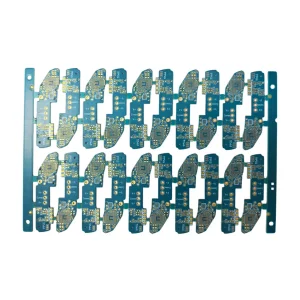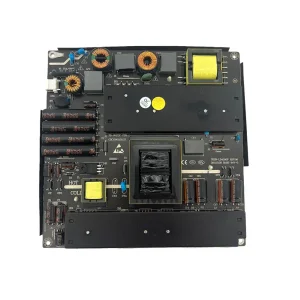
High-Precision SMT & Coated PCBA Product Showcase
Engineered for mission-critical reliability across industrial automation, medical electronics, power systems, and edge IoT devices. Explore our specialized production capabilities.
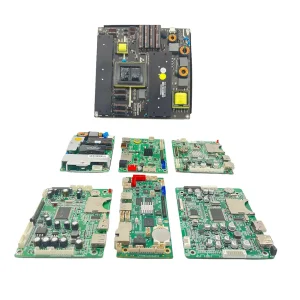
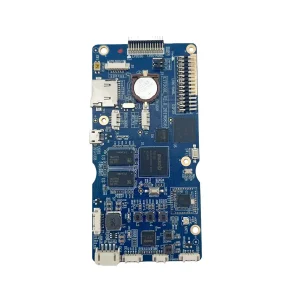
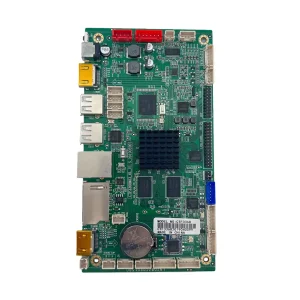
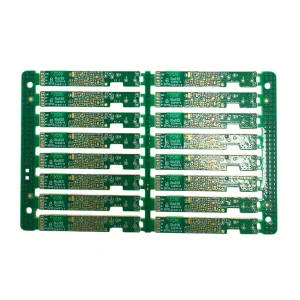
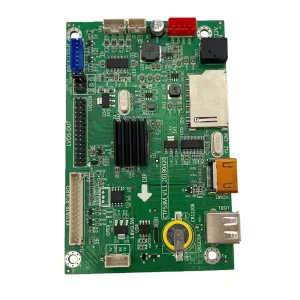
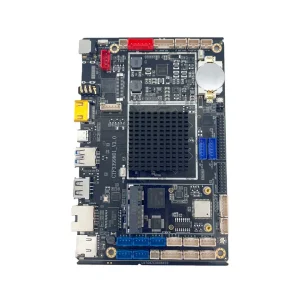
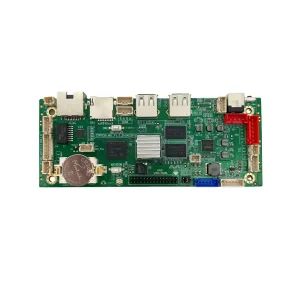
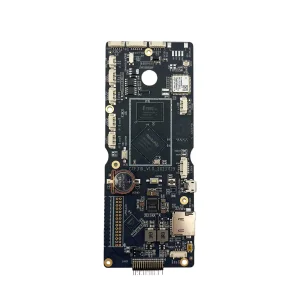
Engineering Fundamentals of Custom Selective Conformal Coating
Eliminating physical masking labor while securing extreme dielectric isolation, moisture resistance, and mechanical resilience under IPC-CC-830 and IPC-A-610 Class 3 mandates.
Robotic Film Coater Dispensing
Multi-axis automated selective coating systems eliminate costly manual taping and masking boots. High-speed non-atomized film coaters apply controlled non-spray bands with zero overspray.
- Edge definition accuracy within ±0.5 mm tolerances
- Selective micro-dispense valves for narrow keep-out zones
- Curtain and swirl nozzles for dense SMT topography
- Elimination of capillary leakage into contact connectors
Polymer Chemistry Optimization
Selecting the optimal conformal chemical matrix dictates mean time between failures (MTBF) under thermal cycling, solvent attack, and condensing humidity environments.
- Acrylic (AR): Simple reworkability and high dielectric strength
- Polyurethane (UR): Chemical solvent and fuel vapor barrier
- Silicone (SR): Continuous -55°C to +200°C thermal stability
- Dual-Cure UV: Instant photopolymerization with moisture shadow cure
Automated UV Optical Inspection (AOI)
Fluorescent optical tracking verifies continuous protective integrity without destructive testing, highlighting edge-pulling, bridging, or voiding over active silicon packages.
- UV tracer excitation under 365 nm black-light LEDs
- Automated thickness verification (wet vs dry film analysis)
- Keep-out zone violation detection down to 25 microns
- Closed-loop feedback to automated dispense valves
Critical Keep-Out Zone (KOZ) DFM Engineering
Successful selective conformal coating begins during PCB CAD layout. Test points, RF shielding cans, optical sensors, tactile microswitches, card edge connectors, and exposed grounding lugs must have explicitly defined Keep-Out Zones with at least 1.5 mm clearance to avoid capillary fluid migration and contact poisoning.
| Coating Chemistry | IPC-CC-830 Thickness Range | Operating Temperature | Chemical / Solvent Resistance | Primary Industrial Use-Case |
|---|---|---|---|---|
| Acrylic Resin (Type AR) | 25 – 75 µm | -40°C to +125°C | Fair (Easily stripped via solvent) | Consumer Wearables, Smart Home Hubs, General IoT |
| Polyurethane (Type UR) | 25 – 75 µm | -50°C to +130°C | Superior (Hydrocarbon & Fuel Resistant) | Automotive Powertrain, Industrial PLCs, Heavy Machinery |
| Silicone Resin (Type SR) | 50 – 210 µm | -55°C to +200°C | Moderate (Vulnerable to some solvents) | EV Battery Management (BMS), Outdoor Solar Inverters |
| UV-Cure Acrylated Polyurethane | 30 – 100 µm | -45°C to +140°C | Very High (Cross-linked matrix) | High-Volume Automotive Electronics, Critical Medical Tier 1 |
Localized Support & Global Regulatory Assurance
Ensuring that exported PCBA modules adhere to rigorous international safety standards, localized electromagnetic compatibility (EMC), and hazardous substance directives.
IPC-A-610 Class 3
Meeting zero-defect inspection criteria for continuous high-performance environments where equipment downtime cannot be tolerated.
- Strict coating coverage tolerances
- Uniform meniscus control
- No crack, bubble, or mealing defects
UL 94V-0 & UL 746E
Conformal coating formulations and laminates certified for flammability resistance and electrical insulation under extreme load.
- Flame self-extinguishing chemistry
- Dielectric breakdown >1500V/mil
- Long-term thermal degradation testing
ISO 13485 & IATF 16949
Dedicated quality management systems governing cleanroom assembly, ESD control, lot traceability, and supplier risk assessment.
- Class 10,000 cleanroom application
- Traceable resin lot records
- Automated batch viscosity logs
RoHS & REACH SVHC
Complete elimination of lead, mercury, brominated flame retardants, and restricted phthalates in both solder paste and resins.
- Third-party SGS lab test reports
- Zero VOC formulation options
- Full international customs clearance
China Supply Chain Advantages: Shenzhen Turnkey Ecosystem
Combining hyper-localized electronic component distribution with automated high-speed SMT assembly, automated robotic dispensing, and global logistics fulfillment.
1-Hour Component Sourcing
Situated in Shenzhen’s core industrial cluster, our procurement team achieves same-day turnaround on genuine passive, IC, and connector stock through direct franchised channels.
- Immediate cross-referencing of obsolete silicon
- Rapid physical stencil laser-cutting in 4 hours
- Direct procurement of specialized conformal resins
Closed-Loop Quality Architecture
Quality assurance is embedded in every step of the turnkey workflow, preventing downstream coating defects through rigorous solder-joint and cleanliness verification.
- In-line 3D SPI (Solder Paste Inspection)
- High-magnification 3D AOI & transmission X-ray
- Ionic contamination testing prior to coating
Agile High-Mix / High-Volume
Our multi-axis robotic dispensers handle quick-turn NPI prototypes as easily as continuous multi-panel mass production runs with zero tooling re-engineering.
- Digital Gerber-to-path robotic programming
- Automated nozzle purging and viscosity calibration
- Rapid carrier fixture modularization
Global Enterprise Procurement Requirements
What hardware engineering leads, supply chain directors, and sourcing managers evaluate when selecting a custom selective conformal coating PCBA factory partner.
1. Transparent Gerber & BOM Audits
Global procurement teams require comprehensive Design for Manufacturability (DFM) and Design for Assembly (DFA) reports before quoting or tooling begins.
- Automated BOM life-cycle risk scoring
- Identification of active keep-out zones
- Detection of shadow areas beneath tall inductors/caps
2. Process Validation (FMEA & CPK)
Statistical process control proves the repeatability of the automated dispensing platform across millions of consecutive placement points.
- Coating thickness gauge data (dry film micrometry)
- Process capability index (Cpk > 1.33)
- Pre-cure thermal profile and ramp-down verification
3. Complete Traceability & MES
Factory MES tracking associates every PCB serial number with raw solder paste lots, SMT feeder numbers, coating chemical batches, and test logs.
- Laser-etched QR code tracking on bare FR4
- Storage logs for moisture-sensitive devices (MSD)
- Archived 100% Functional Test (FCT) result datasets
Industry Evolution: The Future of Conformal Encapsulation
How the convergence of AI visual processing, bio-based solventless polymers, and micro-dispensing is reshaping PCBA protection for the next generation of smart hardware.
AI-Powered UV AOI Inspection
Traditional optical inspection struggled with variable fluorescent intensity and shadowing beneath large BGA packages. Modern systems integrate deep learning algorithms trained on millions of solder-joint profiles.
- Eliminates 99.2% of false calls caused by PCB silkscreen
- Real-time autonomous compensation for meniscus pulling
- Instant notification of viscosity drift or nozzle wear
100% Solids & Solvent-Free Resins
Regulatory restrictions on VOCs (Volatile Organic Compounds) in Europe and North America are accelerating the adoption of 100% solids UV-curable formulations that emit zero atmospheric emissions.
- Sub-15 second UV photopolymerization curing cycles
- Zero shrinkage stresses across ceramic chip caps (0201/01005)
- Enhanced chemical crosslinking density for sulfur resistance
Piezoelectric Micro-Dispensing
As wearable electronics and implantables scale down, traditional film nozzles are augmented by piezoelectric jetting valves capable of dispensing dots down to 100 microns at 1000 Hz frequencies.
- Precise underfill-style coating beneath QFN bottom terminations
- Zero air-pocket entrapment beneath high-density ball matrices
- Microliter-level volume control prevents sensor aperture clogging
Mission-Critical Application Scenarios
From deep-sea marine monitoring to high-voltage EV battery distribution units, selective conformal coating safeguards electronics where environmental failure carries catastrophic risk.
Automotive & New Energy (EV)
Vibration, engine bay heat cycles (-40°C to +150°C), and road de-icing salt sprays threaten under-hood control systems, requiring thick, stress-relieving silicone or polyurethane coatings.
- High-voltage Battery Management Systems (BMS)
- On-Board Chargers (OBC) and DC-DC Inverters
- Tire Pressure Monitoring & Advanced Radar Hubs
Industrial Automation & Smart Grid
Factory environments expose circuit boards to suspended conductive dust, airborne sulfur dioxide (SO2), and oil mists that provoke electrochemical migration (ECM) and dendritic shorts.
- Variable Frequency Drives (VFD) and Servo Controllers
- Programmable Logic Controllers (PLCs) in Chemical Plants
- Smart Power Meters & Outdoor Substation Sensors
Marine, Offshore & Maritime IoT
Salt spray condensation is an aggressive electrolyte that strips copper traces and induces rapid pinhole corrosion. Conformal barriers guarantee continuous compliance with ASTM B117 salt fog tests.
- Sonar Transceivers & Navigation Radars
- Offshore Wind Turbine Telemetry Nodes
- Oceanographic Buoy Sensor Gateways
Frequently Asked Questions on Selective Conformal Coating
In-depth engineering answers to the technical, commercial, and quality questions sourcing teams ask most frequently when qualifying a selective coating PCBA manufacturer.
Why is automated selective conformal coating superior to manual dipping or aerosol spray?
What PCB design files and documentation are required to quote a selective coating project?
How do you verify conformal coating thickness without destroying the assembled board?
Can low-volume prototypes and high-mix production be accommodated economically?
How do you prevent capillary fluid migration into connectors and test pads?
What ionic cleanliness standards are verified prior to the conformal coating process?
Enterprise PCBA Manufacturing & Turnkey Assembly Capabilities
Full-scale production capability spanning surface-mount placement, through-hole soldering, selective coating, firmware programming, and enclosure box build.