Engineered Assemblies Supported by Controlled Warehousing
From moisture-sensitive BGA micro-controllers to high-current power stages, all raw components and finished assemblies are staged under monitored humidity environments to ensure zero popcorning and zero latent joint fatigue.
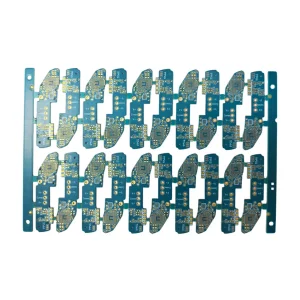
ODM Earphone Panel PCBA OEM ODM Service Supplier, Factory
View Product Details
China Custom PCBA Production from Gerber & BOM Files Service, Factories
View Product Details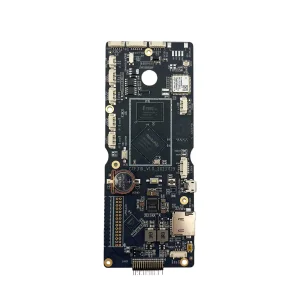
Custom Shenzhen SMT PCBA for Smart Product Manufacturing Service, Factory
View Product Details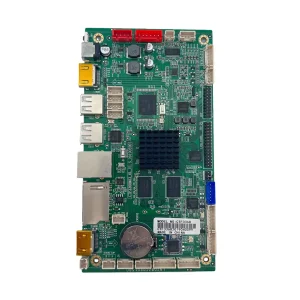
High-Quality Industrial Control PCBA Assembly & Processing Service Supplier, Suppliers
View Product Details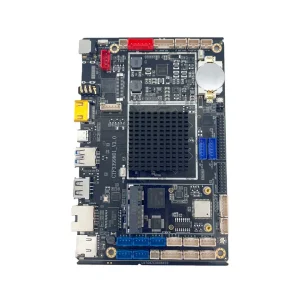
ODM One-stop PCBA Manufacturing & PCB Assembly Manufacturers, Suppliers
View Product Details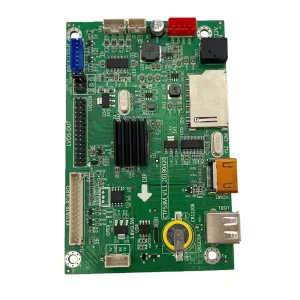
OEM Professional SMT PCBA Production for Electronics Manufacturers, Supplier
View Product Details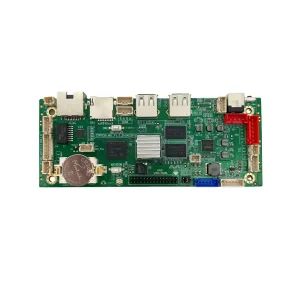
Custom High-quality PCBA Assembly for IoT Control Boards Supplier, Factory
View Product Details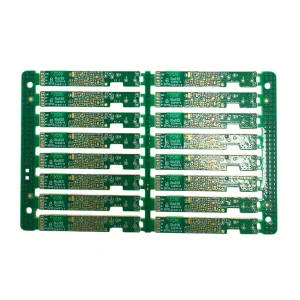
OEM Smart Bracelet PCBA OEM Manufacturing Factories, Factory
View Product DetailsThe Critical Role of Custom Humidity-Controlled Warehousing
Navigating moisture-induced component degradation, interstitial delamination, and latent solder defects across high-reliability electronics manufacturing and long-cycle strategic reserves.
In modern high-density electronic assemblies, component degradation caused by uncontrolled ambient humidity is one of the most persistent yet underestimated threats to product reliability. With the proliferation of fine-pitch Ball Grid Arrays (BGAs), Chip Scale Packaging (CSP), quad flat no-lead (QFN) components, and ultra-thin multilayer PCBs, moisture ingress into permeable plastic packaging compounds induces catastrophic failure modes during high-temperature reflow soldering. Under typical lead-free peak reflow temperatures (reaching 245°C to 260°C), trapped hygroscopic moisture expands instantaneously into high-pressure superheated steam. This phenomenon produces internal delamination, bond wire severance, silicon die fracture, and the infamous "popcorning" effect.
As an integrated Tier-1 manufacturing provider, Shenzhen Aozite Technology Co., Ltd. addresses this fundamental physics challenge by engineering and operating custom humidity-controlled warehouse facilities. Far beyond passive dry cabinets, our dedicated environmental storage infrastructure incorporates dual-rotor solid desiccant dehumidification, closed-loop nitrogen purging systems, and continuous multi-point psychrometric telemetry. This infrastructure guarantees complete adherence to IPC/JEDEC J-STD-033D (Handling, Packing, Shipping and Use of Moisture/Reflow Sensitive Surface Mount Devices) and IPC-1601A (Printed Board Handling and Storage Guidelines).
The Global Supply Chain Landscape & Climate Volatility
How semiconductor reshoring, equatorial transit bottlenecks, and extended floor-life requirements demand custom micro-climate warehousing.
Buffer Inventory & Geopolitical Resilience
Global component allocations and lead-time volatility have forced electronics OEMs to transition from brittle "Just-In-Time" (JIT) models to strategic "Just-In-Case" (JIC) buffer inventory. Holding sensitive bare dice, active silicon, and unpopulated bare boards over 6 to 24 months requires industrial-grade humidity control to prevent lead oxidation and intermetallic degradation.
Equatorial Maritime Transit Realities
Over 78% of active global silicon travels via marine routes through high-temperature, hyper-humid maritime corridors (often exceeding 90% RH at 35°C). Even when vacuum-sealed in Moisture Barrier Bags (MBBs) with standard desiccant packs, micro-perforations or poor seals lead to moisture intrusion. Custom receiving warehouses provide instant decontamination, vacuum testing, and restorative dry-baking.
Lead-Free Solder Alloys & Intermetallic Fatigue
The transition to RoHS-compliant SAC305 and low-temperature bismuth alloys exacerbates sensitivity to surface oxidation. Component pin plating (such as matte Sn or immersion silver) stored above 40% RH oxidizes rapidly, increasing surface tension, promoting non-wetting or de-wetting, and triggering catastrophic head-in-pillow (HiP) solder defects during reflow assembly.
Custom Warehouse Environmental Zonation & Protocols
Quantitative differentiation of environmental management zones deployed across our custom manufacturing facilities in Shenzhen.
| Storage Classification | Target RH Range | Temperature Range | Atmospheric Medium | MSD Suitability (J-STD-033D) | Industrial Applications |
|---|---|---|---|---|---|
| Zone 1: Ultra-Dry Storage | < 1% to 5% RH | 21°C ± 2°C | Dry Air / Active N2 Purge | MSL Level 4, 5, 5a, 6 | Opened BGA reels, flip-chip packages, ultra-thin multi-layer bare PCBs, bare silicon wafers. |
| Zone 2: Precision Staging | < 10% RH | 22°C ± 1.5°C | Desiccant Dehumidified Air | MSL Level 2a, 3 | SMT Feeder staging areas, active kitting buffers, pre-assembly engineering staging. |
| Zone 3: Controlled Raw Materials | 30% to 40% RH | 23°C ± 2°C | HEPA Filtered Air (ESD EPA) | MSL Level 1 & Sealed MBB | Passive components (0201/01005 passives), connector hardware, mechanical chassis, reels in sealed MBBs. |
| Zone 4: Finished Goods PCBA Buffer | 35% to 50% RH | 22°C ± 2°C | Continuous ESD Monitored Air | Tested PCBA Assemblies | Completed medical modules, automotive control units, conformal-coated industrial gateways awaiting box build. |
Electrostatic Discharge (ESD)
Maintained strictly under ANSI/ESD S20.20 with conductive epoxy flooring (10^6 to 10^9 ohms), continuous wrist strap grounding, and ionizing air blowers at all transfer stations.
Dew Point Suppression
Industrial honeycomb rotary desiccants suppress internal atmospheric dew points down to -40°C Td, making microscopic surface condensation physically impossible under ambient temperature swings.
Floor Life Reset Baking
High-precision industrial baking chambers configured at 40°C (< 5% RH) for tape & reel carriers, or 125°C for metal/waffle trays, reliably resetting expired floor life without component thermal fatigue.
Traceable Digital Telemetry
IoT-enabled sensors record psychrometric logs at 60-second intervals. Automated alerts notify plant operations via SCADA if RH deviates beyond ±1.5% from designated setpoints.
Specialized Turnkey Cleanroom & Storage Integrations
Where moisture and environmental failure result in mission-critical field recalls, our custom warehouse solutions provide verifiable peace of mind.
Automotive & New Energy Vehicles (NEVs)
Automotive electronic control units (ECUs), Battery Management Systems (BMS), and Advanced Driver Assistance Systems (ADAS) operate in extreme operating environments (-40°C to +125°C). We safeguard silicon micro-controllers and high-voltage MOSFETs from dendritic copper growth and ionic contamination through ultra-low RH nitrogen storage, satisfying rigorous IATF 16949 and AEC-Q100 audit criteria.
- Zero moisture absorption prior to 10-zone reflow ovens
- Conformal coating adhesion guaranteed via pre-coating de-gassing
- Traceable lot serialization linking warehouse rack to vehicle chassis
Medical Electronics & Class II/III Diagnostics
Implantable device telemetry, surgical monitors, and in-vitro diagnostic (IVD) modules require pristine environmental isolation. Our ISO Class 7 cleanroom-docked humidity-controlled warehouses eliminate airborne particulate accumulation while keeping relative humidity precisely bounded to prevent passive component drift and sensor recalibration errors.
- Full conformity to ISO 13485 medical device quality protocols
- Cleanroom vacuum packaging with validated dessicant ratios
- Unbroken cold/dry chain records for bio-hybrid sensor assemblies
Industrial Automation & Edge Computing
Industrial PLCs, motor drivers, and industrial IoT gateways must withstand decades of continuous operation in corrosive or humid environments. Sourcing and mounting thick-copper heavy-power PCBs alongside fine-pitch 0.4mm BGA controllers requires strict atmospheric pre-conditioning to ensure uniform wetting and void-free solder joints under IPC-A-610 Class 3 standards.
- Elimination of BGA solder ball voiding via desiccated staging
- Wave soldering optimization for high-density through-hole connectors
- Extended buffer preservation for 10-year industrial lifecycle support
Localized Compliance & Rigorous Quality Safeguards
International quality frameworks and localized technical infrastructure deployed at our primary manufacturing campus in Shenzhen, China.
IPC/JEDEC J-STD-033D
Comprehensive control of Floor Life for Moisture Sensitivity Levels 1 through 6. Our computerized ERP automatically decrements exposure time the second an MBB seal is opened, locking components from line access if remaining floor life hits safety buffers.
ANSI/ESD S20.20 & IEC 61340
Full Electrostatic Discharge Protected Area (EPA) validation throughout warehouse aisles, transfer carts, automated storage lockers, and SMT feeder loading zones. Daily calibration audits ensure surface resistivity and body voltage generation remain below 100V.
ISO 9001:2015 & ISO 14001
Closed-loop quality management system governing receiving inspection, chemical desiccant rejuvenation, nitrogen storage tank purges, and automated sensor recalibration traceable to National Metrology Institutes.
RoHS & REACH Compliance
Contamination-free environmental containment preventing volatile organic compound (VOC) transfer or silicone contamination in desiccant filtration banks, safeguarding gold/tin wire bonding and lead-free solder joint chemistry.
Step-by-Step Material Handling & Factory Integration
How material moves through our custom humidity controlled warehouse direct to SMT high-speed lines.
Operating an electronics manufacturing hub within Shenzhen’s subtropical climate presents significant humidity risks. With outside ambient conditions regularly exceeding 85% RH and 32°C during summer monsoons, our factory architecture establishes a series of hermetic pressure and dew-point locks that isolate components from ambient exposure at every stage of fabrication:
De-Humidified Airlock Ingestion
Inbound shipments of active semiconductors, bare PCBs, and passive chips enter an airlock de-staging zone. Humidity Indicator Cards (HICs) are inspected under microscope; any packaging showing greater than 10% RH exposure triggers immediate quarantine and baking verification.
Automated Micro-Climate Racks
Components are cataloged via barcode into automated desiccant high-bay racks maintained at < 5% RH. Nitrogen-injected dry cabinets host unsealed wafer-level reels, stopping intermetallic boundary oxidation and preserving floor life indefinitely.
Sealed Transfer to 8 High-Speed Lines
Kitted smart feeders are loaded inside an environmentally conditioned feeder setup cell. Completed carts are transferred directly onto our 8 high-speed SMT lines (capable of 1.2M+ placements daily) with minimal ambient exposure, preserving solder paste wetting characteristics.
Technology Roadmap & Next-Gen Smart Warehousing
Pioneering AI psychrometric forecasting, automated guided vehicles (AGVs), and carbon-neutral regeneration technologies through 2030.
Predictive Psychrometric AI Controls
Integrating external meteorological telemetry with factory IoT sensors enables predictive machine learning algorithms to modulate desiccant wheel RPM and chilled water coils 6 hours ahead of external typhoon fronts, eliminating transient humidity spikes within warehouse enclosures.
Autonomous AGVs with Active Dry Enclosures
Developing internal automated guided vehicles fitted with battery-powered active miniature desiccant pods. Components transfer from the central humidity-controlled warehouse to SMT lines inside sealed < 5% RH environments, completely neutralizing ambient exposure risk during transit.
Waste-Heat Desiccant Regeneration
Capturing thermal exhaust from reflow soldering ovens and compressed air plants to regenerate solid silica desiccant matrices. This reduces energy consumption across our dry storage facilities by 42%, combining stringent environmental control with sustainable ESG initiatives.
Frequently Asked Technical Questions
Direct, engineering-level answers regarding humidity control parameters, baking limits, and component reliability.
How does custom humidity-controlled warehousing differ from standard air-conditioned warehouses?
What are the IPC/JEDEC J-STD-033D guidelines for storing opened Moisture Sensitive Devices (MSDs)?
Why is dry room desiccant storage preferred over repeated thermal baking cycles?
How does Aozite monitor and record psychrometric data for buyer compliance audits?
Can overseas buyers audit Aozite’s humidity storage infrastructure before placing volume contracts?
Explore Our Full Range of Turnkey Electronic Solutions
From prototyping runs to high-volume production, every board manufactured at Aozite benefits from strict moisture-free storage protocols and rigorous SMT assembly controls.
ODM Earphone Panel PCBA OEM ODM Service Supplier, Factory
View Product Details
China Custom PCBA Production from Gerber & BOM Files Service, Factories
View Product Details
Custom Shenzhen SMT PCBA for Smart Product Manufacturing Service, Factory
View Product Details
High-Quality Industrial Control PCBA Assembly & Processing Service Supplier, Suppliers
View Product Details
ODM One-stop PCBA Manufacturing & PCB Assembly Manufacturers, Suppliers
View Product Details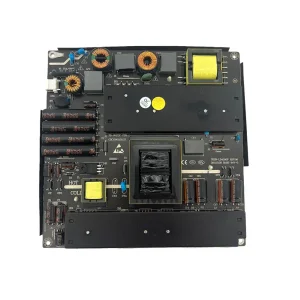
Best SMT Factory Power PCBA Production with DIP Supplier, Suppliers
View Product Details
Custom High-quality PCBA Assembly for IoT Control Boards Supplier, Factory
View Product Details