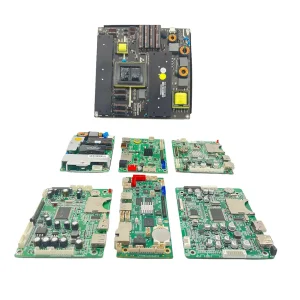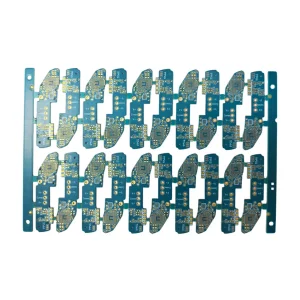
Standard & Custom OEM/ODM Circuit Assemblies
Direct manufacturing output supporting precision solid-state lighting, smart battery power units, and intelligent hardware.
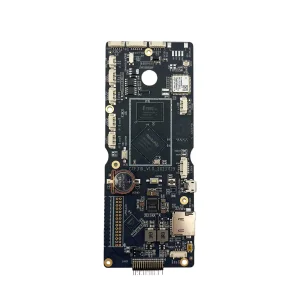
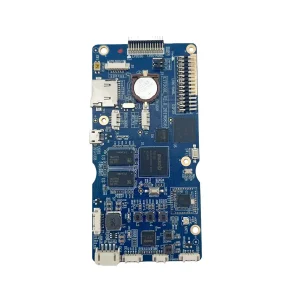
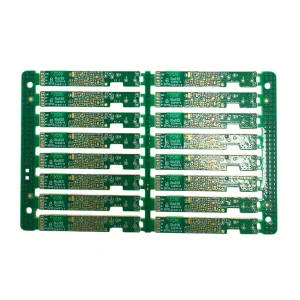
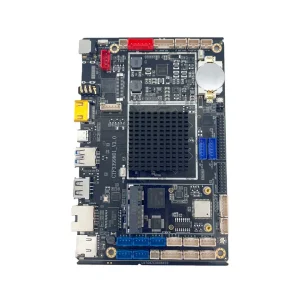
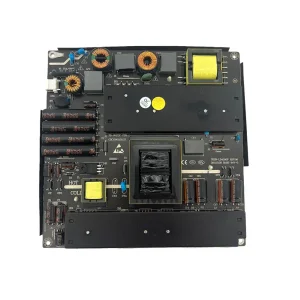
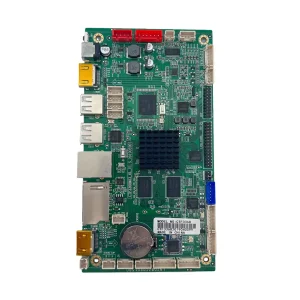
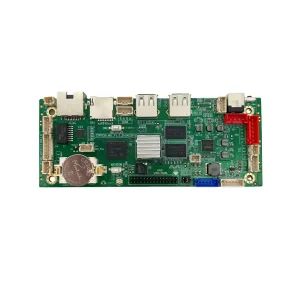
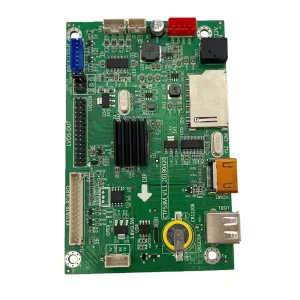
Engineering Architecture of Emergency Lighting PCBA
Unlike conventional commercial luminaires, emergency illumination hardware functions as an active safety life-line, mandating fault-tolerant design and instantaneous power transit.
Sub-Millisecond Transfer Circuits
Instantaneous line-sense circuits detect main AC dropouts, shifting power routing from standard mains to the auxiliary reserve within <10ms without LED flicker or driver latchup.
- Opto-isolated AC zero-cross detection
- Low MOSFET RDS(on) reverse blocking
- Zero arc risk solid-state switching
Smart BMS & Battery Conditioning
Multi-chemistry charging circuitry supports LiFePO4, Ni-Cd, and Ni-MH architectures featuring precision constant-current/constant-voltage (CC/CV) profiles and thermal throttling.
- Over-charge and deep-discharge protection
- Cell balance & passive thermal mitigation
- Autonomous monthly/annual self-testing
Thermal & High-Current Isolation
Optimized FR4 high-Tg (170°C+) and aluminum-core metal clad substrates minimize thermal impedance, extending internal electrolytic capacitor lifespan under permanent continuous standby.
- Creepage & clearance adhering to UL 924
- Selective conformal coating against moisture
- Automated Optical & X-Ray solder void checks
Localized Support & Global Regulatory Compliance
Emergency lighting boards operate in strictly audited building safety environments. We guarantee end-to-end design trace to international certifications.
| Regulatory Standard | Target Geographic Market | PCBA Hardware Requirements | Shenzhen Aozite Verification Protocol |
|---|---|---|---|
| UL 924 / CSA C22.2 | North America (USA, Canada) | 90-minute minimum emergency runtime, 600V line surge withstand, fail-safe transfer logic. | 100% automated high-voltage hi-pot test (up to 3.75kV), burn-in under dynamic thermal cycling. |
| EN 60598-2-22 / CE | European Union, UK (UKCA) | DALI-2 interface protocol integration, IEC 62386-202 automated periodic battery testing. | Oscilloscope signal rise-time inspection, DALI compliance protocol analyzer testing. |
| AS/NZS 2293 | Australia & New Zealand | Extreme temperature tolerance (up to 50°C ambient), 2-hour discharge rating for evacuation. | High-temperature chamber aging with continuous current and thermal data telemetry. |
| RoHS 3 / REACH | Worldwide Tier-1 OEMs | 100% lead-free, non-toxic flame retardants, conflict-free solder materials. | XRF raw material screening and certified chemical laboratory batch documentation. |
Shenzhen Supply Chain Velocity & Manufacturing Depth
Deploying production inside Shenzhen’s Shangxue Science Park provides unparalleled procurement speed, rapid pilot runs, and seamless volume scalability.
4-Hour Sourcing Perimeter
Instant access to primary microcontrollers, high-voltage MOSFETs, transformers, and industrial battery cells cuts component lead times from weeks to hours.
Automated In-Line Inspection
Closed-loop 3D SPI (Solder Paste Inspection) coupled with inline 3D AOI and real-time offline X-ray ensures sub-zero solder bridging on tight-pitch ICs.
Mixed SMT & DIP Capacity
8 high-speed pick-and-place lines handle 0201 passives, while wave soldering systems secure heavy through-hole transformers and terminal blocks.
What Global Tier-1 Buyers Demand From PCBA Partners
Sourcing strategies have evolved from bare labor cost arbitrage to deep supply-chain transparency, lifecycle resilience, and zero-defect quality gates.
Granular Traceability (Lot & Reel)
Procurement teams require board-level 2D QR code serialization linking each PCBA directly to the component reel ID, reflow oven zone temperature, and post-assembly functional test log.
Obsolescence Prevention (DFM/BOM Review)
Emergency lighting controllers have multi-year certified lifespans. We identify single-source semiconductors during Gerber review, proposing drop-in pin-compatible alternatives to avert sudden shortages.
Total Turnkey Execution Under One Roof
Overseas OEM partners eliminate cross-vendor finger-pointing. We manage bare PCB fabrication, component kitting, dual-technology assembly, fixture-based FCT, and final conformal coating under a single PO.
Emerging Technology Trends in Emergency Lighting PCBA
The industry is transitioning toward connected, energy-dense, and automated infrastructure frameworks.
Wireless Mesh (Matter / BLE)
Moving beyond hardwired DALI buses to encrypted wireless mesh networks, allowing emergency luminaires to self-report battery health straight to central building automation dashboards.
GaN Power Conversion
Gallium Nitride (GaN) switching topologies reduce transformer footprint by up to 45%, shrinking the emergency driver module so it fits effortlessly into low-profile architectural fixtures.
Universal LiFePO4 Transition
Systematic migration from outdated cadmium cells to environmentally sustainable, thermally safe Lithium Iron Phosphate packs, yielding 8–10 year operational life without capacity drop.
Predictive Cell Degradation AI
On-board microcontroller algorithms analyze impedance fluctuations over regular charge-discharge cycles, flagging battery failure months before sudden functional collapse.
Localized Engineering Use Cases & Field Implementations
Different operating environments demand targeted PCBA component choices and tailored board protection.
Commercial High-Rise Complexes
Architectural exit signage and recessed corridor troffers require ultra-thin driver PCBA formats with integrated DALI-2 protocol chips for automated digital maintenance logging.
Industrial Petrochemical Plants (Ex-Proof)
Hazardous explosion-proof lighting housings demand spark-free solid-state switching, high-pot isolation above 3kV, and heavy polyurethane conformal coating against airborne corrosive gases.
Cold Storage & Extreme Ambient Sites
Sub-zero logistics facilities utilize specialized PCBA boards containing autonomous heating trace resistors to keep secondary battery chemistry active down to -25°C.
Frequently Asked Questions (FAQ)
Crucial engineering and procurement answers for hardware project managers and strategic sourcing directors.
What engineering documentation is required to initiate a custom emergency lighting PCBA build?
How does Aozite ensure emergency PCBA boards comply with UL 924 and EN 60598-2-22 safety standards?
Can you handle high-mix, low-volume (HMLV) orders alongside volume mass runs?
What types of battery chemistries can your emergency lighting PCBA management circuits handle?
What testing capabilities are performed before shipment to overseas buyers?
Complete Turnkey PCBA Capabilities
Explore our diverse production outputs spanning industrial controls, power electronics, IoT wireless devices, and smart hardware.