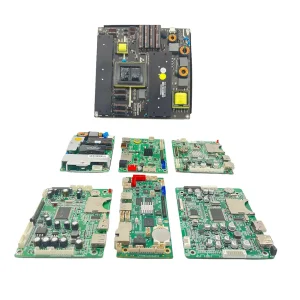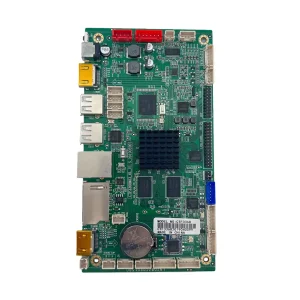
Featured PCBA Production Solutions
Precision SMT assembly, automated high-density component placement, and integrated pre-flashed / in-line MCU provisioning across high-reliability applications.
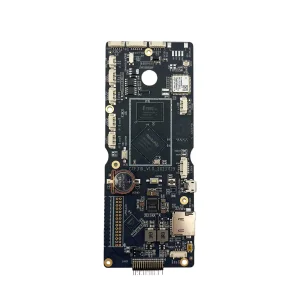
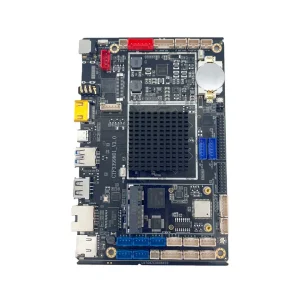
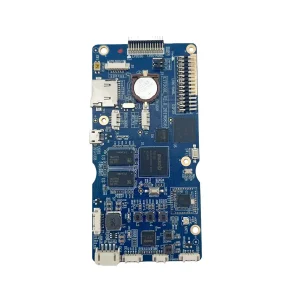
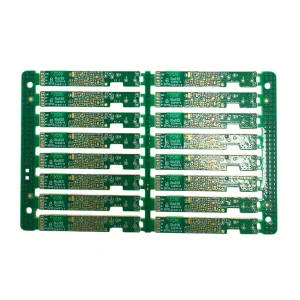
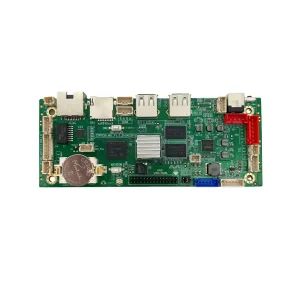
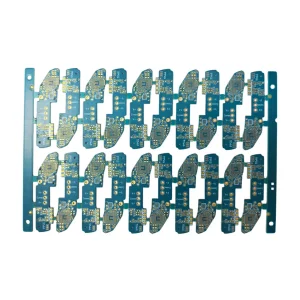
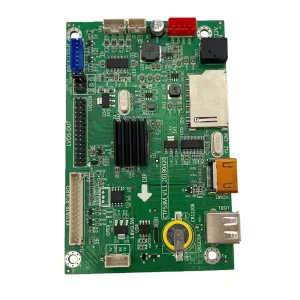
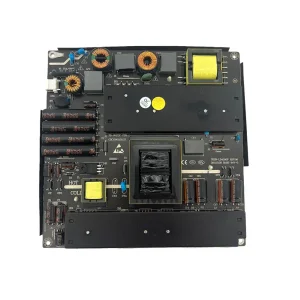
Engineering Architecture of Custom Bootloader Flashing in PCBA
Modern embedded hardware no longer relies on standard factory ROMs. We implement cryptographic root-of-trust provisioning, secure second-stage bootloaders (MCUboot, U-Boot, coreboot), and irreversible eFuse blow procedures directly on automated production lines.
Hardware Root of Trust (RoT) & eFuse Burning
For critical applications (automotive, IoT edge, defense), flashing the bootloader includes permanent physical fusing. Once public key digests are burned into one-time-programmable (OTP) eFuses, JTAG/SWD debug ports are permanently clamped, disabling hardware snooping.
- Irreversible Silicon Key Pinning
- JTAG / SWD Port Lockdown
- Protection Against Differential Power Analysis
Dual-Bank Fail-Safe OTA Bootloader Partitioning
Enterprise clients demand bulletproof Over-the-Air upgradeability. Our engineering team configures flash memory layout into dual active/passive banks (Slot A / Slot B). If a field update corrupts or fails signature verification, the custom bootloader seamlessly rolls back.
- Zero-Bricking Architecture
- Automated Flash Sector Integrity Check
- MCUboot / U-Boot Custom Optimizations
Unique Device Identity & Cloud Injection
Every connected board leaving our factory line requires individual personalization. We inject distinct cryptographic client certificates (X.509), factory calibration offsets, Bluetooth MACs, and IMEI numbers, bound securely to the microchip’s internal silicon serial number.
- Automated AWS IoT / Azure Sphere Enrollment
- Real-time Cloud HSM Key Generation
- Complete Barcode-to-Silicon Traceability
Bootloader Flashing Methodologies Comparison
Selecting the optimal programming stage defines overall production tact time, fixture NRE costs, and security exposure. Here is our comparative manufacturing benchmark.
| Flashing Methodology | Production Phase | Interface Standard | Throughput Rate | Traceability & Key Injection | Ideal Batch Profile |
|---|---|---|---|---|---|
| Automated Off-Line Gang Programming | Pre-SMT Reel-to-Reel Tape | Dedicated Socket (QFN/BGA/QFP) | Ultra-High (>2,500 pcs/hr) | Static Bootloader Only (No dynamic keys) | Mass production runs exceeding 50,000 pcs |
| In-Circuit Automated Bed-of-Nails Fixture | Post-Reflow SMT / Panel Level | Pogo-pin SWD, JTAG, SPI, UART | High (Parallel Gang 8-32 boards) | Complete (Dynamic UID, MAC, Private Keys) | Agile OEM/ODM (1,000 to 50,000 pcs) |
| Functional Circuit Test (FCT) Docking | Final Sub-System Assembly | USB-C, Ethernet, Direct Header | Medium (120-300 pcs/hr) | End-to-End Functional + Cloud Verification | High-Mix, Mission-Critical, Medical & Industrial |
| JTAG Boundary Scan Flashing | Post-Assembly Quality Assurance | IEEE 1149.1 / 1149.7 TAP Port | Moderate (Diagnostic Level) | Hardware Validation + Boot Injection | Complex Multi-BGA, High-Layer HDI Boards |
Localized Compliance Assurance & Secure Provisioning
Navigating modern hardware cybersecurity mandates requires complete traceability. From the EU Cyber Resilience Act (CRA) to US NIST SP 800-193, we integrate air-gapped security protocols directly within our manufacturing lines.
EU Cyber Resilience Act (CRA) Ready
Mandating secure bootloaders that verify digital signatures before execution. Our flashing pipeline prohibits unauthenticated firmware states, ensuring exported hardware meets strict CE/RED cybersecurity directives.
NIST SP 800-193 Firmware Resiliency
Implementing guidelines for Platform Firmware Resilience. Flashed bootloaders provide mechanisms for automated detection of firmware corruption, cryptographically validated recovery, and immutable golden image rollback.
Air-Gapped Key Custody & Zero-Leakage
Private signing keys remain secured inside Hardware Security Modules (HSM). Our factory programmers connect via encrypted local channels, injecting public certs and per-board sym keys without line operators ever accessing raw credentials.
Global Radio Certification (FCC/IC/MIC)
Flashing RF calibration tables directly into flash memory registers during SMT testing. Ensures frequency offset, tx power, and modulation characteristics strictly match FCC Title 47 and TELEC regulations.
The Shenzhen Supply Chain Advantage for Fast-Paced PCBA
Engineering firmware and assembling complex hardware require tight physical coupling. Our factory in Shenzhen leverages Asia’s most comprehensive electronics ecosystem to minimize turnaround cycles and eradicate component risk.
1-Hour Component Sourcing Matrix
Direct proximity to Tier-1 authorized distributors and semiconductor hubs means missing passive packages or microcontrollers (STM32, NXP, ESP32, Nordic, Renesas) arrive on our loading dock in hours, not weeks.
Rapid Tooling & In-House Pogo Jigs
We mill custom bed-of-nails flashing jigs in-house using CNC machining within 48 hours of receiving your Gerber/test-point files, accelerating pilot engineering validation runs (EVT/DVT).
DFM + DFT Pre-Production Screening
Our veteran engineers inspect test point pad diameters, pull-up/down resistors on boot strapping pins, and decoupling capacitance near the flash chip prior to cutting stencils, ensuring zero flashing failures during assembly.
Specialized Bootloader Provisioning Across Critical Verticals
Different industries enforce starkly different bootloader priorities. Our specialized production lines adjust memory mapping, security validation, and boundary testing to match stringent operating requirements.
Automotive & BMS
UDS-compliant CAN/LIN bootloaders configured to ISO 26262 ASIL-D specs with dual-bank recovery for electric powertrain & battery control.
Medical Electronics
Compliant with IEC 62304 standards; cryptographically locked boot code with 100% automated FCT and full batch traceability for health monitoring.
Smart IoT & Wearables
Optimized minimal flash footprints (BLE/Matter), ultra-low sleep current validation, and zero-touch direct cloud credential onboarding.
Industrial PLCs
High-temperature resilient flash burning for EtherCAT, Profinet, and Modbus automation controllers operating non-stop in noisy environments.
Telecommunications
Multi-core processors requiring synchronized stage-1 and stage-2 boot code across Linux kernel, FPGA bitstreams, and DSP co-processors.
Emerging Flashing Trends & Global Procurement Criteria
As semiconductors integrate tighter security blocks, overseas procurement teams are transitioning from simple BOM-cost models to evaluating automated secure ingestion and lifetime firmware resilience.
Post-Quantum Cryptography Readiness
With the finalization of NIST's Post-Quantum Cryptography (PQC) standards (FIPS 203, 204), next-generation bootloaders require larger signature footprints (e.g., ML-DSA / Dilithium). Factory lines must accommodate flash size expansion and longer cryptographic verification cycle times without degrading assembly throughput.
Aozite factory engineers work directly with your firmware architects to configure high-speed SWD/JTAG clocks (up to 50 MHz) and optimized buffer streaming, keeping flashing cycle times within predictable manufacturing windows.
AI-Driven Dynamic Verification
Traditional pass/fail current draw thresholds are being replaced with AI-monitored transient power profiling during the boot sequence. By observing high-frequency current signatures during initial CPU core startup, automated fixtures detect latent bonding defects, micro-bridging, or under-voltage anomalies before boards advance to conformal coating.
This closed-loop telemetry is linked directly into our MES (Manufacturing Execution System), creating an unalterable digital twin for every serial number produced.
Enterprise Sourcing Checklist
When selecting a China PCBA partner for bootloader-critical products, evaluate:
- Does the factory support Hardware Security Module (HSM) key injection?
- Can fixtures perform parallel gang flashing on panelized boards?
- Are test logs and unique silicon IDs exportable via API?
- Is the factory certified to ISO 9001, IATF 16949, and ISO 13485?
Custom Bootloader Flashing Technical FAQ
Answers to critical engineering and procurement inquiries regarding custom bootloader firmware programming, fixture development, security protocols, and production yield controls.
What files and information are required to set up automated bootloader flashing?
How do you safeguard client IP, proprietary firmware, and private cryptographic keys?
Can you inject unique serial numbers, MAC addresses, and calibration constants per board?
What is the difference between pre-SMT IC gang flashing and in-circuit panel flashing?
How do you handle microcontrollers that become bricked or unresponsive during production?
Can overseas engineering teams remotely audit or update the factory flashing scripts?
Explore Our PCBA Manufacturing Series
Ready to scale your next electronic hardware design? Leverage our high-speed SMT lines, automated bootloader flashing fixtures, and end-to-end turnkey assembly services.