
Featured PCBA Processing Solutions & Turnkey Assemblies
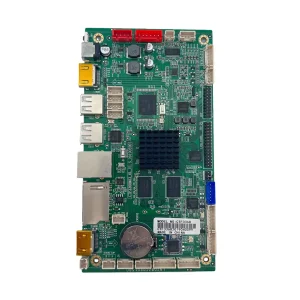
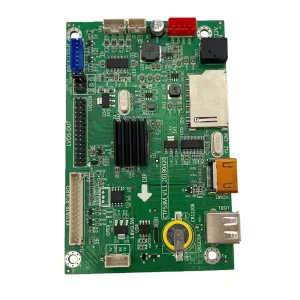
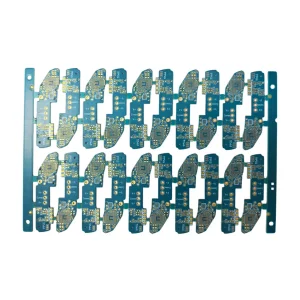
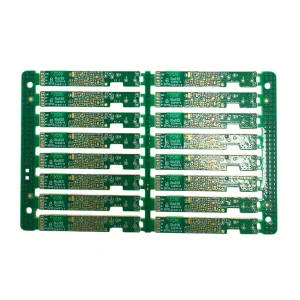
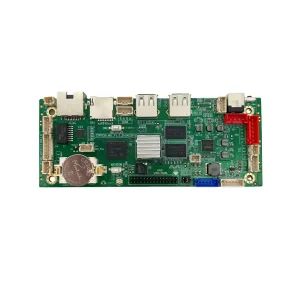
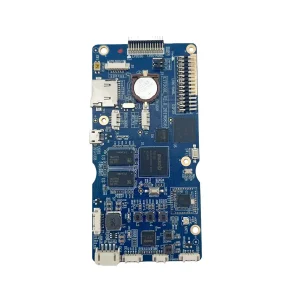
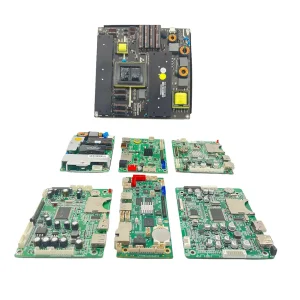
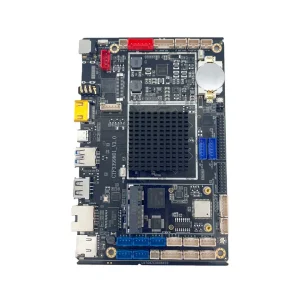
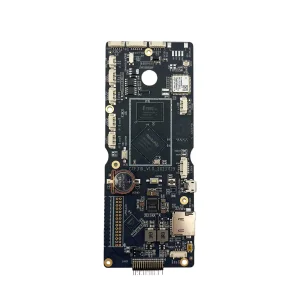
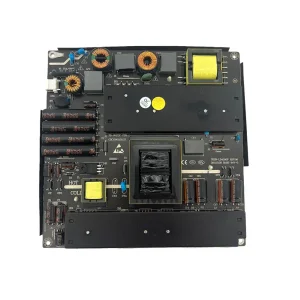
Each turnkey PCBA batch below undergoes mandatory material intake verification, desiccant integrity inspection, and programmable pre-assembly baking cycles to guarantee zero-defect soldering on multi-layer and dense surface-mount packages.
The Critical Role of Custom Baking in High-Yield Surface Mount Assembly
In modern electronics manufacturing, moisture entrapment within component packaging and printed circuit board laminates is the primary root cause of catastrophic assembly failures. During lead-free reflow soldering, peak temperatures regularly reach 240°C to 260°C. At these elevated thermal regimes, trapped moisture inside plastic encapsulated microcircuits (PEMs), ball grid arrays (BGAs), chip-scale packages (CSPs), and high-density interconnect (HDI) laminate structures instantly vaporizes. The resulting internal steam pressure can exceed several megapascals, producing violent volumetric expansion.
Without an engineered, auditable custom baking before assembly service, this rapid thermodynamic expansion causes the infamous "popcorn" effect: internal delamination between the semiconductor die and lead-frame, bond wire shear, microscopic silicone die cracking, internal via tearing in multi-layer PCBs, and exterior package rupture. Even when external package rupture does not manifest immediately, latent defects remain undetected during conventional automatic optical inspection (AOI), only to trigger catastrophic system failure in mission-critical field operations.
Professional pre-assembly baking is not merely "heating parts in an oven." It represents a calibrated thermodynamic desiccation science governed by international industrial standards, primarily IPC/JEDEC J-STD-033D (Handling, Packing, Shipping and Use of Moisture, Reflow, and Process Sensitive Devices) and IPC-1601 (Printed Board Handling and Storage Guidelines). Each package configuration, substrate thickness, glass transition temperature (Tg), and Moisture Sensitivity Level (MSL rating from Level 2 up to Level 6) demands a dedicated thermal cycle curve. Improper baking parameters—such as excessive temperatures that promote rapid intermetallic compound (IMC) growth or inadequate duration that leaves core moisture trapped—can be as lethal to solder joint integrity as the moisture itself.
IPC/JEDEC J-STD-033D Moisture Sensitivity Levels (MSL) & Baking Protocol
Our Shenzhen facility enforces strict incoming lot control and climate-regulated storage. When moisture barrier bags (MBBs) exhibit humidity indicator card (HIC) contamination or exceed floor life limits, materials are placed into industrial convection baking ovens according to the certified matrix below:
| MSL Level | Floor Life (≤30°C / 60% RH) | Package Thickness | Standard Bake (125°C) | Low-Temp Bake (90°C, ≤5% RH) | Ultra-Gentle Bake (40°C, ≤5% RH) |
|---|---|---|---|---|---|
| MSL 2 | 1 Year | ≤ 1.4 mm / ≤ 2.0 mm / > 2.0 mm | 5 Hours / 7 Hours / 9 Hours | 11 Hours / 15 Hours / 18 Hours | 6 Days / 8 Days / 11 Days |
| MSL 2a | 4 Weeks | ≤ 1.4 mm / ≤ 2.0 mm / > 2.0 mm | 7 Hours / 9 Hours / 13 Hours | 15 Hours / 20 Hours / 28 Hours | 8 Days / 11 Days / 16 Days |
| MSL 3 | 168 Hours (7 Days) | ≤ 1.4 mm / ≤ 2.0 mm / > 2.0 mm | 9 Hours / 13 Hours / 18 Hours | 18 Hours / 27 Hours / 38 Hours | 9 Days / 15 Days / 23 Days |
| MSL 4 | 72 Hours | ≤ 1.4 mm / ≤ 2.0 mm / > 2.0 mm | 11 Hours / 15 Hours / 22 Hours | 22 Hours / 32 Hours / 48 Hours | 12 Days / 20 Days / 30 Days |
| MSL 5 | 48 Hours | ≤ 1.4 mm / ≤ 2.0 mm / > 2.0 mm | 12 Hours / 18 Hours / 26 Hours | 25 Hours / 38 Hours / 58 Hours | 14 Days / 24 Days / 36 Days |
| MSL 5a | 24 Hours | ≤ 1.4 mm / ≤ 2.0 mm / > 2.0 mm | 14 Hours / 22 Hours / 32 Hours | 30 Hours / 46 Hours / 68 Hours | 16 Days / 28 Days / 42 Days |
| MSL 6 | Mandatory Bake Before Use | All Form Factors | Process According to Component Supplier Specification Sheet Prior to SMT Mount | Controlled Thermal Profile | Requires Nitrogen Purge |
Bare Printed Circuit Board Dehydration (IPC-1601 Protocols): Beyond active semiconductor devices, bare multi-layer circuit boards require careful pre-baking evaluation. High-layer boards (8 to 32 layers), heavy-copper power substrates, and rigid-flex laminates accumulate atmospheric moisture during maritime shipping and unsealed storage. Under IPC-1601 guidelines, bare PCBs suspected of moisture ingress undergo desiccation at 105°C to 120°C for 2 to 4 hours, ensuring the board core's moisture content stays well below 0.1% by weight. This eliminates the risk of solder mask blistering, copper barrel cracking inside through-hole vias, and micro-void formation in buried via layers during subsequent double-sided SMT reflow.
Localization Support, Rigorous Compliance & Auditable Quality Guarantees
Exporting mission-critical electronics to North American, European, and Japanese markets necessitates absolute traceability, cleanroom environmental management, and verifiable adherence to international quality frameworks.
IPC-A-610 Class 3 & J-STD-001
All thermal conditioning routines conform strictly to IPC Workmanship Standards. Our default production runs follow Class 2 requirements, while dedicated aerospace, medical, and defense product lines are managed under stringent Class 3 criteria with full solder joint metallurgical verification.
ANSI/ESD S20.20-2021 Protection
Baking ovens, transport carts, transfer trays, and nitrogen desiccant chambers are permanently integrated into continuous electrostatic discharge (ESD) loops. Personnel are tethered via monitored wrist-straps, guaranteeing that high-temperature dry baking does not induce static voltage discharge on ultra-sensitive silicon.
Complete MES Lot Serialization
Every component reel, tray, or bare PCB batch entering a pre-assembly baking oven receives a unique 2D barcode logged into our Manufacturing Execution System (MES). The record captures start time, thermal ramp rates, real-time internal chamber temperatures, operator ID, and remaining floor life upon oven departure.
RoHS, REACH & Halogen-Free
All baking chambers utilize clean, non-outgassing heating elements. Our process controls preserve component lead finishes—including ENIG, Immersion Silver, Immersion Tin, and lead-free SAC305 solder balls—preventing lead tarnishing, copper migration, or premature intermetallic oxidation.
Why Sourcing Pre-Baking & PCBA from China Delivers Unmatched Turnaround
The electronics manufacturing cluster in Shenzhen, Guangdong, is globally recognized as the epicenter of hardware agile delivery. By combining turnkey procurement, high-capacity industrial ovens, and immediate line changeovers on a single campus, we eliminate weeks of multi-vendor friction.
Same-Day Localized Component Kitting
Located within a 30-minute radius of the world's most comprehensive electronic distributor warehouses, we verify, retrieve, and inspect active silicon, discrete passives, and raw PCB panels within hours. If an incoming tape-and-reel has been breached during international transit, our on-site baking ovens immediately re-condition the devices without pausing the overarching build schedule.
Dedicated High-Capacity Convection Ovens
Rather than relying on small laboratory countertop ovens, our facility operates multiple high-volume forced-convection industrial baking ovens capable of continuous 24/7 cycle operation. Multi-sensor micro-controllers maintain temperature uniformity within ±2.5°C throughout the entire chamber volume, preventing localized thermal stress on carrier tapes and trays.
Drastic Bill-of-Materials (BOM) Cost Efficiency
Contracting an independent testing house or secondary vendor in the West to perform specialized component baking adds significant markups, logistic transit delays, and multi-tier handling risks. By embedding custom pre-assembly baking directly into our standard turnkey SMT assembly pipeline, overseas buyers reduce overall unit manufacturing costs by 20% to 35% while retaining end-to-end quality accountability.
What Global Enterprise Procurement Teams Require from Assembly Suppliers
Procurement leaders and quality assurance directors at Fortune 500 corporations, Tier-1 automotive manufacturers, and medical device innovators do not evaluate PCBA suppliers solely on headline price per point. They assess suppliers through the lens of comprehensive defect prevention, systemic risk mitigation, and documented process continuity.
When procurement teams request pre-assembly baking capabilities, their core qualification criteria include:
Defect Elimination at the Source
Ensuring that no IC package leaves the moisture-sensitive staging zone without a validated bake cycle log. This prevents the propagation of micro-cracks that compromise functional test yield and field longevity.
Strict Floor Life Management
Once baked, components possess a specific "floor life" (e.g., 72 hours for MSL 4). Procurement audits verify that our plant tracks elapsed time on factory floor displays and returns unmounted reels to nitrogen cabinets before expiration.
Carrier & Reel Thermal Compatibility
Standard packaging tapes and reels often melt at 125°C. Global buyers require suppliers who intelligently deploy low-temperature baking (40°C–90°C with ≤5% RH) or execute clean de-reeling and re-reeling under ESD-safe cleanroom hoods.
Virtual & On-Site Audit Transparency
International clients require verifiable evidence. Our facility supports live high-definition video audit tours and third-party inspection (SGS, TÜV) covering oven calibration records, sensor certifications, and bake tracking logs.
Emerging Trends: Smart IoT Baking, Vacuum Desiccation & Advanced SiP Packaging
The electronic hardware landscape is undergoing rapid miniaturization. The proliferation of System-in-Package (SiP), ultra-fine pitch micro-BGAs (0.35 mm pitch), flip-chips, and 3D stacked die configurations has altered moisture sensitivity dynamics dramatically. Thinner substrate layers and micro-encapsulation compounds absorb moisture significantly faster than traditional legacy DIP or large QFP packages.
Smart IoT Sensor-Monitored Baking
Next-generation baking chambers incorporate distributed IoT telemetry arrays. Multi-channel thermocouple arrays communicate real-time thermal readings directly to central cloud dashboards, alerting process engineers immediately if a temperature deviation exceeding ±1°C occurs during long cycles.
Vacuum Baking at Reduced Temperatures
To prevent oxidation of sensitive lead metallization and mitigate excessive intermetallic growth, vacuum baking technologies are becoming standard for advanced packaging. By lowering ambient pressure within the chamber, moisture boiling points decrease, permitting rapid moisture extraction at merely 40°C to 60°C.
Active Nitrogen Auto-Recharge Storage
Modern manufacturing facilities pair baking ovens with smart nitrogen purge dry cabinets. These cabinets maintain constant relative humidity levels below 1% to 2% RH. Once an assembly run finishes its primary bake, parts reside in nitrogen stasis indefinitely without consuming floor life or undergoing thermal re-aging.
Mission-Critical Application Scenarios Requiring Pre-Assembly Baking
Different operational environments impose varying mechanical and thermal stresses on finished circuit board assemblies. For the following application sectors, custom pre-assembly baking is a non-negotiable prerequisite:
Automotive Inverters & Battery Management (BMS)
Electric vehicle powertrain systems operate under intense cyclic vibrations and thermal extremes (-40°C to +125°C). Moisture-induced micro-voids in heavy copper MOSFET switches or battery monitoring ICs can trigger vehicle power loss or catastrophic thermal runaway events.
Medical Diagnostic & Life-Support Hardware
Class III medical implants, automated ultrasound scanners, and bedside telemetry monitors demand unyielding repeatability. Delamination caused by unbaked BGA micro-controllers can cause intermittent diagnostic readouts, directly risking patient safety.
Industrial Automation PLCs & Motor Drives
Factory floor robotics and variable frequency drives (VFDs) run continuously in harsh industrial air laden with humidity and airborne contaminants. Dehydrating high-layer control boards prior to reflow ensures durable solder joints capable of decades of uninterrupted runtime.
5G Infrastructure & Aerospace Avionics
High-frequency RF laminates (such as Rogers or Teflon-infused PTFE) exhibit unique dielectric properties sensitive to absorbed humidity. Pre-baking stabilizes the dielectric constant (εr), preventing signal attenuation and impedance mismatches across gigahertz communication links.
Frequently Asked Questions: Pre-Assembly Baking Service
Detailed technical clarifications regarding moisture-sensitive devices, thermal cycling parameters, and supply chain quality control.
What is the physical difference between baking bare PCBs versus active semiconductor ICs?
Can component carrier tapes, tubes, and reels withstand 125°C industrial baking ovens?
How does baking affect component solderability and termination finishes (ENIG, SAC, Tin)?
What documentation does your factory provide to prove pre-assembly baking compliance?
What happens if components exceed their floor life after baking but before assembly?
How does baking prevent the "popcorn effect" in Ball Grid Array (BGA) components?
Explore Our Full Range of PCBA Manufacturing & Processing Services
Browse our comprehensive surface-mount assembly, mixed-technology DIP insertion, and specialized electronic processing capabilities manufactured in our state-of-the-art Shenzhen facility.
Initiate Your Custom Pre-Assembly Baking & PCBA Build Package
Submit your Gerber RS-274X/ODB++ archive, complete BOM, and MSL requirements to our engineering desk. Our certified process engineers will deliver a comprehensive DFM audit, thermal baking matrix review, and itemized quotation within 24 hours.