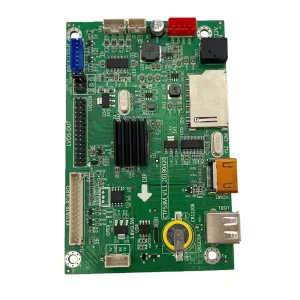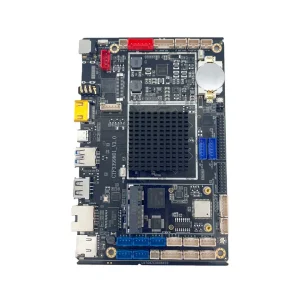
High-Reliability PCBA Manufacturing Solutions
Engineered for high humidity, condensation cycles, and chemical endurance across industrial, consumer, and IoT electronics.
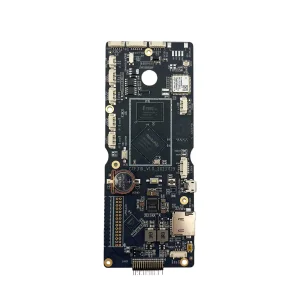
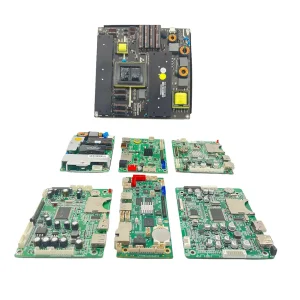
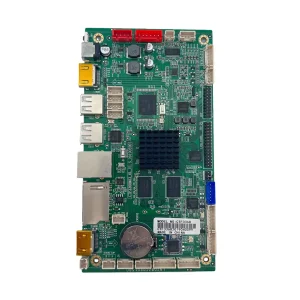
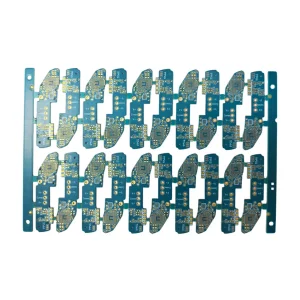
Engineering Moisture Protection: Mitigation of ECM, Dendritic Growth & CAF
Understanding the micro-physical mechanisms that degrade printed circuit assemblies under elevated relative humidity (RH) and condensing environments.
Electrochemical Migration (ECM)
Under DC electrical bias and moisture ingress, metallic ions (principally Sn, Ag, and Cu) dissolve at the anode and migrate across the PCB substrate toward the cathode. Once deposited, they form conductive filament trees (dendrites) causing sudden low-impedance short circuits.
- Accelerated by water-film thicknesses exceeding 3 monomolecular layers.
- Directly driven by hygroscopic ionic residues (Cl⁻, Br⁻, organic acids).
- Requires stringent ROSE ionic cleanliness verification (<1.56 µg/cm² NaCl eq.).
Conductive Anodic Filament (CAF)
CAF involves internal sub-surface electro-migration along glass fiber-resin interfaces within the FR-4 laminate. Moisture hydrolyzes the silane coupling agent, forming an acidic micro-channel that facilitates copper salt precipitation between adjacent through-hole vias.
- Critical failure risk in fine-pitch BGA breakouts and multilayer via fences.
- Mitigated by using Anti-CAF base laminates with high CTI (>600V).
- Controlled by thermal profile tuning to prevent dielectric micro-cracking.
Surface Insulation Resistance (SIR) Loss
Relative humidity above 60% causes water absorption on hydrophilic flux residues, inducing parasitic leakage currents across high-impedance operational amplifiers, ADC input stages, and ultra-low-power microcontrollers in battery-powered IoT devices.
- Triggers false resets, calibration drift, and premature battery depletion.
- Requires IPC-TM-650 Method 2.6.3.7 continuous SIR validation (>100 MΩ).
- Requires automated ultrasonic de-fluxing prior to coating application.
Protective Polymer Systems: Conformal Coating, Nano-Layers & Potting
Comparative technical analysis of moisture-barrier chemistry applied across Chinese smart manufacturing facilities to guarantee IPC-CC-830C compliance.
| Coating Chemistry | IPC Class / Type | Dielectric Strength | Moisture Vapor Transmission (MVTR) | Thermal Range | Optimal Application Scenario |
|---|---|---|---|---|---|
| Acrylic Resin (AR) | IPC-CC-830 AR | 1500 V/mil | Moderate (30-50 g/m²/day) | -65°C to +125°C | Cost-sensitive consumer goods, smart wearables, fast reworkability. |
| Polyurethane Resin (UR) | IPC-CC-830 UR | 1500 V/mil | Low (10-25 g/m²/day) | -65°C to +130°C | Industrial automation, maritime electronics, corrosive chemical environments. |
| Silicone Resin (SR) | IPC-CC-830 SR | 1000 V/mil | Moderate (high permeability, excellent hydrophobicity) | -65°C to +200°C | Automotive engine bays, outdoor LED luminaires, extreme thermal shock zones. |
| Parylene (Type C / N) | IPC-CC-830 XY | 5000+ V/mil | Extremely Low (<0.5 g/m²/day) | -200°C to +150°C | Implantable medical devices, aerospace avionics, pinhole-free vacuum coating. |
| Plasma Nano-Coating | Ultra-thin Fluoropolymer | High surface tension (>110° contact angle) | Hydrophobic barrier repellent | -50°C to +150°C | Acoustic open-mesh ports, TWS earphones, micro-connectors without masking. |
Automated Selective Spray
Utilizing PVA and Nordson Asymtek multi-axis robotic dispensing cells. High-precision needle valves and film coaters accurately map keep-out zones (KOZs)—such as RF shields, test pins, optical sensors, and micro-fit connectors—without requiring manual liquid masking.
UV-Curable Solvent-Free Chemistries
To reduce VOC emissions and accelerate cycle times, our SMT lines deploy UV-initiated acrylated urethanes that cure completely in seconds under high-intensity 365nm UV LED tunnels, complemented by secondary moisture cure mechanisms for shadows beneath BGAs.
Vacuum Potting & Encapsulation
For IP68 immersion and heavy industrial vibration, two-part polyurethane or elastomeric silicone potting materials are degassed under vacuum chambers before automated dynamic-meter injection, eliminating trapped air bubbles that lead to dielectric breakdown under humid stress.
Why Tier-1 Chinese PCBA Factories Lead in Humidity-Proof Assembly
Shenzhen Aozite Technology leverages the world's densest electronics supply chain cluster to provide complete turnkey execution from engineering review to high-volume shipment.
Integrated SMT & Coating Hub
Eliminate intermediate transport between assembly lines and coating houses. Having SMT, automated cleaning, dispensing, and environmental curing in one continuous ESD-controlled facility eliminates contamination pickup and transient moisture absorption.
Same-Day Chemical Procurement
Proximity to certified global chemical formulators (Dow Corning, Humiseal, H.B. Fuller, Henkel Loctite) ensures fresh raw resin stock with full traceability, guaranteed shelf-life monitoring, and immediate access to specialized viscosity thinners.
Automated In-Line Inspection
Closed-loop inspection systems featuring 3D Solder Paste Inspection (SPI), automated optical inspection under 365nm UV blacklight for fluorescent tracer verification, and digital micrometer cross-section checks ensure uniform wet and dry film thicknesses.
Rigorous J-STD-033 MSD Controls
Moisture Sensitive Devices (MSD Level 3 to 5a) are cataloged, stored in automated nitrogen desiccant cabinets maintaining <5% relative humidity, and subjected to pre-assembly low-temperature de-moisturizing baking cycles to prevent popcorning during lead-free reflow.
Macro-Industry Solutions & Localized Harsh Operating Scenarios
Where failure is not an option: field-proven hardware architectures engineered to endure extreme dew-point cycling, aggressive ambient vapors, and corrosive saline environments.
Automotive BMS & Under-Hood Inverters
Environmental Challenge: New Energy Vehicle (NEV) battery management systems and on-board chargers face rapid thermal transitions (-40°C to +105°C) combined with high-humidity engine washdown, condensation near cold chassis plates, and conductive road-salt aerosols.
Engineered Solution: Application of IPC-CC-830 Class 3 thick-film silicone or high-adhesion urethane coatings across high-voltage busbar sensing circuits. Boards undergo 100% X-ray BGA void inspection (<15% void ratio) to prevent moisture trapping under thermal pads.
Maritime, Port Logistics & Offshore Wind
Environmental Challenge: Continuous 95% to 98% relative humidity, dense salt fog (IEC 60068-2-11/52), and airborne sulfurous/chlorinated industrial exhaust that aggressively dissolve copper traces and lead-free solder alloys.
Engineered Solution: Multi-layer dual-cure polyurethane or Parylene vacuum deposition providing uniform pinhole-free film coverage over fine-pitch pins. Combined with tin-nickel or immersion gold (ENIG) surface finishes to inhibit galvanic copper oxidation.
Agricultural IoT & Industrial Gateways
Environmental Challenge: Smart greenhouse sensor nodes, irrigation pump controllers, and rooftop solar micro-inverters that experience daily diurnal dew-point cycles where water vapor condenses directly onto cold circuit surfaces.
Engineered Solution: Automated selective acrylic or silicone coating with integrated hydrophobic plasma finishes. Implementation of IP67 sealed connectors and GORE-TEX pressure equalization vents within custom enclosure box-build assemblies.
Accelerated Stress Testing & Reliability Qualification Protocols
How Aozite validates high-humidity survival through rigorous environmental stress screening before approving mass-production shipments.
THB (Temperature-Humidity-Bias)
JEDEC JESD22-A101 compliant 85°C / 85% RH environmental chamber testing running continuously for 1,000 hours under rated DC operating voltage. Verifies that no dielectric breakdown, leakage current spikes, or metal migration occur over extended operational lifetimes.
HAST (Highly Accelerated Stress)
Accelerating failure modes by subjecting PCBA samples to unsaturated pressurized steam at 110°C to 130°C and 85% RH at 2.3 atmospheres. Compresses months of tropical field degradation into 96 hours to identify moisture permeation through encapsulation interfaces.
ROSE & Ion Chromatography
Resistivity of Solvent Extract (ROSE) testing validates overall bulk ionic contamination to levels below 1.56 µg/cm² NaCl equivalent. For critical Class 3 builds, Ion Chromatography quantifies discrete inorganic halides (chlorides, bromides, sulfates) that trigger ECM.
UV Thickness & Cross-Sectioning
Continuous robotic AOI utilizing 365nm UV excitation validates complete coating boundary integrity and absence of bubbling, orange-peeling, or de-wetting. Mechanical micro-sectioning and eddy-current dry-film thickness gauges guarantee 25µm–75µm thickness compliance.
Global Sourcing & Factory Audit Playbook for Overseas Buyers
A step-by-step technical blueprint for procurement directors and hardware engineering leads qualifying Chinese PCBA suppliers for harsh-environment deployments.
1. Technical RFQ Data Package
To avoid quoting delays and post-production rework, ensure your RFQ submission includes clear coating boundaries:
- Gerber RS-274X or ODB++ fabrication and assembly layers.
- Mechanical drawing explicitly defining Keep-Out Zones (KOZ) and coating boundaries.
- BOM with exact manufacturer part numbers (MPNs) for moisture-rated components.
- Target thickness specifications (e.g., 50µm ± 15µm) and test criteria (IPC-CC-830C).
2. On-Site & Video Audit Verification
When auditing Shenzhen Aozite or evaluating alternative manufacturing partners, inspect the following critical control points:
- MSD storage: Automated dry cabinets keeping reels at <5% RH with digital loggers.
- SMT solder paste management: Monitored storage, controlled warm-up cycles, and SPI monitoring.
- Selective coating line setup: Multi-axis robotic capability vs. uncontrolled manual spray booths.
- UV blacklight darkrooms: Dedicated darkroom inspection booths for 100% optical verification.
3. Complete Quality Traceability
Mitigate supply chain risk by specifying full batch accountability across all manufacturing phases:
- Laser-etched 2D DataMatrix barcodes on each individual circuit board.
- Linked data records tracking SMT line ID, solder paste lot, reflow profile, and coating batch.
- Functional Circuit Testing (FCT) records archived with parametric voltage/current data.
- Vacuum-sealed moisture barrier bag (MBB) packaging with desiccant and HIC indicator cards.
Frequently Asked Questions: Humidity Resistance PCBA Sourcing
Clear, engineering-level answers addressing procurement logistics, chemical selection, failure prevention, and production parameters.
What is the difference between water-resistant, moisture-proof, and waterproof PCBA?
Water-resistant PCBA generally employs thin conformal coatings (e.g., 25–50µm acrylic or plasma nano-coatings) to withstand ambient humidity (up to 85% RH) and incidental splashing (IP54 to IP64).
Moisture-proof PCBA is engineered to withstand continuous condensing humidity, rapid dew-point swings, and salt-laden atmospheres, requiring IPC-CC-830 certified thick-film silicone or polyurethane coatings (50–125µm) with high surface insulation resistance (>100 MΩ).
Waterproof PCBA (IP67/IP68) requires complete structural encapsulation (potting) with two-part polyurethane, epoxy, or silicone compounds, or full-enclosure overmolding to endure prolonged submersion under hydrostatic pressure.
How does Aozite prevent flux residues from causing electrochemical migration under the coating?
Even "no-clean" flux formulations contain organic acid activators and resin carriers. If trapped under a conformal coating in high humidity, these residues act as hygroscopic ionic conductors, absorbing moisture and promoting dendritic growth. At Aozite, we employ automated inline aqueous or solvent-based ultrasonic cleaning cycles when high-reliability coating is specified. Ionic contamination is monitored through ROSE testing to verify cleanliness below 1.56 µg/cm² NaCl equivalent before boards enter the coating dispensing cell.
What files and documentation are required to quote a humidity-resistant PCBA project?
To provide an accurate, engineering-reviewed quote within 24 hours, we require: (1) Gerber RS-274X or ODB++ files including solder mask and silkscreen layers; (2) Detailed Bill of Materials (BOM) containing manufacturer part numbers and package designations; (3) Pick-and-place centroid coordinate files; (4) Mechanical assembly drawing detailing Keep-Out Zones (KOZ) where conformal coating must NOT be applied (e.g., switches, test pads, edge connectors, RF shields); and (5) Specific test requirements (e.g., IPC-A-610 Class 2 vs Class 3, THB testing, or custom functional firmware testing).
Can fine-pitch components (0201 passives, 0.4mm pitch BGA) be reliably coated against moisture?
Yes, but high-viscosity coatings applied with standard spray valves can cause bridging, shadowing, or excessive capillary pullout beneath micro-BGAs. For ultra-fine-pitch assemblies, we deploy low-viscosity, solvent-free UV-curable silicones or specialized Parylene chemical vapor deposition (CVD). Parylene forms a true molecular vapor that penetrates beneath packages as tight as 0.3mm pitch with uniform sub-micron thickness, ensuring complete pin-to-pin isolation without void formation.
How do you ensure proper moisture protection during international export shipping?
All finished assemblies undergo automated final FCT and visual UV inspection before entering our export packing line. Boards are vacuum-sealed inside multi-layer aluminum Moisture Barrier Bags (MBB) compliant with MIL-PRF-81705. Inside each sealed bag, we place calculated quantities of active desiccant and a reversible 6-spot Humidity Indicator Card (HIC) to provide overseas inspection teams with instant, verifiable proof that relative humidity remained under 10% during air or ocean transit.
Explore Our Complete Turnkey PCBA Offerings
From rapid engineering prototypes to high-volume production, manufactured in our Shenzhen facility with 8 high-speed SMT lines.