Featured Turnkey PCBA Solutions with Selective Protective Coatings
Explore our high-reliability printed circuit board assemblies manufactured under strict electrostatic-safe environments, supporting automated polyurethane spray dispensing, thermal curing, and 100% automated optical inspection.
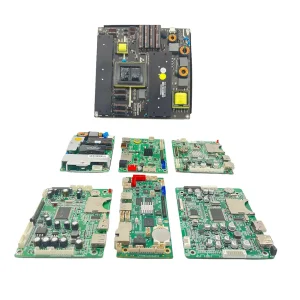
High-Quality OEM ODM PCBA for All Electronic Products Service, Factory
View Specifications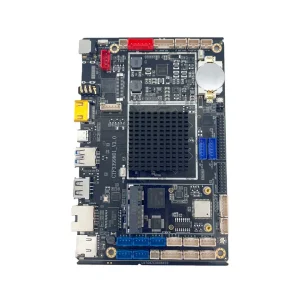
ODM One-stop PCBA Manufacturing & PCB Assembly Manufacturers, Suppliers
View Specifications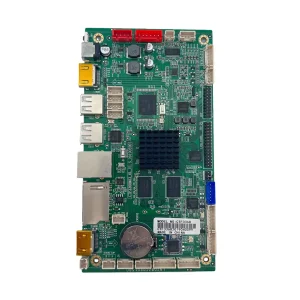
High-Quality Industrial Control PCBA Assembly & Processing Service Supplier, Suppliers
View Specifications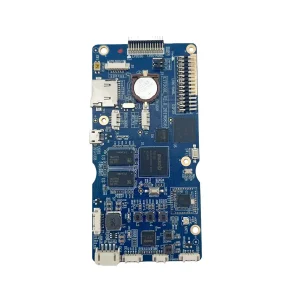
China Custom PCBA Production from Gerber & BOM Files Service, Factories
View Specifications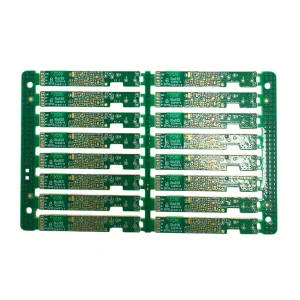
OEM Smart Bracelet PCBA OEM Manufacturing Factories, Factory
View Specifications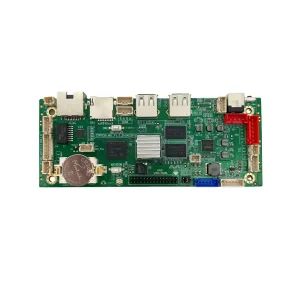
Custom High-quality PCBA Assembly for IoT Control Boards Supplier, Factory
View Specifications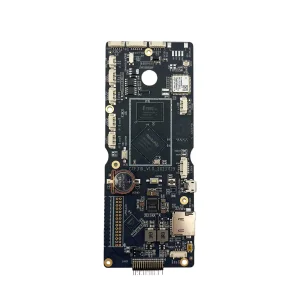
Custom Shenzhen SMT PCBA for Smart Product Manufacturing Service, Factory
View Specifications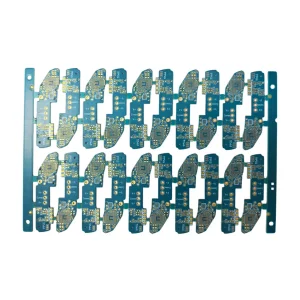
ODM Earphone Panel PCBA OEM ODM Service Supplier, Factory
View SpecificationsEngineering Integrity of Polyurethane (Type UR) Conformal Coating
Why mission-critical embedded hardware designers specify solvent-borne and UV-curable urethane chemistries over acrylic, silicone, and epoxy polymers for severe industrial deployment.
Exceptional Solvent & Chemical Shield
Urethane conformal coatings (Type UR under IPC-CC-830C) form highly cross-linked polyurethane molecular networks upon complete cure. This micro-structure delivers near-impenetrable barriers against airborne hydrocarbon vapors, hydraulic fluids, diesel fuel exposure, transmission fluids, and severe salt spray mist.
- Impervious to aggressive cleaning chemicals and aliphatic solvents
- Zero plasticizer migration during extended thermal exposure
Low Moisture Vapor Transmission (MVTR)
Compared with standard acrylics that absorb ambient humidity and silicone coatings that exhibit high gas permeability, cured polyurethane retains an exceptionally low moisture vapor transmission rate. It prevents water-induced electrochemical migration (ECM), dendritic copper growth, and sub-surface leakage currents across high-density circuit traces.
- Dielectric breakdown strength rating > 1500 V/mil
- Prevents tin whisker propagation and conductive anodic filaments (CAF)
High Mechanical Abrasion Resistance
Where epoxy coatings are brittle and crack under cyclic vibration, polyurethane strikes the ultimate balance between ductile elasticity and surface hardness (Shore D 70–85). This toughness cushions surface mount components (SMD) against continuous mechanical shock in downhole drilling rigs, railway traction inverters, and under-hood automotive ECUs.
- Maintains flexibility from -65°C through +125°C continuous
- ASTM D3359 cross-hatch adhesion classification 5B
| Coating Chemistries Parameter | Polyurethane (UR) | Acrylic (AR) | Silicone (SR) | Epoxy (ER) | Parylene (XY) |
|---|---|---|---|---|---|
| Target Film Thickness (IPC Class 3) | 25 – 50 μm (0.001 - 0.002 in) | 25 – 75 μm | 50 – 210 μm | 25 – 50 μm | 10 – 25 μm |
| Solvent & Fuel Resistance | Superior (Aliphatic, Oils, Fuels) | Poor (Dissolves readily) | Moderate (Swelling in fuel) | Superior (Inert) | Exceptional |
| Moisture Barrier (MVTR) | Excellent (Very Low) | Moderate | Low Barrier (Permeable) | Excellent | Highest Known Barrier |
| Thermal Shock Resilience | High (Elastic resilience) | Moderate | Extremely High (-65 to 200°C) | Poor (Prone to micro-fracture) | High |
| Reworkability & Stripping | Thermal De-soldering / Chemical Stripper | Very Easy (Vapor / Solvents) | Difficult (Mechanical / Stripper) | Nearly Impossible | Micro-abrasion Only |
| Application Process Compatibility | Automated Selective Robotic Spray | Dip, Spray, Brush | Selective Dispense, Dip | Dip, Brush, Dispense | Vapor Deposition Polymerization |
Global Enterprise Sourcing Demands for Urethane Coated PCBAs
Tier-1 industrial equipment leaders and electronics OEMs do not simply procure bare PCB assemblies—they qualify integrated manufacturing ecosystems capable of mitigating voiding, de-wetting, and shadowing defects.
Sub-Assembly Cleanliness & Ionic Contamination
Urethane exhibits high surface tension. Applying polyurethane over unreacted flux activators or finger oil residues will precipitate premature de-wetting, localized delamination, and osmotic blistering under high humidity. Global procurement teams enforce strict inline ionic contamination limits prior to the conformal coating cell.
- Resistivity of Solvent Extract (ROSE) testing below 1.0 μg/cm² NaCl equivalent
- Automated inline DI-water wash systems with saponifying chemistry
- Atmospheric oxygen plasma surface activation to elevate dynes/cm surface energy
Robotic Selective Spraying vs. Manual Masking
Manual dipping and aerosol hand-spraying result in erratic meniscus formation, blocked connector barrels, masked thermal pads, and unacceptable layer variance. Factory qualification mandates programmable 4-axis or 5-axis selective coating robots equipped with non-atomized film coaters and micro-dispensing heads.
- Zero-masking keep-out edge accuracy within ±0.35 mm
- Atomized swiveling nozzles ensuring wrap-around coverage under tall QFPs and SOICs
- Inline viscosity sensors compensating dynamically for solvent flash-off
Audited Production Capabilities: From BOM Kitting to Cured PCBA
Combining two decades of electronics engineering expertise with clean-room coating lines, high-speed SMT assembly, and complete lot traceability across 100+ export destinations.
Closed-Loop Quality Control Ecosystem for Polyurethane Coated Assemblies
1. Pre-Coating DFM Verification
Footprint spacing checks, keep-out boundary delineation, thermal relief auditing, and component proximity reviews prevent capillary suction into switches, test pads, and board-to-board connectors.
2. 3D Automated Optical Inspection (AOI)
UV blacklight (365nm waveband) inline AOI identifies edge voiding, cracking, bubbles, bridging, and overspray using built-in fluorescent optical tracers embedded in high-grade urethane polymers.
3. Wet & Dry Thickness Metrology
Non-destructive eddy-current and ultrasonic film thickness gauges quantify dry film accumulation against IPC-A-610 Class 3 specifications (25 μm to 50 μm target thickness profile).
Mission-Critical Deployments Engineered for Zero Downtime
How specialized urethane conformal coating protects PCBA hardware across severe automotive, industrial, marine, and high-frequency communication environments.
Automotive & New Energy Vehicles (NEV)
Powertrain inverters, On-Board Chargers (OBC), and Battery Management Systems (BMS) are subjected to continuous thermal cycling (-40°C to +125°C) and splash contact with road de-icing salts, battery electrolytes, and motor coolants.
- Meets IATF 16949 production standards and ISO 16750-4 environmental testing
- Eliminates localized high-voltage arcing in 800V silicon-carbide (SiC) traction modules
Industrial Automation & Smart Factories
Programmable Logic Controllers (PLCs), variable frequency drives (VFDs), and remote telemetry I/O units operating in chemical processing facilities encounter airborne hydrogen sulfide (H₂S), chlorine mists, and fine abrasive mineral dust.
- ISA 71.04 Class G3 / GX harsh corrosive environment survival
- High dielectric isolation across mixed SMT and heavy DIP through-hole switchgear
Maritime & Offshore Renewable Energy
Wind turbine pitch control electronics, marine navigational telemetry, and offshore floating solar inverters undergo permanent exposure to 100% relative condensing humidity and dense maritime sodium chloride aerosol.
- ASTM B117 continuous salt spray chamber endurance exceeding 1000 hours
- MIL-STD-810G fungus and biological spore proliferation immunity
Automated Production Workflow for Urethane PCBA Protection
From surface preparation through robotic selective spraying, dual-cure thermal kinetic ovens, and final automated traceability.
De-Fluxing & Surface Activation
Assemblies pass through automated closed-loop aqueous ultrasonic wash stages, neutralizing flux acids and activating surface dyne levels for optimal urethane wetting.
Robotic Selective Deposition
Multi-axis robotic spray systems apply controlled polyurethane film passes (25–50 μm), dynamically skipping connectors, RF shields, and mechanical ground contacts.
Dual Thermal / UV Curing
Precise ramp-soak thermal tunnel profiles expel carrier solvents without skinning or bubbling, followed by secondary moisture/UV cross-linking for deep unshadowed cures.
UV-Fluorescence AOI & FCT
100% inspection under automated UV blacklight detects meniscus continuity and fillet thickness, preceding final ICT and functional burn-in chamber testing.
Global Compliance & Engineering Assurance
Eliminating international supply chain friction through fully documented quality management, environmental material declarations, and recognized industry certifications.
IPC-CC-830C & MIL-I-46058C
All urethane chemistries, dispensing parameters, and coating thicknesses align rigorously with IPC-CC-830C qualification criteria and military-grade durability benchmarks for moisture insulation resistance (MIR).
UL94 V-0 & UL746E Recognition
Polyurethane compounds are certified for flammability self-extinguishing behavior, carrying yellow-card recognition to simplify final product safety listings with Underwriters Laboratories, CE, and CSA.
RoHS 3, REACH & Low-VOC Standards
Lead-free solder integration and low-VOC / solvent-less urethane formulas eliminate restricted phthalates, heavy metals, and halogens, ensuring friction-free customs clearance worldwide.
Polyurethane Conformal Coating Technical Sourcing FAQ
Direct engineering answers to critical inquiries encountered by electronics procurement leads, quality assurance directors, and embedded systems hardware designers.
Because urethane displays high chemical resistance, standard mild solvents like isopropyl alcohol or toluene will not strip the cured polymer. Component-level rework utilizes localized micro-thermal de-soldering tips to vaporize the coating cleanly at the solder joint, or specialized poly-stripping gels applied strictly to the target component footprint, followed by manual re-coating with an approved urethane touch-up pen.
Bubbles and skinning defects stem from excessive wet film thickness, entrapped solvent vapor, or violent atomization. Our SMT factories prevent this through inline viscosity stabilization, dual-stage curing ovens with pre-evaporation zones (flash-off at 45°C–60°C before final thermal bake), and pressurized fluid delivery loops that eliminate micro-air entrapment.
Under IPC-A-610 and IPC-CC-830 standards, the nominal dry film thickness requirement for Polyurethane (Type UR) is 25 μm to 50 μm (0.001 to 0.002 inches). Thinner coatings risk dielectric pinholing along component sharp lead edges; excessively thick coatings increase internal mechanical tension and are susceptible to stress-induced cracking during severe thermal cycling.
In addition to standard RS-274X or ODB++ Gerber files and the component Centroid (Pick-and-Place) file, engineering teams must supply a dedicated Conformal Coating Drawing. This drawing explicitly specifies: 1) Areas requiring mandatory coverage, 2) Strict keep-out zones (switches, potentiometers, RF antennas, pin headers), and 3) Allowable edge tolerance clearance (typically 1.0 mm standard, 0.5 mm precision).
Explore Specialized PCBA Manufacturing Services
From consumer IoT edge devices to high-amperage power conversion hardware, our production infrastructure delivers reliable turnkey assembly with optional selective conformal coating.
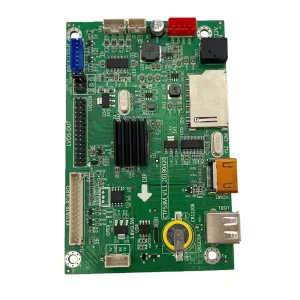
OEM Professional SMT PCBA Production for Electronics Manufacturers, Supplier
View Specifications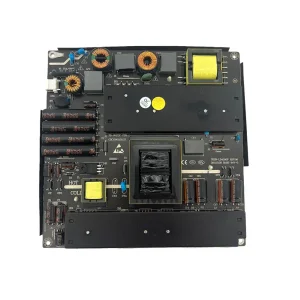
Best SMT Factory Power PCBA Production with DIP Supplier, Suppliers
View Specifications
High-Quality OEM ODM PCBA for All Electronic Products Service, Factory
View Specifications
ODM One-stop PCBA Manufacturing & PCB Assembly Manufacturers, Suppliers
View Specifications
High-Quality Industrial Control PCBA Assembly & Processing Service Supplier, Suppliers
View Specifications
China Custom PCBA Production from Gerber & BOM Files Service, Factories
View Specifications
OEM Smart Bracelet PCBA OEM Manufacturing Factories, Factory
View Specifications