
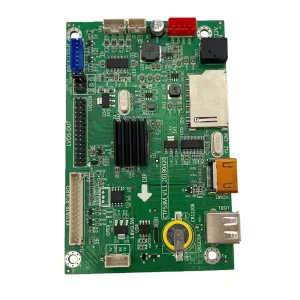
Industrial Core Solutions
High-Reliability PCBA Assemblies & Thermal Engineering Systems
Engineered for mission-critical electronic ecosystems requiring rigorous base-material validation, IPC-A-610 Class 3 compliance, and strict thermal transition limits.
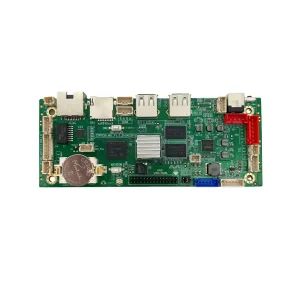
Custom High-quality PCBA Assembly for IoT Control Boards Supplier, Factory
Request Specification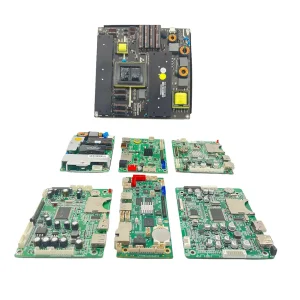
High-Quality OEM ODM PCBA for All Electronic Products Service, Factory
Request Specification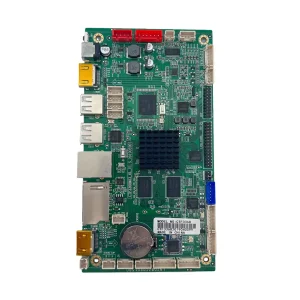
High-Quality Industrial Control PCBA Assembly & Processing Service Supplier, Suppliers
Request Specification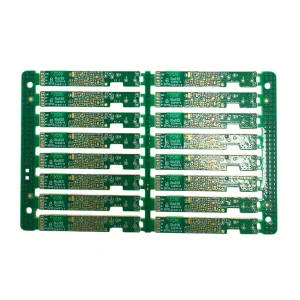
OEM Smart Bracelet PCBA OEM Manufacturing Factories, Factory
Request Specification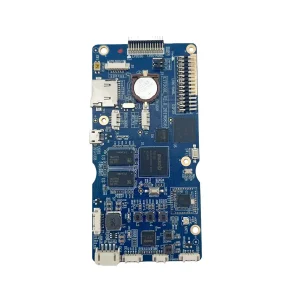
China Custom PCBA Production from Gerber & BOM Files Service, Factories
Request Specification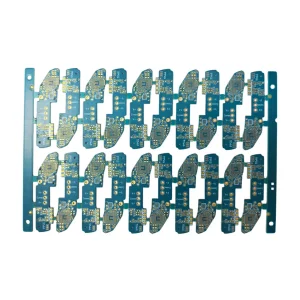
ODM Earphone Panel PCBA OEM ODM Service Supplier, Factory
Request Specification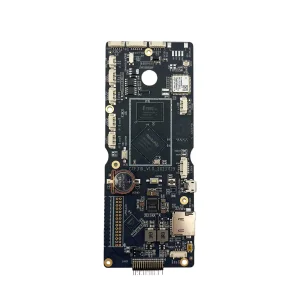
Custom Shenzhen SMT PCBA for Smart Product Manufacturing Service, Factory
Request Specification
Technical Whitepaper
Decoding Tg Glass Transition Temperature in High-Reliability Electronics
A comprehensive examination of polymer morphology, z-axis thermal expansion, and mechanical shear stress in multi-layer PCBA assemblies.
In advanced printed circuit board fabrication and surface mount assembly, the Glass Transition Temperature (Tg) represents a fundamental thermodynamic inflection point. It marks the reversible transition of the polymer resin matrix from a rigid, glassy state into a compliant, viscoelastic rubbery phase. For hardware engineering directors and international procurement teams, selecting the optimal Tg threshold is no longer a tertiary parameter—it is the baseline determinant of structural survival during modern lead-free reflow operations (RoHS peak temps reaching 245°C–260°C).
When an operational board exceeds its functional Tg threshold, the coefficient of thermal expansion (CTE), especially along the vertical Z-axis, expands exponentially. Under normal conditions below Tg, standard FR-4 maintains a Z-axis CTE of approximately 50–60 ppm/°C. However, post-Tg transition, this expansion coefficient surges to 250–300 ppm/°C. This drastic volumetric change generates intense tensile strain across plated through-holes (PTH), microvias, and fine-pitch BGA solder interconnects, culminating in barrel fractures, corner cracking, pad lifting, and inner-layer delamination.
| Substrate Classification | Tg Rating (DSC / TMA) | Td (Decomposition Temp) | Z-Axis CTE (< Tg / > Tg) | Reflow Cycle Durability | Primary Industrial Use-Cases |
|---|---|---|---|---|---|
| Standard FR-4 | 130°C – 140°C | ~300°C | 60 / 300 ppm/°C | 1–2 Cycles (SnPb / Low Temp) | Consumer Peripherals, Low-cost IoT Nodes |
| Mid-Tg FR-4 | 150°C – 160°C | ~325°C | 45 / 260 ppm/°C | 2–3 Cycles (Standard Lead-Free) | Industrial Sensors, Audio Panels, Smart Home |
| High-Tg FR-4 (IS410, Shengyi S1000-2) | 170°C – 180°C | >340°C | 35 / 220 ppm/°C | >5 Cycles (Heavy Copper / Lead-Free) | Automotive ECUs, Power Distribution, Base Stations |
| Ultra High-Tg / Polyimide | 200°C – 260°C+ | >390°C | 20 / 120 ppm/°C | >10 Cycles (Extreme Thermal Stress) | Aerospace, Downhole Drilling, Medical Defense |
Macro Industry Solutions
High-Tg Systemic Architecture Across Critical Sectors
How precise material selection and automated surface-mount manufacturing protect devices subjected to high thermal cycling, harmonic vibration, and continuous power dissipation.
Automotive Powertrains & BMS
Electric mobility demands assemblies capable of withstanding operating conditions under the hood and within battery enclosures.
- Substrate: Tg 170°C–180°C with CAF (Conductive Anodic Filament) resistance
- Applications: Inverters, 800V BMS modules, onboard charging controllers
- Validation: 1000-cycle thermal shock (-40°C to +125°C) and inline 3D X-Ray for voiding <15%
Industrial Automation & Heavy Power
Continuous-duty programmable controllers, variable frequency drives, and grid converters operating 24/7 in harsh factory environments.
- Substrate: Heavy copper (2oz–6oz) paired with High-Tg FR-4 dielectric
- Process: Automated SMT with selective wave-soldered DIP power stages
- Conformal Protection: Automated selective silicone or polyurethane robotic coating
Medical Diagnostic & Surgical Gear
Class II and Class III diagnostic and patient-support instrumentation where failure-free functional life cycles are legally mandated.
- Substrate: Halogen-free, ultra-clean high-Tg materials with minimal dielectric loss
- Quality Standard: Complete lot traceability down to component reel barcode
- Inspection: 100% In-circuit testing (ICT) plus custom FCT firmware flashing
Shenzhen Smart Manufacturing
China Factory 4.0: Supply Chain Velocity Meets Thermal Engineering
Direct integration with the world's most concentrated electronics supply chain enables rapid turnaround without quality compromise.
Hyper-Localized Material Sourcing & Engineering DFM
Operating out of Shenzhen's advanced industrial corridor, our facilities are within a 2-hour radius of tier-1 raw laminate producers (including Shengyi, ITEQ, and Rogers distributors). This eliminates transatlantic transit lag when procuring authentic high-Tg prepregs and specialty copper foils.
Every Gerber and Bill of Materials (BOM) package undergoes a rigorous Design for Manufacturability (DFM) and Design for Thermal Reliability (DFT) review. Our senior process engineers evaluate:
- ✔ Thermal Relief Geometry: Optimizing copper balance across inner layers to prevent panel bow and twist during 260°C reflow.
- ✔ Aspect Ratio & Via Plating: Enforcing strict aspect ratios (≤ 1:10) with minimum 25μm copper wall plating thickness to eliminate barrel stress fractures.
- ✔ Component Thermal Mass Matching: Tuning zone-by-zone reflow profiles to balance massive inductors against ultra-fine 0201 passives and CSPs.
Smart Factory SMT Workflow Parameters
Daily SMT Placement Capacity:
1.2M+ Placement Points
SMT Placement Accuracy:
±0.025 mm (Chips / QFP / BGA)
Reflow Nitrogen Atmosphere:
10-Zone Full N2 Capability
Inspection Topology:
Inline 3D SPI + 3D AOI + AXI X-Ray
Quality Traceability:
MES-Driven Barcode Serialization
Future Outlook
High-Tg Technical Roadmap: Next-Gen Semiconductor Demands
Addressing the thermal dissipation challenges brought by Silicon Carbide (SiC), Gallium Nitride (GaN), and heterogeneously packaged microprocessors.
Wide-Bandgap (SiC/GaN) Interconnects
Power densities in modern inverters exceed historical thermal dissipation limits by up to 300%.
- Hybrid stackups: Combining High-Tg core laminates with direct bonded copper (DBC) or insulated metal substrates (IMS)
- Embedded ceramic heat slugs within standard FR-4 multi-layer matrices
- Solder alloy transitions: High-reliability micro-alloy dopants with liquidus >220°C
Heterogeneous 2.5D/3D Packaging Warpage Control
Large-scale system-on-chip (SoC) architectures exhibit differential expansion against standard PCBs.
- Substrate coefficient matching: Lowering laminate planar (X/Y) CTE from 16 ppm/°C down to 10–12 ppm/°C
- Ultra-low modulus underfills formulated to relieve interfacial shear strain
- Shadow moiré thermal warpage profiling under real-time simulated reflow environments
Eco-Compliant Halogen-Free Flame Retardants
Environmental standards restrict traditional brominated flame retardants without allowing degradation in fire safety.
- Phosphorus-based crosslinked resins maintaining UL94 V-0 flame ratings at Tg >175°C
- Superior CAF resistance preventing conductive filament growth across dense 0.4mm microvias
- Enhanced peel strength: Maintaining copper-to-dielectric adhesion above 1.1 N/mm
Procurement Excellence
Global Enterprise Sourcing: Evaluating High-Tg PCBA Manufacturers
Key technical audit checkpoints for hardware buyers and sourcing heads seeking production resilience in Asia.
1. Raw Laminate Provenance
Demand full raw material CoCs (Certificates of Conformance). Verify that your supplier uses genuine Shengyi, ITEQ, or Isola copper-clad laminates, preventing unauthorized substitutions of non-rated low-Tg FR-4 core sheets.
2. Thermal Profiling Rigor
Audit the SMT provider’s multi-channel thermocouple datalogging procedures (e.g., KIC profilers). A certified High-Tg line requires customized dwell times above liquidus (TAL) to avoid localized thermal shock across thick assemblies.
3. Non-Destructive Inspection
Class 2 and Class 3 electronics require closed-loop inline automated optical inspection (AOI) backed by transmission X-Ray (AXI) to inspect for ball voiding, head-in-pillow (HiP) defects, and internal barrel separation.
Knowledge Center
Frequently Asked Questions: High-Tg PCBA Manufacturing
In-depth responses covering engineering specifications, procurement parameters, and automated manufacturing validation.
What files do you need to evaluate a PCBA project?
Send Gerber files (RS-274X or ODB++), a comprehensive BOM with exact manufacturer part numbers, the pick-and-place (centroid) file, and an assembly drawing. If you need functional testing, add the test specification, firmware, and any custom test fixture requirements so FCT can be planned before production starts.
Do you support low-volume prototypes as well as mass production?
Yes. The same high-precision SMT lines handle engineering prototypes, pilot verification runs, and full volume manufacturing. Small batches carry a slightly higher unit cost because stencil, line setup, and component reel minimums are spread across fewer boards; our process engineers advise on panelization and alternate parts to optimize total costs.
How do you control PCBA quality during production?
Quality is maintained through a closed-loop architecture: incoming material inspection (IQC) with moisture-barrier baking, 3D SPI post solder-paste printing, 3D AOI after reflow, transmission X-ray inspection for BGA and concealed thermal pads, and comprehensive FCT before packaging. Workmanship strictly adheres to IPC-A-610 Class 2 standard, with Class 3 available on demand.
Can you source the electronic components for our build?
Yes. We offer full turnkey assembly where we procure all components through authorized tier-1 distributors, partial turnkey where you consign high-value ICs and we procure passives, and full consignment assembly where your team supplies all parts.
Can overseas buyers audit the factory before placing orders?
Yes. International clients are welcome to schedule an on-site audit at our Shenzhen production center or participate in an interactive live video audit covering material storage, ESD handling, SMT lines, automated testing bays, and lot-traceability software systems.
Why is High-Tg FR-4 mandatory for lead-free RoHS soldering?
Lead-free solder alloys (such as SAC305) melt at ~217°C and require peak reflow temps of 245°C to 260°C. Standard FR-4 (Tg 130°C–140°C) remains above its transition point for an extended duration, causing rapid Z-axis expansion and risk of microvia rupture. High-Tg laminates (Tg ≥170°C) preserve mechanical rigidity and keep total thermal expansion within safe thresholds.
Turnkey Portfolio
OEM/ODM Turnkey Assemblies Ready for Global Deployment
Select from our high-mix manufacturing catalog or submit your Gerber package for rapid DFM review and quotation.
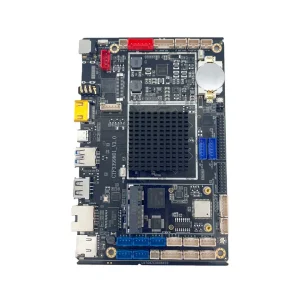
ODM One-stop PCBA Manufacturing & PCB Assembly Manufacturers, Suppliers
Request Specification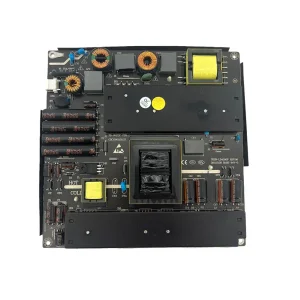
Best SMT Factory Power PCBA Production with DIP Supplier, Suppliers
Request Specification
OEM Professional SMT PCBA Production for Electronics Manufacturers, Supplier
Request Specification
Custom High-quality PCBA Assembly for IoT Control Boards Supplier, Factory
Request Specification
High-Quality OEM ODM PCBA for All Electronic Products Service, Factory
Request Specification
High-Quality Industrial Control PCBA Assembly & Processing Service Supplier, Suppliers
Request Specification
OEM Smart Bracelet PCBA OEM Manufacturing Factories, Factory
Request Specification