
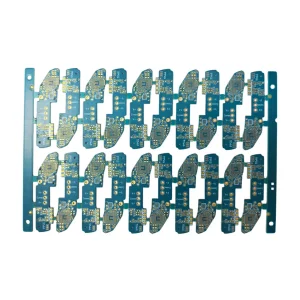
Featured Flex & Rigid-Flex PCBA Assemblies
Engineered to exact IPC-2223 Class 2 & Class 3 dynamic and static flex-to-fit parameters. Built for enterprise electronics.
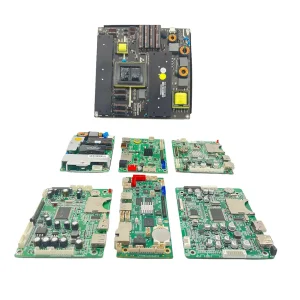
High-Quality OEM ODM PCBA for All Electronic Products Service, Factory
View Specifications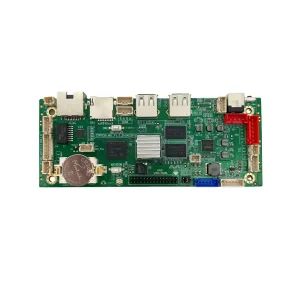
Custom High-quality PCBA Assembly for IoT Control Boards Supplier, Factory
View Specifications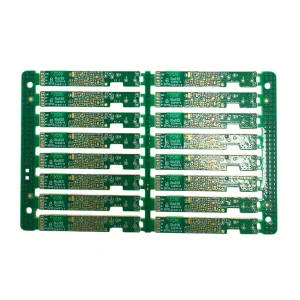
OEM Smart Bracelet PCBA OEM Manufacturing Factories, Factory
View Specifications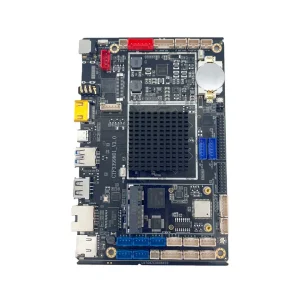
ODM One-stop PCBA Manufacturing & PCB Assembly Manufacturers, Suppliers
View Specifications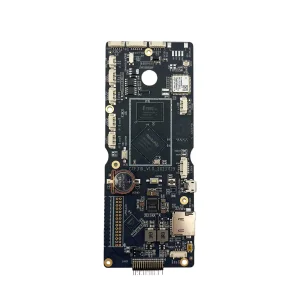
Custom Shenzhen SMT PCBA for Smart Product Manufacturing Service, Factory
View Specifications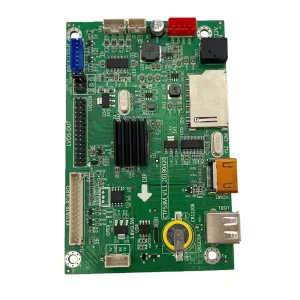
OEM Professional SMT PCBA Production for Electronics Manufacturers, Supplier
View Specifications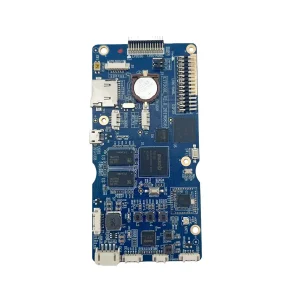
China Custom PCBA Production from Gerber & BOM Files Service, Factories
View SpecificationsThe Global Commercial Reality of the IPC-2223 Flex PCB Standard
Deciphering electrical clearance, mechanical bend radii, and adhesive-free adhesiveless polyimide material stacks across tier-1 hardware manufacturing hubs.
IPC-2223 Design Rule Enforcement
IPC-2223 establishes specific sectional rules for flexible printed wiring. Unlike rigid FR4 specifications governed under IPC-2221/2222, flex circuits necessitate rigorous structural validation to prevent trace fracture.
- Type 1 (Single-Sided) to Type 4 (Multilayer Rigid-Flex)
- Elimination of plated through-holes (PTH) in critical bend zones
- Adhesiveless base substrates complying with IPC-4204
Dynamic vs. Flex-to-Fit Stress Curves
The global demand requires differentiation between dynamic flexing applications (gimbals, robotics, rotating hinges) and static "flex-to-install" configurations that bend once during packaging.
- Dynamic flexing: bend radius calculated at >20x-40x material thickness
- Static installation: bend radius permissible down to 6x-10x thickness
- Rolled Annealed (RA) Copper preferred over Electro-Deposited (ED)
Thermal & Moisture Pre-Conditioning
Polyimide exhibits hygroscopic tendencies, absorbing ambient moisture up to 3%. Uncontrolled moisture causes catastrophic delamination during IPC Class 3 reflow profiles at 260°C peak temperatures.
- Pre-SMT vacuum dehydration baking (120°C for 4-8 hours)
- Controlled MSD storage protocols prior to automated kitting
- Surface finialization using ENIG, ENEPIG, or Immersion Silver
1.2M+
Daily SMT Placement Points
>98.5%
First-Pass Yield (FPY)
8 Lines
High-Speed Automated SMT
IPC-A-610
Class 2 & Class 3 Audited
The Shenzhen Manufacturing Advantage: Agile Turnkey Engineering
How localized supply chain compression across Shenzhen and the Greater Bay Area turns IPC-2223 complex multi-layer designs into finished assemblies in record turnaround times.
Same-Day Sourcing Perimeter
Situated in Longgang District, Shenzhen, our assembly hub maintains direct lines to specialized flex raw laminate converters (DuPont Pyralux, Shengyi, Rogers), reducing raw substrate kitting to under 24 hours.
Specialized Magnetic Carrier Tooling
Flexible circuits cannot traverse high-speed SMT pick-and-place conveyors without support. We fabricate bespoke magnetic fixture carriers within 12 hours, guaranteeing coplanar stencil printing down to 0.3mm pitch.
Design for Manufacturability (DFM)
Every Gerber/ODB++ package undergoes automated teardown. Our engineers verify conductor transitions across rigid-to-flex interfaces, coverlay tie-in overlap, and teardrop fillet presence before cutting tooling.
Turnkey Component Aggregation
Avoid coordinating discrete fab houses and assembly contractors. We manage bare board fabrication, authorized electronic component procurement, SMT placement, ultrasonic cleaning, and full functional testing (FCT).
| Engineering Parameter | Standard Commercial PCB Shop | Aozite IPC-2223 Flex Production Hub |
|---|---|---|
| Base Substrate Standard | Standard adhesive FR4 / modified epoxy | IPC-4204/11 Polyimide film with adhesiveless ED/RA copper foil |
| Bend Transition Management | Sharp 90-degree transitions (crack risk) | IPC-2223 compliant gradual radiused curves with copper teardrops |
| Rigid-Flex Boundary Seal | Manual coverlay application (voids common) | Automated laser-skived coverlay with flexible acrylic bead fillet |
| BGA SMT Solder Inspection | Standard optical 2D AOI inspection | High-resolution 3D X-Ray laminography to detect hidden voids in flex |
| Assembly Hold Fixturing | High-temperature tape (unstable alignment) | Custom CNC-machined magnetic vacuum pallet tooling |
Mission-Critical Applications & Next-Gen Trends
From high-vibration automotive battery management systems to millimeter-wave IoT sensor arrays, see where IPC-2223 boards operate reliably.
Automotive BMS & Powertrain
Replacing bulky wire harnesses with lightweight IPC-2223 rigid-flex harnesses drastically cuts weight while boosting vibration resistance in EV battery packs and motor controllers.
- Withstands thermal cycling (-40°C to +125°C)
- Direct integration of NTC sensors and voltage taps
- IPC-6013 Class 3 automotive qualification
Class III Medical Diagnostics
Ultrasound transducers, portable endoscopy probes, and implantable monitoring arrays rely on ultra-thin flexible circuits designed to conform within tight, non-planar anatomical spaces.
- Biocompatible coverlay coatings (USP Class VI)
- Sub-50 micron line/spacing capabilities
- 100% IPC-A-610 Class 3 inspection validation
5G/6G RF & Wearable Ecosystems
The advent of compact hearables, smart glasses, and high-frequency IoT hardware demands flex boards that sustain controlled impedance matching up to 28GHz without trace dissipation.
- Low dielectric loss materials (Dk < 3.2, Df < 0.002)
- Embedded EMI shielding silver films
- Integrated micro-coaxial interconnect termination
Verified Production Board Solutions
Explore production-ready SMT assemblies operating under IPC-A-610 standards, manufactured daily at our Shenzhen factory.
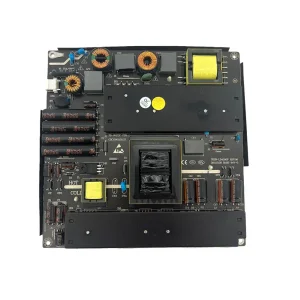
Best SMT Factory Power PCBA Production with DIP Supplier, Suppliers
View Specifications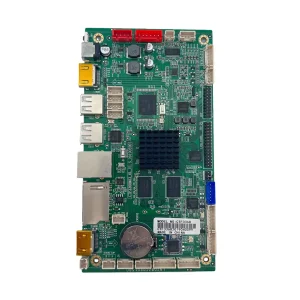
High-Quality Industrial Control PCBA Assembly & Processing Service Supplier, Suppliers
View Specifications
ODM Earphone Panel PCBA OEM ODM Service Supplier, Factory
View Specifications
High-Quality OEM ODM PCBA for All Electronic Products Service, Factory
View Specifications
Custom High-quality PCBA Assembly for IoT Control Boards Supplier, Factory
View Specifications
OEM Smart Bracelet PCBA OEM Manufacturing Factories, Factory
View Specifications
ODM One-stop PCBA Manufacturing & PCB Assembly Manufacturers, Suppliers
View Specifications
Custom Shenzhen SMT PCBA for Smart Product Manufacturing Service, Factory
View SpecificationsGlobal Procurement Demands: Addressing the Supply Chain Triad
Enterprise procurement teams across North America, Europe, and Asia require complete visibility into Bill of Materials (BOM) risk, cycle times, and IPC audit compliance.
Lead Time Compression
Traditional overseas flex procurement suffers from disconnected vendors where bare board fabricators and SMT houses blame each other for delays. A single-source turnkey ecosystem mitigates hand-off delays.
- Rapid NRE prototype delivery within 5-7 business days
- Streamlined mass production ramping within 15-18 days
- Direct integration with global couriers (DHL, FedEx, Air Cargo)
Component Lifecycle & Obsolescence
Active component volatility can halt a flex PCBA run midway. Our procurement team provides early obsolescence warnings and cross-references drop-in pin-compatible alternates.
- Authorized franchised distributor partnerships
- Strict anti-counterfeit testing in ESD-safe warehouses
- Consignment, partial turnkey, or 100% full turnkey sourcing
Defect Mitigation & Accountability
Flex PCBs are vulnerable to cracked inner-layer copper traces when thermal profiling is skewed. We apply closed-loop quality tracking from 3D SPI through final functional testing.
- Closed-loop feedback linking 3D SPI and inline AOI
- IPC-A-610 Class 3 soldering verification
- Comprehensive test fixture (FCT) fabrication in-house
Frequently Asked Questions (FAQ)
Expert answers addressing the core design, engineering, and manufacturing challenges of the IPC-2223 flex PCB specification.
What is the fundamental difference between IPC-2223 and IPC-2221?
IPC-2221 is the generic base standard for all printed board design disciplines. In contrast, IPC-2223 is the sectional design standard specifically dedicated to flexible printed boards. It governs unique design constraints such as minimum dynamic bend ratios, adhesive anchor requirements, stiffener overlap rules, coverlay aperture definitions, and the transition boundaries between rigid glass-epoxy sections and flexible polyimide layers.
Why must flexible PCBs undergo pre-SMT dehydration baking?
Polyimide film is inherently hygroscopic and can absorb between 1.5% and 3.0% ambient atmospheric moisture. If subjected to standard lead-free reflow profiles (reaching peak temperatures of 245°C to 260°C) without prior baking, this trapped moisture vaporizes instantly into steam. This volumetric expansion causes internal micro-delamination, blister formation, and copper barrel rupture within plated through-holes (PTH). We subject all flex boards to vacuum baking at 105°C-120°C for 4 to 8 hours prior to solder paste printing.
What are the key design rules for traces in flexible bending zones?
Under IPC-2223 guidelines:
- Traces must be routed perpendicular to the bend axis rather than parallel or diagonally.
- Traces must never stack directly on top of each other across adjacent layers (staggered routing must be applied to prevent the "I-Beam effect").
- No plated vias, through-holes, or surface mount components are permitted inside the defined bending radius.
- Conductor transitions must feature generous fillets (teardrops) to dissipate mechanical stresses.
How does Aozite handle SMT assembly on ultra-thin flexible circuits?
Due to the lack of mechanical rigidity in 0.1mm - 0.2mm flex substrates, automated pick-and-place conveyors and squeegee blades cannot run on bare flex boards directly. Aozite engineers manufacture custom precision CNC magnetic pallets. The flexible board is pinned down via high-accuracy registration guide pins and held flat by magnetic top plates or vacuum suction. This creates a completely flat, rigid surface that allows standard SMT tolerances down to 0201 passives and 0.3mm pitch BGA placement.
What documentation is required to receive a full turnkey quote?
To provide an accurate, transparent turnkey estimate, please provide:
- Gerber or ODB++ files: Including copper layers, solder mask/coverlay, drill files, outline, and stiffener profiles.
- Comprehensive BOM (Bill of Materials): Indicating manufacturer part numbers (MPN), component designators, quantities, and acceptable alternate sources.
- Assembly Drawings: Indicating stiffener locations, PSA adhesive zones, and thickness constraints.
- Pick & Place (Centroid) data: Containing X-Y coordinates and rotation for all SMD parts.
- Test Specification (Optional but recommended): Guidelines for FCT functional fixture testing and firmware uploading.