High-Precision PCB & Assembly Solutions
Direct engineering access to Shenzhen manufacturing facilities supporting high-frequency Rogers laminates, standard/high-Tg FR-4, and complex hybrid assemblies.
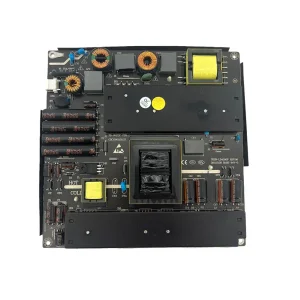
Power PCBA SMT & DIP Assembly
Heavy-copper and robust high-voltage power conversion board manufacturing.
Best SMT Factory Power PCBA Production with DIP Supplier, Suppliers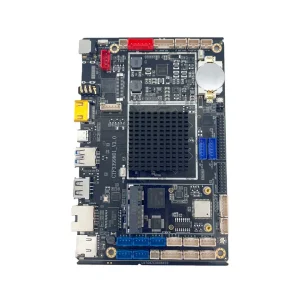
Full Turnkey OEM / ODM Assembly
End-to-end Gerber-to-product manufacturing with complete traceability.
ODM One-stop PCBA Manufacturing & PCB Assembly Manufacturers, Suppliers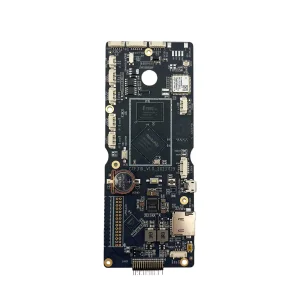
Smart Product High-Density PCBA
Fine-pitch SMT assembly engineered for connected smart appliances and controllers.
Custom Shenzhen SMT PCBA for Smart Product Manufacturing Service, Factory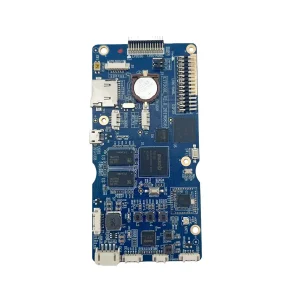
Build-to-Print Gerber & BOM Runs
Rapid prototyping and automated volume scaling under rigorous DFM controls.
China Custom PCBA Production from Gerber & BOM Files Service, Factories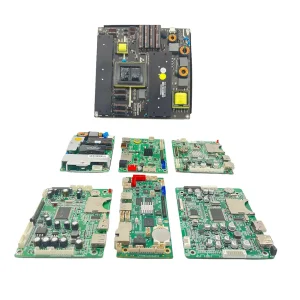
Multi-Sector OEM / ODM PCBA
Industrial, commercial, and telecommunications circuit board processing.
High-Quality OEM ODM PCBA for All Electronic Products Service, Factory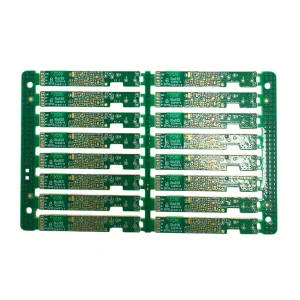
Miniature Wearable Sensor PCBA
Ultra-compact layout, rigid-flex options, and low-power component mounting.
OEM Smart Bracelet PCBA OEM Manufacturing Factories, Factory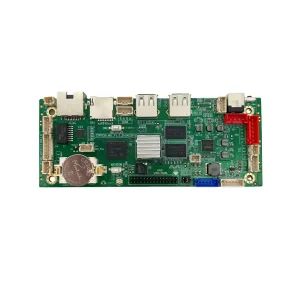
IoT Wireless & Gateway Boards
Integrated Wi-Fi, BLE, and cellular transceivers with RF impedance matching.
Custom High-quality PCBA Assembly for IoT Control Boards Supplier, Factory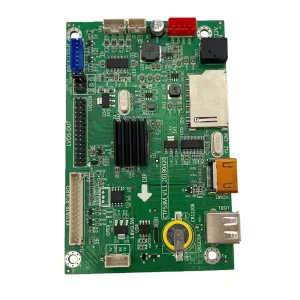
Precision High-Mix Electronics SMT
Fast changeover lines running 0201 passives, fine-pitch BGAs, and QFNs.
OEM Professional SMT PCBA Production for Electronics Manufacturers, SupplierFR-4 vs Rogers: The High-Frequency Paradigm Shift
In the rapidly advancing landscape of high-frequency telecommunications, millimeter-wave (mmWave) automotive radar, and ultra-high-speed computational backplanes, the choice between traditional Flame Retardant 4 (FR-4) and Rogers high-frequency ceramic-hydrocarbon / PTFE laminates constitutes the foundational fork in hardware architecture. The dilemma confronting chief technology officers (CTOs) and global procurement managers is no longer an elementary dichotomy between "low-cost" and "high-performance"; it has evolved into a multi-parameter trade-off analysis balancing dielectric dissipation (Df / tanδ), dielectric constant stability (Dk / εr), coefficient of thermal expansion (CTE), insertion loss budgets, and total manufacturing expenditure across high-volume production cycles.
5G FR2 & 6G Spectrum Migration
As cellular networks transition from sub-6 GHz to mmWave bands (24 GHz to 40 GHz) and preliminary 6G sub-THz research, the elevated loss tangent of standard FR-4 precipitates unacceptable signal dissipation and severe phase jitter, rendering proprietary low-loss hydrocarbon laminates (such as Rogers RO4000 and RO3000 series) an absolute physical imperative.
High-Density AI Computing
PCIe Gen 5/6 interconnects, OAM accelerator boards, and 800G/1.6T transceivers operate with clock harmonics penetrating the gigahertz realm. Signal integrity (SI) engineers must control dielectric dispersion and conductor skin-effect losses, dictating smooth copper foils and stable Dk across dynamic temperature profiles.
Procurement Cost Harmonization
Pure Rogers multilayer fabrication can elevate raw printed board costs by a factor of 4x to 10x relative to FR-4. The industry has converged upon hybrid multilayer laminations—where high-frequency signals traverse the outer Rogers microstrip layers, while power distribution and low-speed digital control route through economical FR-4 internal cores.
FR-4 vs Rogers Comprehensive Technical Comparison Matrix
Standard FR-4 consists of woven fiberglass cloth impregnated with an epoxy resin binder, whereas Rogers Advanced Electronics Solutions materials are engineered using ceramic-filled thermoset hydrocarbon polymers, PTFE (polytetrafluoroethylene), or woven glass reinforced composites. Below is a rigorous side-by-side engineering comparison across electrical, thermal, and mechanical vectors.
| Critical Parameter | Standard FR-4 (e.g. S1000-2) | High-Tg FR-4 (e.g. IS410/FR408) | Rogers RO4350B (Hydrocarbon/Ceramic) | Rogers RT/duroid 5880 (PTFE Glass) |
|---|---|---|---|---|
| Dielectric Constant (Dk / εr @ 10 GHz) | 4.40 - 4.70 | 3.70 - 4.10 | 3.48 ± 0.05 | 2.20 ± 0.02 |
| Dissipation Factor (Df / tanδ @ 10 GHz) | 0.0180 - 0.0220 (Severe loss) | 0.0100 - 0.0130 | 0.0037 (Ultra low) | 0.0009 (Near frictionless) |
| Thermal Conductivity (W/m·K) | 0.25 - 0.30 | 0.35 - 0.40 | 0.62 (Superior dissipation) | 0.20 |
| Glass Transition Temp (Tg, °C) | 130 - 140 °C | 170 - 180 °C | > 280 °C | N/A (PTFE matrix) |
| Z-Axis CTE (ppm/°C) | 60 - 70 ppm/°C | 45 - 55 ppm/°C | 32 ppm/°C (Matches Copper) | 40 ppm/°C |
| Moisture Absorption Rate (%) | 0.20% - 0.35% | 0.15% - 0.25% | 0.06% (Hydrophobic) | 0.02% |
| Drilling & Plating Processability | Standard carbide tooling | Standard tooling / mild wear | Requires specialized drill feeds | Requires Sodium Naphthalene etch |
| Typical Frequency Threshold | DC to 1.5 GHz | Up to 4.0 - 5.0 GHz | Up to 30.0 GHz | Up to 77.0 - 110.0 GHz |
| Raw Laminate Cost Index | 1.0x (Baseline) | 1.3x - 1.8x | 5.0x - 8.0x | 10.0x - 14.0x |
Signal Integrity & Dielectric Dispersion
The dielectric constant of standard FR-4 degrades rapidly as operating frequency rises, exhibiting non-linear dielectric dispersion. Consequently, harmonic frequencies of digital square waves travel at divergent phase velocities, causing extreme eye-diagram closure and timing skew. In contrast, Rogers RO4003C and RO4350B exhibit essentially horizontal Dk stability from 1 GHz beyond 40 GHz, ensuring deterministic characteristic impedance ($Z_0 = 50\ \Omega$) and preserving edge integrity in high-baud-rate PAM-4 signaling.
Plated Through-Hole (PTH) Thermal Reliability
FR-4 exhibits an elevated Z-axis CTE (approx. 65 ppm/°C), which expands dramatically above its glass transition temperature (Tg). During repeated lead-free SAC305 reflow profiles (peaking at 245–260°C), this differential thermal expansion places violent shear stress on copper barrel plating, inducing micro-cracks and latent field failures. Rogers RO4000 laminates feature a ceramic filler package tailored to a Z-axis CTE of 32 ppm/°C, perfectly mimicking electrodeposited copper (17 ppm/°C) and ensuring zero via barrel barrel cracking across automotive Class 3 thermal shock lifecycles (-40°C to +125°C, 1000+ cycles).
Macro Industry Solutions & Hybrid Architecture
Achieving commercial dominance requires striking a calculated balance between technical necessity and BOM economy. Deploying 100% pure high-frequency laminates throughout an 8-layer or 12-layer design is often an unjustifiable financial penalty. Our Shenzhen engineering hub specializes in hybrid stackup integration.
5G & Massive MIMO Infrastructure
Active Antenna Units (AAU) and Remote Radio Units (RRU) leverage hybrid stackups: Rogers RO4350B or RO4835 outer layers for the antenna patch matrix and beamforming phase-delay lines, bonded with Rogers RO4450F prepreg over high-Tg FR-4 digital baseband cores. This architecture slashes total board lamination costs by 52% while achieving insertion loss figures lower than 0.08 dB/inch at 28 GHz.
77GHz Automotive Radar (ADAS)
Autonomous emergency braking and adaptive cruise control sensors function at 76–81 GHz. These systems demand Rogers RO3003 or RO3003G2 PTFE composites, delivering an ultra-low Dk of 3.00 and Df of 0.0010. Our factory guarantees controlled depth blind via laser drilling (micro-vias) and tightly controlled copper tooth profiles to negate conductor roughness losses at millimeter scales.
Aerospace & Satellite Satcom
Low Earth Orbit (LEO) phased array terminals require radiation-hardened materials with minimal outgassing properties under extreme vacuum conditions. We supply Rogers RT/duroid 5880 / 6002 substrates processed to NASA SP-R-0022A outgassing criteria, certified under rigorous IPC Class 3 and MIL-PRF-31032 assembly parameters.
Shenzhen Factory Hybrid Stackup Engineering Rules
Fabricating asymmetric or hybrid multicore circuit boards (e.g., Rogers + FR-4) presents acute challenges due to thermal expansion mismatch during the lamination cure cycle. Aozite's process engineering protocol resolves these fabrication hazards through:
Multi-stage vacuum press cycle with cooling rates decelerated to ≤ 1.5°C/min to prevent residual stresses, warp, and twist exceeding IPC 0.75% tolerances.
Utilization of Rogers RO4450F or FastRise prepregs that cure at 175°C, perfectly aligning with the glass transition cure envelope of standard high-Tg FR-4.
Specialized CF4/O2 gas plasma treatment prior to electroless copper deposition to chemically etch ceramic residues and guarantee hole-wall adhesion.
Global Procurement Decision Framework: Rogers or FR-4?
When evaluating bill-of-materials (BOM) cost against hardware field failure liabilities, enterprise engineering leads use our structured four-tier algorithmic assessment before freezing their stackup specification.
1. Operating Frequency Threshold
≤ 2.5 GHz: Standard FR-4 suffices.
2.5 – 6 GHz: High-Tg / low-loss FR-4 is evaluated.
> 6 GHz: Rogers hydrocarbon (RO4350B) or hybrid stackups become mandatory to preserve link margins.
2. Loss Budget & Line Length
For RF traces longer than 50 mm, FR-4 signal attenuation exceeds manageable link margins. At 10 GHz, standard FR-4 dissipates roughly 1.5 dB per inch, while Rogers RO4350B limits loss to 0.35 dB per inch.
3. Operating Temperature Variance
In outdoor telecom enclosures or automotive engine compartments subject to -40°C to +105°C swings, FR-4 exhibits thermal coefficient of dielectric constant (TCDk) shifts up to +300 ppm/°C, detuning filters. Rogers keeps TCDk < +40 ppm/°C.
4. Total Production Batch Volume
For low-volume prototypes (<100 units), pure Rogers simplifies fabrication risks. For mass production (>10,000 units), transitioning to a Rogers-FR4 hybrid stackup reclaims up to $45 per board in substrate and processing costs.
Localized Support, Certifications & Quality Safeguards
Operating from Shenzhen Aozite Technology's intelligent production base in Longgang District, we connect international hardware developers directly with tier-1 PCB fabricators and full turnkey surface mount assembly (SMT) under one accountable roof.
IPC-A-610 Class 2 & Class 3
All SMT and DIP assemblies are processed to IPC-A-610 workmanship standards. High-reliability automotive radar, defense, and medical PCBA orders are strictly executed under IPC-A-610 Class 3 controls with automated 3D AOI and 3D AXI (X-ray) void analysis < 15% under BGAs and QFN heat-slugs.
Environmental & Safety Compliance
Complete documentation and lab traceability backing EU RoHS 3 (Directive 2015/863/EU), REACH (SVHC), Halogen-Free fabrication mandates, and UL 94V-0 flammability certification. Detailed material declaration sheets (MDS) are delivered with every manufacturing batch.
Shenzhen Ecosystem & Rapid Turn
Direct proximity to the world's most comprehensive component and laminate channels. We maintain standing inventory of authentic Rogers RO4003C, RO4350B, and high-Tg Shengyi/Isola FR-4 panels, collapsing pilot run lead times from weeks down to 5–7 operational working days.
Technology Roadmap: Substrates for 2026 and Beyond
As system signaling surpasses 112G and 224G PAM-4 and millimeter-wave operations explore the D-band (130–175 GHz) and sub-terahertz regimes, material chemistry is pivoting toward ultra-pure synthetic PTFE, liquid crystal polymers (LCP), and glass-core carrier packages.
Modified Epoxy & RO4000
Standardization of Mid-Loss FR-4 and Rogers RO4350B/RO4835 for 5G sub-6 GHz, early automotive radar, and 25G/56G high-speed backplanes.
Ultra-Low Loss Hybrid HDI
Integration of ultra-smooth profile copper (HVLP/VLP), RO3003G2, and low-loss hydrocarbon cores for 77-81GHz imaging radar and 112G SerDes.
PTFE & Liquid Crystal Polymer
LCP multilayer substrates offering Df ≤ 0.002 across satellite Ku/Ka bands and tight-tolerance flexible high-frequency interconnects.
Glass Cores & Synthetic PTFE
Ultra-planar glass core interposers and modified ceramic composites engineered for 140+ GHz 6G radios and co-packaged optics (CPO).
Frequently Asked Questions: Technical Sourcing & DFM
Detailed responses formulated by senior SMT and substrate fabrication engineers to resolve complex queries encountered in high-frequency hardware procurement.
Why does Rogers laminate have a significantly lower loss tangent (Df) than standard FR-4?
Can our engineering team design a hybrid multilayer PCB combining both Rogers and FR-4 cores?
What are the primary machining and processing differences during PCB fabrication?
How does moisture absorption impact RF circuit performance over extended operation?
What files and parameters are needed to request a formal Rogers vs FR-4 quotation?
Turnkey Assemblies & Specialized Manufacturing
Full-lifecycle electronic manufacturing services—from precision SMT placement of high-frequency modules to robust industrial through-hole assembly.
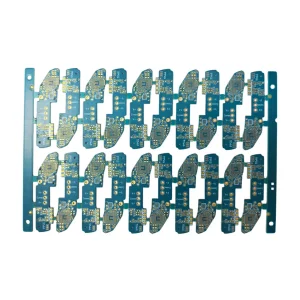
Audio & Acoustic Control PCBA
Micro-footprint board layouts for high-fidelity TWS earphone and audio panels.
ODM Earphone Panel PCBA OEM ODM Service Supplier, Factory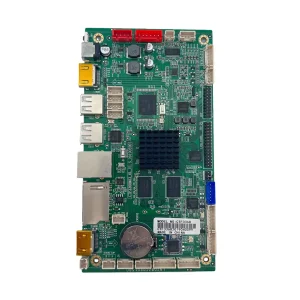
Industrial Automation PCBA
Heavy-duty PLC, servo drive, and motor controller board processing with conformal coating.
High-Quality Industrial Control PCBA Assembly & Processing Service Supplier, Suppliers
High-Current Power SMT & DIP
Optimized thermal vias and wave soldering for demanding power conversion hardware.
Best SMT Factory Power PCBA Production with DIP Supplier, Suppliers
Turnkey Box Build & Testing
Single-source procurement from bare laminate to fully cased, functionally tested electronics.
ODM One-stop PCBA Manufacturing & PCB Assembly Manufacturers, Suppliers
Intelligent Hardware Assembly
Precision component mounting for smart home, metering, and AIoT terminal systems.
Custom Shenzhen SMT PCBA for Smart Product Manufacturing Service, Factory
Fast-Turn DFM Gerber Builds
Engineering pre-production design rule checks ensuring zero footprint discrepancies.
China Custom PCBA Production from Gerber & BOM Files Service, Factories
IoT RF & Telemetry Boards
Controlled impedance lines, antenna tuning, and integrated wireless communication modules.
Custom High-quality PCBA Assembly for IoT Control Boards Supplier, Factory
Enterprise Class SMT Lines
High-speed 1.2M daily placement points delivering high first-pass yields (≥98.5%).
OEM Professional SMT PCBA Production for Electronics Manufacturers, Supplier