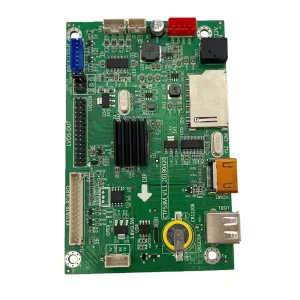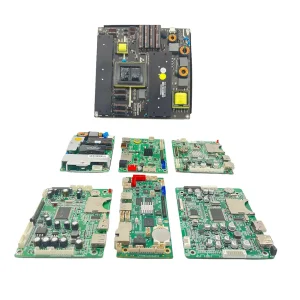
Precision Turnkey PCBA Solutions & Finished Assemblies
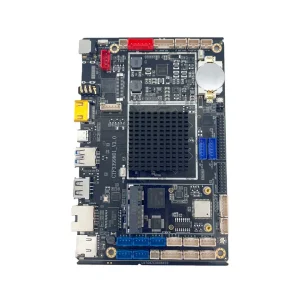
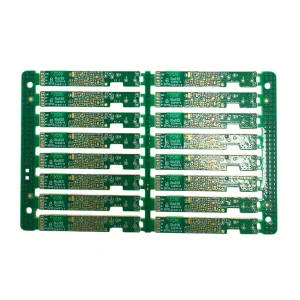
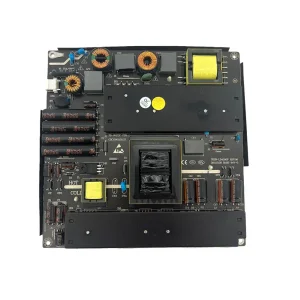
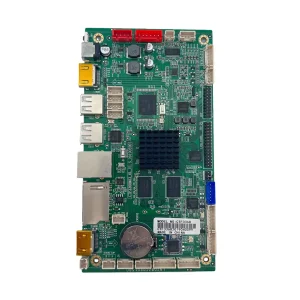
Explore our active manufacturing lines featuring automated SMT, selective electrolytic plating, and turnkey hardware production.
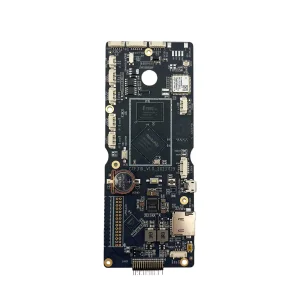
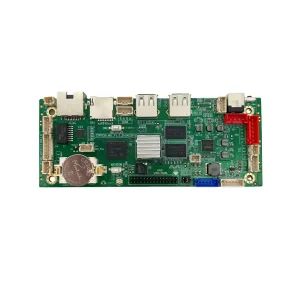
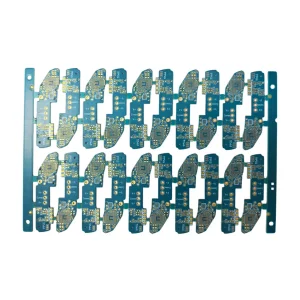
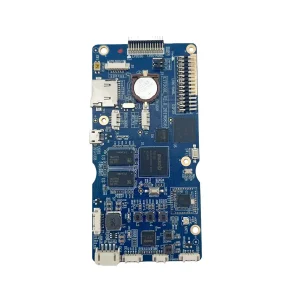
Engineering Depth: Electrolytic Hard Gold in Global Electronics
Why modern mission-critical hardware demands galvanically deposited hard gold over immersion finishes like ENIG or ENEPIG.
Alloy Hardening Dynamics
Unlike immersion gold (soft Au 99.9% purity, Knoop 60–90), electrolytic hard gold introduces cobalt or nickel dopants (0.1–0.3%) into the crystal lattice, boosting Knoop hardness to 130–200 HK. This prevents mechanical galling during continuous edge-card insertion cycles.
Diffusion Barrier Architecture
We electroplate an electrolytic low-stress sulfamate nickel barrier (typically 100 to 200 microinches) beneath the hard gold layer. This completely prevents copper migration, thermal atom diffusion, and premature contact resistance spikes across thermal operating extremes.
Corrosion & Tribology Control
Compliant with MIL-DTL-45204 Type II, Grade C, electrolytic hard gold provides exceptional tribological protection against fretting corrosion, chemical oxidation, and high-frequency friction wear encountered in automotive and industrial control electronics.
Technical Specification Matrix: Hard Gold vs. Alternate Finishes
A data-backed comparative analysis for procurement specialists, hardware architects, and component engineers.
| Surface Finish Type | Hardness (Knoop HK) | Plating Thickness Range | Insertion Cycle Endurance | Solderability Performance | Primary Industrial Use Case |
|---|---|---|---|---|---|
| Electrolytic Hard Gold (Au-Co/Ni) | 130 – 200 HK | 15 to 50 μin (0.38 – 1.27 μm) | > 20,000+ Cycles | Poor (Requires Selective Mask) | PCIe Fingers, Edge Connectors, Keypads |
| ENIG (Electroless Ni / Immersion Au) | 60 – 90 HK | 1 to 3 μin (0.025 – 0.075 μm) | < 100 Cycles | Exceptional (SMT & BGA) | Fine-pitch planar IC pads, Dense SMT |
| Electrolytic Soft Gold (Pure 99.99%) | 50 – 80 HK | 10 to 40 μin (0.25 – 1.0 μm) | < 50 Cycles | Excellent for Wire Bonding | COB (Chip-on-Board), Ultrasonic Wire Bonding |
| ENEPIG | 80 – 120 HK | Au: 1–2 μin / Pd: 2–4 μin | < 200 Cycles | Universal (Solder + Wire Bond) | High-density packaging, Aerospace arrays |
| Immersion Silver (IAg) | 40 – 60 HK | 6 to 16 μin (0.15 – 0.40 μm) | < 20 Cycles | Good (Short shelf life) | High-frequency RF, Membrane switches |
Chinese Manufacturing Ecosystem & Efficiency Advantages
Leveraging Shenzhen's localized industrial supply chain to compress hard gold turnaround times while slashing overall procurement expenditures.
Shenzhen Turnaround Velocity
Located in the heart of Longgang, Shenzhen, our plating facility achieves 24-hour rapid prototyping for selective hard gold busbar circuits and fast multi-panel scaling, bypassing the week-long queue times common in Western boutique facilities.
Integrated Busbar & SMT Lines
By uniting electrochemical bath plating lines, tie-bar beveling (20°, 30°, 45° edge beveling), and automated SMT assembly under one roof, we eliminate multi-vendor handoff scrap and protect against intermetallic contamination.
Precious Metal Yield Optimization
Our proprietary dry film selective masking and automated current density rectifiers ensure precise gold deposition down to ±1.5 microinches, eliminating precious metal waste and transferring massive BOM cost savings to high-volume contracts.
High-Reliability Industrial Application Scenarios
Where mechanical cycling, environmental humidity, and electrical contact resistance cannot afford a single point of failure.
PCIe & Backplane Connectors
High-speed networking blade servers, router modules, and enterprise storage racks requiring 30–50 μin hard gold on edge fingers to sustain continuous hot-swap insertions without copper flaking or channel attenuation.
Automotive BMS & ECU Subsystems
Battery management interconnections and vehicle power distribution controllers exposed to continuous mechanical vibration, engine bay thermal shock, and aggressive saline humidity.
Medical Diagnostics & IVD Cartridges
In-vitro diagnostic modules, clinical blood gas monitors, and portable imaging equipment requiring zero biocompatible leaching, zero oxidation, and stable microvolt contact integrity.
Robotics & Factory Automation PLCs
Rotary encoders, slip rings, and tactile membrane switch contacts subject to hundreds of thousands of actuation cycles in harsh chemical and industrial manufacturing environments.
Emerging Trends & Global Sourcing Requirements
Strategic insights for hardware procurement executives adapting to rapid industry shifts and technological evolution.
Selective Dual-Finish Architectures
Leading hardware designers increasingly demand Selective Hard Gold + ENIG/OSP on the same circuit board. Plating hard gold strictly on edge connectors while applying ENIG or OSP on SMT pads avoids solder embrittlement (gold embrittlement occurring above 3% Au concentration in solder joints).
Strict IPC-4552B Compliance Audits
Western aerospace, defense, and telecom OEMs have moved beyond visual checks to mandate complete metallurgical cross-section reports, XRF thickness distribution charts, and X-ray porosity scans to qualify Chinese contract manufacturing partners.
Cobalt-Free Ecological Electrolytes
Driven by EU RoHS, REACH, and ESG supply chain governance, modern electroplating chemistry is advancing toward next-generation ecological cobalt-free and low-cyanide Au-Ni plating formulations without sacrificing Knoop hardness or surface finish integrity.
Frequently Asked Questions (FAQ)
Addressing engineering specifications, selective plating, DFM rules, and international procurement processes.
What is the critical difference between electrolytic hard gold and immersion gold (ENIG)?
Why is electrolytic hard gold unsuitable for standard SMT solder joints?
What Gerber files and DFM rules are required for selective hard gold edge fingers?
How does Aozite verify plating thickness and eliminate porosity defects?
Can overseas clients conduct remote live video audits or factory tours before signing volume purchase orders?
High-Mix OEM / ODM Electronic PCBA Capabilities
Explore additional high-density assembled circuit boards engineered with turnkey quality control and rapid prototyping capabilities.