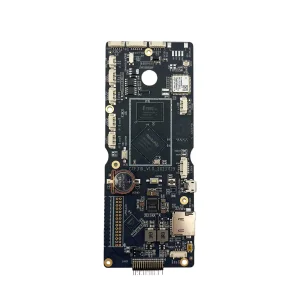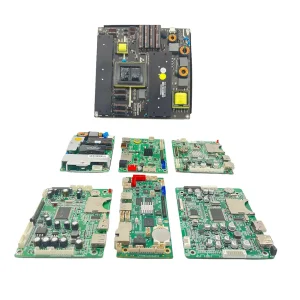
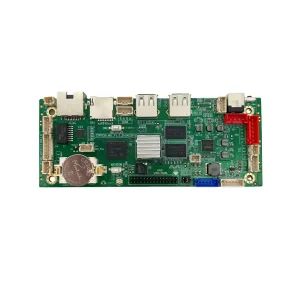
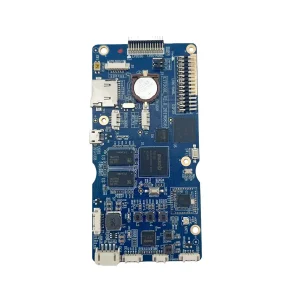
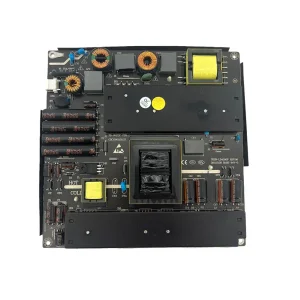
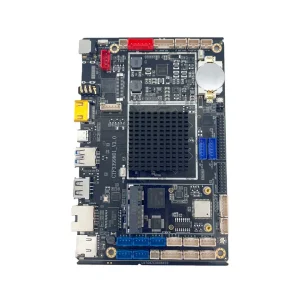
Certified Turnkey Assemblies & Precision PCBA
Explore production-grade circuit board systems manufactured under rigorous closed-loop IPC-A-610 Class 2 and Class 3 quality controls with automated CAP mitigation pipelines.
Global Landscape: Sourcing Strategy & Corrective Action Protocols
Why modern hardware enterprises demand suppliers with systematic, transparent, and auditable corrective action architectures rather than reactive warranty swaps.
Supply Chain Resilience & Micro-Variance
The contemporary electronics sector faces tight margins and complex miniaturization (0201/01005 passives, 0.35mm pitch BGAs). A single unmonitored thermal fluctuation during reflow can spawn latent micro-fractures, risking broad field returns if systemic containment isn't enforced early.
Shift from RCA to CAP Verification
Global procurement teams no longer accept superficial root-cause assertions. Engineering-driven leaders require definitive proof: Fishbone (Ishikawa), 5-Why regression, statistical D-FMEA/P-FMEA reviews, and documented control plan updates that lock out defect recurrences.
Digital Traceability & MES Integration
Top-tier factories operate with full digital barcoding across incoming kitting, automated stencil inspection (3D SPI), dual-angle AOI, and functional test (FCT). This infrastructure isolates non-conformances down to the single machine nozzle, reel batch, or reflow zone within minutes.
Architecting an Auditable Corrective Action Plan (CAP)
A rigorous breakdown of 8D problem-solving methodologies, DFM prevention systems, and closed-loop process engineering on the modern manufacturing floor.
Phase 1: Immediate Containment & Risk Boundary (D1-D3)
Upon detection of an electrical discrepancy, component misalignment, or soldering anomaly, an elite PCBA factory executes an immediate "quarantine lock." Materials across raw inventory, active SMT pick-and-place lines, staging buffers, and outgoing consignments are quarantined under an Engineering Change Notice (ECN) to prevent defect escape.
Phase 2: Root-Cause Investigation & Ishikawa Modeling (D4)
Technical diagnosis separates the symptom from the underlying root mechanism. Engineers cross-examine five core pillars (Man, Machine, Material, Method, Measurement). Using cross-sectional metallography, X-ray laminography for BGA micro-voiding, and solder paste volume statistical variation, the systemic breakdown point is mathematically identified.
Phase 3: Corrective Actions & Verification Proofs (D5-D6)
Corrective steps supersede temporary fixes. If solder bridges or head-in-pillow (HiP) occurrences happen, adjustments include laser-cut electro-polished stencils with nano-coatings, automated reflow zone profiling, and updated optical vision thresholds. Actions are subjected to pilot production tests before broad release.
Phase 4: Standardization & Systemic Lockout (D7-D8)
A Corrective Action Plan is only resolved once the Process Failure Mode and Effects Analysis (PFMEA), Control Plans (CP), and Standard Operating Procedures (SOP) are updated. This guarantees institutional learning across future product iterations, providing long-term reliability for OEM/ODM brand partners.
Domain-Specific Quality Engineering & Regulatory Alignment
Tailored quality frameworks designed to satisfy global industrial, medical, and automotive standards across local regulatory territories.
Automotive & New Energy Systems
Compliant with high thermal-shock, high-vibration thresholds. Focuses on zero-defect containment, solder joint shear testing, IPC Class 3 workmanship, full PPAP documentation, and strict component traceability to withstand under-hood and EV battery management rigors.
Medical Diagnostics & Critical Healthcare
Adheres to clean-assembly requirements, zero toxic ionic residue, and comprehensive Functional Circuit Testing (FCT). Backed by batch record governance, controlled change management, and IPC-A-610 Class 3 controls for patient monitors, dialysis pumps, and IVD units.
Industrial Automation & Smart Edge Gateways
Engineered for continuous 24/7 duty cycles under harsh electromagnetic interference, dust, and temperature swings. Employs selective conformal coating, wave soldering for high-current DIP relays, and extended thermal cycling burn-in tests.
Predictive SMT Manufacturing & Next-Gen CAP Frameworks
How deep learning algorithms and smart-factory integrations are transforming reactive quality audits into predictive, zero-defect production pipelines.
AI-Assisted Optical Metrology
Traditional AOI systems often suffer from high pseudo-defect false-alarm rates. Next-gen neural networks trained on millions of solder fillet images distinguish between actual wetting defects and non-critical flux reflections, streamlining review without missing true anomalies.
Closed-Loop Stencil-Printer Auto-Feedback
By connecting 3D Solder Paste Inspection (SPI) directly with automated screen printers, real-time offset data (X, Y, Theta) is fed back instantaneously. The printer auto-aligns stencils and initiates wipe cycles before paste volume drifts outside nominal control thresholds.
Immutable Component Traceability Ledger
To eliminate component counterfeiting and batch degradation, supply chains are integrating cryptographic lot verification. Moisture Sensitive Devices (MSD) track floor-life exposure digitally, ensuring automatic lockout if baking parameters are exceeded.
Essential Inquiries: Supplier Evaluation & CAP Quality Control
Direct technical answers addressing engineering verification, supplier qualification audits, and defect mitigation protocols.
What criteria distinguish an exceptional Corrective Action Plan supplier from a standard vendor?
What specific files and manufacturing inputs are required to initiate an engineering evaluation?
How does the factory prevent recurrence of BGA micro-voiding and solder bridging?
Can overseas enterprise buyers conduct remote or on-site quality and CAP audits?
How are prototype batches handled differently from volume mass production?
Industrial-Grade Assemblies & Specialized OEM Boards
Explore additional high-performance solutions from our Shenzhen SMT lines, optimized for long lifecycles and minimal field failure rates.