Precision Engineering Portfolio
Turnkey PCBA Assemblies with Alternate Sourcing Resiliency
Explore our precision-assembled boards manufactured in Shenzhen, backed by comprehensive component cross-referencing, DFM feasibility audits, and Class 2/3 industrial standards.
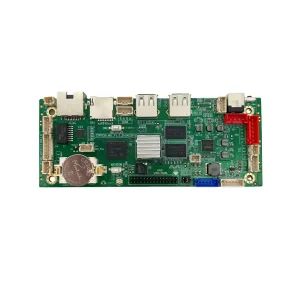
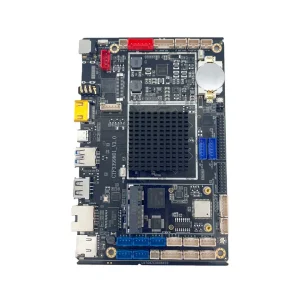
Custom High-quality PCBA Assembly for IoT Control Boards
Explore Specification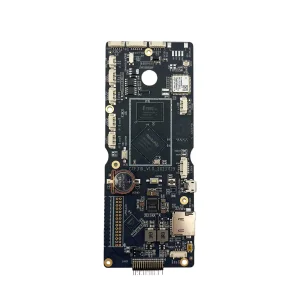
Custom Shenzhen SMT PCBA for Smart Products
Explore Specification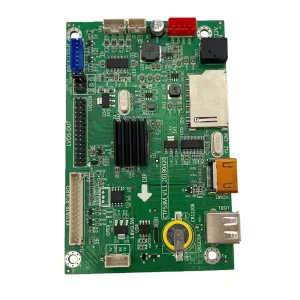
OEM Professional SMT PCBA Production
Explore Specification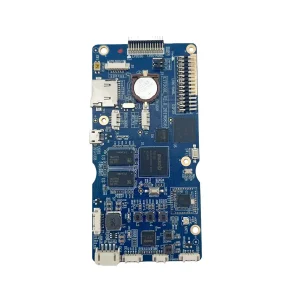
China Custom PCBA Production from Gerber & BOM
Explore Specification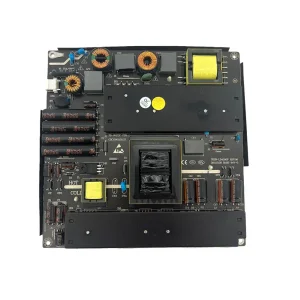
High Reliability Power PCBA Production with DIP
Explore Specification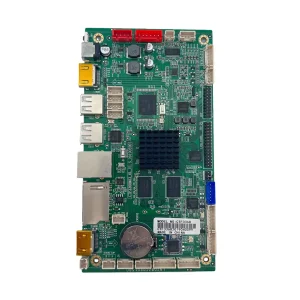
Industrial Control PCBA Assembly & Processing
Explore Specification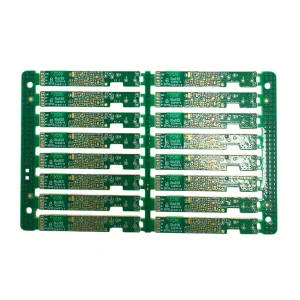
OEM Smart Bracelet PCBA Manufacturing
Explore Specification
Industrial Reality
Global Commercial & Supply Landscape for Alternate Components
The electronic component ecosystem faces unprecedented geopolitical decoupling, shortening product life cycles, and sudden End-of-Life (EOL) notices. Modern electronics factories have transformed from passive assemblers into proactive engineering partners.
38.4%
BOM Cost Savings Achieved
14 Wks
Average Lead Time Compression
99.8%
Pin-to-Pin Compatibility Rate
0 ppm
Counterfeit Defect Tolerance
Supply Chain Antifragility
Over-reliance on single-source Western semiconductor suppliers has exposed Tier-1 OEMs to devastating line shutdowns. Alternate component mapping establishes dual and triple sourcing options at the schematic stage, safeguarding production integrity against natural disruptions or trade embargoes.
Cost Rationalization Strategies
Global brands routinely pay high premiums for legacy ICs and brand-name passives. Tier-1 manufacturers in Shenzhen deploy drop-in alternatives from vetted Asian fabrication plants, trimming bill-of-materials costs by 15% to 40% without compromising MTBF or thermal performance.
Obsolescence Lifecycle Management
Product Life Cycle (PLC) obsolescence can strand active product lines. Elite manufacturing partners continuously scan global databases (SiliconExpert, IHS Markit) combined with proprietary market intelligence to execute proactive replacements before parts go Not Recommended for New Designs (NRND).
Engineering Framework
Rigorous FFF (Form-Fit-Function) Replacement Matrix
Component substitution is an exacting engineering discipline, not a clerical search. Our Shenzhen engineering teams deploy a four-tiered validation hierarchy to ensure electrical, physical, and reliability parity.
Tier 1: Pin-to-Pin Direct Drop-in
Zero redesign impact. Footprint geometry, thermal dissipation profiles, logic thresholds, and pin assignments match the original part exactly, allowing instant substitution without PCB Gerber modifications.
Tier 2: Parametric Equivalent
Functions identically from an electrical standpoint (voltage rails, switching frequencies, current capability) but requires minor peripheral passive recalculation, such as feedback resistors or bootstrap capacitors.
Tier 3: Dual-Footprint Layout
Engineered during DFM review for new production runs. Circuit designers establish overlapping multi-pad layouts accommodating both QFN/SOP and SOIC alternatives simultaneously on a single PCB.
Tier 4: Sub-System Module Swap
For complex Wi-Fi, BLE, and MCU processors where discrete parts cannot be matched. We design daughterboard or pre-certified SOC module conversions with zero compromise on firmware compatibility.
Sector Applications
Vertical Market Engineering Solutions
Alternative component adoption must honor unique vertical certifications. We operate dedicated engineering protocols to assure full qualification across demanding end-markets.
Automotive & New Energy (EV)
Alternative selections strictly adhere to AEC-Q100/Q101/Q200 qualifications. For battery management systems (BMS) and onboard vehicle gateways, every substitute undergoes comprehensive thermal shock, vibration profiles, and PPAP Level 3 documentation.
Medical & Diagnostic Instrumentation
Replacements for healthcare and patient-monitoring electronics are audited against ISO 13485 standards. We manage full engineering change notifications (ECN) and biological risk mitigation, avoiding non-notified silicon changes that could jeopardize FDA/CE device clearance.
Industrial Automation & Smart Grid
Industrial PLCs, motor control inverters, and utility metering demand 24/7 continuous uptime in high-EMI environments. Our replacements guarantee extended temperature ranges (-40°C to +105°C), conformal coating compatibility, and high transient voltage tolerance.
Future Outlook
Technological Roadmap: The Evolution of Intelligent Sourcing
Component substitution is transitioning from reactive manual parts hunting to automated, machine-learning-driven supply chain engineering.
PHASE 1: CURRENT
Rule-Based FFF Cross-Indexing & Parametric Scraping
Deployment of real-time scrapers across global authorized distributors, paired with in-house parametric engines to instantly spot drop-in pin equivalents for passive components, standard MOSFETs, and linear voltage regulators.
PHASE 2: 2026-2027
AI-Driven Silicon Emulation & Schematic Auto-Correction
Integration of Large Multimodal Models (LMMs) trained on millions of semiconductor datasheets. Systems autonomously generate alternative PCB routing recommendations, simulation models (SPICE), and automatic bill-of-materials cost recalculations.
PHASE 3: 2028+
Autonomous Dynamic Kitting & Unified Global Traceability
Decentralized ledger integration verifying original semiconductor foundry wafer lots. Automated pick-and-place lines dynamically adjust vision and feeder profiles on-the-fly according to the available verified component lot batch.
Technical FAQ
Alternative Component Engineering FAQs
Clear, actionable answers addressing engineering risk, functional parity testing, and procurement procedures.
How do you guarantee that an alternative component won't degrade board reliability?
Every suggested replacement passes through our strict DFM and quality gate. We compare maximum ratings, thermal impedance, switching thresholds, jitter, noise immunity, and package tolerances. Before production, engineering verification testing (EVT) and custom FCT (Functional Circuit Testing) jigs assess the board under full operational load and environmental stress.
Can we propose alternative Chinese silicon for Western microcontrollers (e.g., STM32)?
Yes. We have successfully implemented hundreds of conversions from major microcontrollers (such as STMicroelectronics, Microchip, and NXP) to robust domestic solutions (like GigaDevice, Geehy, and HDSC). Many alternatives offer pin-to-pin register compatibility, allowing your firmware to run with minimal code modifications while slashing lead times from 40+ weeks to under 3 weeks.
How does your factory protect against counterfeit components in the spot market?
We procure strictly through franchised original manufacturers and Tier-1 authorized distributors. For urgent spot-market requirements, incoming lots undergo incoming quality control (IQC), including acetone scrape testing, de-capping, microscopic die inspection, lead-frame integrity analysis, and X-ray fluorescence (XRF) inspection to verify genuine internal construction.
What documentation do you provide when recommending an alternative component?
We submit an Engineering Change Order (ECO) package that includes side-by-side datasheet parameter comparisons, solder pad footprint overlay comparisons, price delta calculations, lead-time tracking forecasts, and prototype bench-test reports for client approval before cutting line stencils.
Does component substitution impact our international compliance (RoHS, REACH, UL)?
No. All suggested alternatives are accompanied by full material declaration sheets, confirming compliant levels under EU RoHS and REACH SVHC regulations. If UL flammability (94V-0) or CE certification is required, we ensure the alternative device holds equivalent component-level recognition.
Advanced Manufacturing Capabilities
High-Density Turnkey Electronics Assemblies
From smart IoT sensors to multi-layer industrial automation, our production infrastructure in Shenzhen delivers certified precision and end-to-end component traceability.
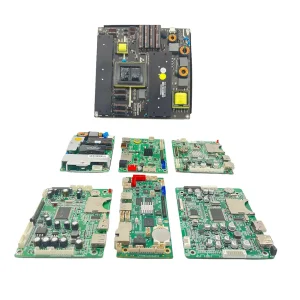
High-Quality OEM ODM PCBA for All Electronic Products
Explore Specification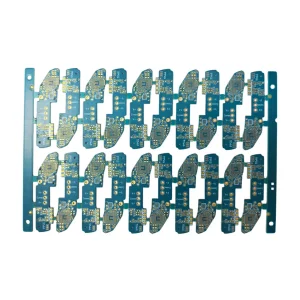
ODM Earphone Panel PCBA OEM ODM Service
Explore Specification
Turnkey One-Stop PCBA Assembly
Explore Specification
IoT Smart Control Board SMT Processing
Explore Specification
Shenzhen SMT PCBA for Smart Consumer Devices
Explore Specification
High-Density Professional SMT Assembly
Explore Specification
Custom Build-to-Print PCBA Solutions
Explore Specification