Standard & Custom Coated PCBA Assemblies
Explore our certified turnkey PCB assembly and automated conformal coating configurations engineered for harsh automotive, industrial, and smart hardware applications.
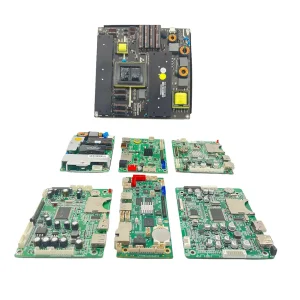
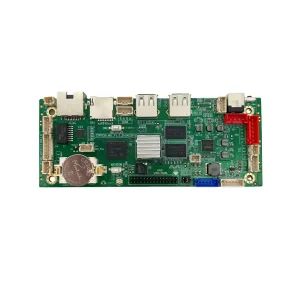
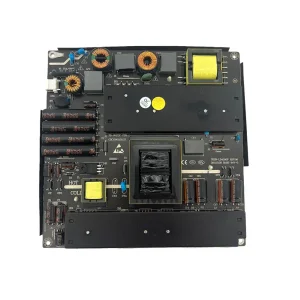
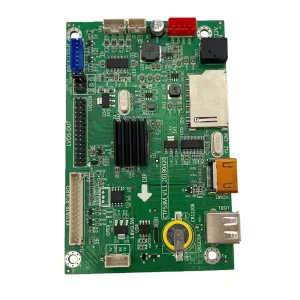
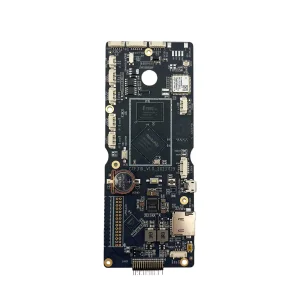
The Engineering Paradigm of PCBA Conformal Coating
Analyzing molecular dielectric protection, environmental isolation mechanics, and defect prevention across high-density circuit topologies.
Moisture & Condensation Protection
Operating electronics in fluctuating ambient conditions promotes micro-condensation on exposed traces. Hydrophobic polymeric layers mitigate moisture ingress, suppressing electrochemical migration (ECM) and dendritic filament growth across tight conductor spacing down to 0.1mm.
Corrosive Gas & Salt Mist Shielding
Industrial and coastal applications subject PCBA components to Hydrogen Sulfide (H₂S), Sulfur Dioxide (SO₂), and saline aerosol. Conformal coatings establish a gas-diffusion barrier preventing silver terminal tarnishing in passive resistors and solder joint leaching.
Dielectric Insulation & Arcing Prevention
By imparting high dielectric strength (typically >1500 V/mil), conformal thin films allow circuit engineers to compact conductor pitches in high-voltage power converters, EV inverters, and battery management boards without risking dielectric breakdown or surface tracking.
Critical Process Note: The "Keep-Out Area" Mandate
Precision automated selective coating is essential to prevent unintended fluid capillary migration into non-coatable components. Critical keep-out zones include pogo-pin test points, spring-loaded RF connectors, tactile switches, potentiometer adjustment screws, optical sensor apertures, and heatsink thermal interfaces. Our DFM protocol flags these areas during Gerber parsing.
Exhaustive Taxonomy of Conformal Coating Types
Selecting the optimal polymer backbone based on operating thermal envelope, solvent exposure, mechanical elasticity, and rework feasibility.
| Chemistry Class | IPC-CC-830 Designation | Typical Film Thickness | Operating Temperature | Chemical / Solvent Resistance | Reworkability Factor | Primary Industrial Use-Cases |
|---|---|---|---|---|---|---|
| Acrylic Resins (AR) | Type AR | 25 – 75 μm (1 – 3 mil) | -65°C to +125°C | Fair (Soluble in solvents) | Superior (Easy chemical strip) | Consumer devices, IoT gateways, commercial electronics, cost-sensitive high-mix runs. |
| Polyurethane Resins (UR) | Type UR | 25 – 75 μm (1 – 3 mil) | -65°C to +130°C | Excellent (Fuel & solvent resistant) | Moderate (Thermal/abrasive strip) | Automotive under-hood, marine instrumentation, aerospace avionics, locomotive drive controls. |
| Silicone Resins (SR) | Type SR | 50 – 210 μm (2 – 8 mil) | -65°C to +200°C | Moderate (High thermal stability) | Difficult (Requires specialty strippers) | EV power inverters, high-temperature industrial furnaces, LED lighting drivers, outdoor solar. |
| Epoxy Resins (ER) | Type ER | 25 – 75 μm (1 – 3 mil) | -65°C to +150°C | Outstanding (Nearly unyielding) | Extremely Difficult (Physical milling) | Harsh mining equipment, subterranean drilling sensors, chemical processing, anti-tamper security. |
| Parylene (XY) | Type XY | 10 – 50 μm (0.4 – 2 mil) | -200°C to +150°C | Inert (Impervious to acids/bases) | Near Impossible (Micro-abrasion only) | Class III implantable medical electronics, space payloads, subsea transducers, MEMS packaging. |
Acrylic (AR) vs. Polyurethane (UR): Field Selection Trade-Offs
While Acrylic Resins represent the global standard for consumer and smart-home electronics due to their rapid evaporation drying curve and effortless repairability via localized solvent dipping, Polyurethane (UR) becomes non-negotiable when fuel oil, hydraulic fluids, or severe mechanical vibrations enter the duty cycle. UR coatings exhibit cross-linked polymer matrix structures that deliver remarkable abrasion toughness but necessitate localized mechanical abrasion or dedicated chemical strippers when desoldering defective integrated circuits.
Silicone (SR) vs. Parylene (XY): Extreme Environmental Resilience
Silicone Resins provide unmatched flexibility (elongation up to 100%), shielding large ceramic capacitors and heavy magnetic chokes from thermal cycling micro-cracking across temperature deltas of -65°C to +200°C. In contrast, Parylene is unique as a gas-phase vapor deposition polymerization (VDP) method. Because it does not rely on a liquid meniscus, Parylene guarantees pinhole-free, completely uniform coverage over razor-sharp IC lead edges and beneath ultra-low-standoff Flip-Chip and BGA packages.
Automated Selective Coating & Curing Process
A closed-loop manufacturing pipeline eliminating manual masking labor, liquid pooling, overspray, and solvent entrapment defects.
Plasma Surface Activation
Atmospheric plasma treatment removes molecular organic residues, boosting PCB surface energy to >48 dynes/cm to ensure flawless polymer wetting.
Robotic Selective Dispensing
4-axis CNC selective coating valves apply curtain, swirl, and micro-dot patterns with repeatable edge precision avoiding all keep-out zones.
Dual-Stage Polymer Curing
Infrared (IR) convection or high-intensity UV curing followed by secondary moisture curing mechanisms for shadowed under-component zones.
Automated UV AOI & Thickness
Multi-angle 365nm UV inspection scanning for bubbles, voids, capillary bridging, and eddy-current thickness calibration across coupons.
Avoiding Solder Bead & Capillary Wicking
Low viscosity conformal formulas can wick into unsealed connectors or switch contact blocks through capillary draw. Our process engineering team optimizes rheology modifiers and implements programmable edge decelerations to prevent catastrophic internal switch shorting.
Fluorescent Tracer UV Verification
All conformal coating formulations integrated into our Shenzhen production facility are compounded with an optical fluorescent tracer dye. Under 365nm UV excitation, the assembly reveals immediate optical contrast, enabling automated vision systems to detect de-wetting and pinholes instantly.
Thickness Control (IPC-A-610 Class 3)
Film thickness that is excessively thin compromises barrier isolation; thickness that is too heavy triggers solder joint cracking during thermal cycling due to mismatched Coefficient of Thermal Expansion (CTE). We calibrate wet-film and dry-film gauges on every production shift.
Targeted Industrial Applications & Environment Contexts
Real-world engineering case applications requiring bespoke chemical barriers across demanding mission-critical deployments.
Automotive Powertrain & EV
Battery Management Systems (BMS), motor traction controllers, and onboard chargers (OBC) exposed to ethylene glycol, high-voltage arcing, and cyclic thermal shock from -40°C to +125°C.
Industrial Automation & PLC
Distributed I/O modules, variable frequency drives (VFD), and chemical plant sensor nodes operating within ISA 71.04 Class G3 corrosive gas envelopes rich in sulfur and chlorine vapors.
Offshore & Marine Electronics
Radar displays, AIS transponders, and subsea telemetry modules subjected to relentless high-humidity salt spray, sustained vibration, and marine fungal exposure according to MIL-STD-810H.
Clean Energy & Smart Grid
Outdoor solar microinverters, wind turbine pitch actuators, and smart power metering hubs requiring uninterrupted 20-year lifespans in tropical monsoon or arid desert regions.
Technology Roadmap & Future Outlook (2025–2035)
Anticipating the technological shift toward solventless bio-based polymers, nano-scale hydrophobic barriers, and AI-driven automated optical diagnostics.
100% Solids & Zero-VOC Formulations
With international regulatory bodies clamping down on volatile organic compounds (VOCs) and hazardous air pollutants (HAPs), the industry is transitioning rapidly toward 100% solid UV-curable and bio-sourced acrylic oligomers. These chemistries eradicate outgassing in vacuum operations and slash factory thermal drying carbon footprints by >65%.
Atomic Layer Deposition (ALD) Nanocoatings
As component footprints contract into 01005 and ultra-fine pitch micro-BGAs (<0.3mm ball pitch), conventional liquid conformal films suffer from meniscus tension bridging. Inorganic ceramic nanocoatings (such as Al₂O₃ via ALD) provide sub-micron hermetic moisture passivations without adding bulk weight or thermal resistance.
AI-Powered 3D Spectral AOI Inspection
Replacing human visual spot-checks with high-speed multi-camera 3D profilometry. Machine learning models analyze real-time UV refraction indices to identify micro-voids, bubbling, and edge-pull defects smaller than 25 microns, feeding dimensional offsets back to the robotic dispensing heads instantly.
China Factory Supply Chain Resilience & Efficiency Advantages
Harnessing the world's most concentrated electronics cluster in Longgang, Shenzhen, to collapse lead times, lower BOM costs, and ensure material integrity.
2-Hour Industrial Sourcing Radius
Operating out of Shenzhen's core electronics district grants direct, same-day access to raw FR4/Rogers laminate fabricators, precision laser-cut stencil vendors, authorized component distribution houses, and Tier-1 conformal coating chemical manufacturers (Dow Corning, Peters, Humiseal, Electrolube).
Turnkey Agility: SMT + Coating In-House
Contracting SMT assembly and secondary conformal coating with fragmented suppliers introduces severe logistical friction, oxidation risks on exposed pads, and unaccountable finger-pointing during failures. Aozite operates an integrated production line where PCBA boards transition seamlessly from reflow to automated plasma and coating.
Stringent Anti-Counterfeit Verification
Our dedicated component procurement protocols include incoming X-ray fluorescence (XRF) material verification, de-capsulation testing, and moisture sensitivity level (MSL) dry-storage baking ovens. We guarantee 100% genuine components direct from franchised distributors, safeguarding reliability before coating encapsulation.
Regulatory Compliance & Localized Technical Support
Navigating international regulatory frameworks with fully auditable documentation, rigorous laboratory validation, and dedicated Western-timezone engineering support.
IPC-A-610 Class 3
Strict workmanship criteria for high-performance electronic assemblies where downtime cannot be tolerated.
UL 94V-0 & UL 746E
Complete flame retardancy and polymeric dielectric certification for industrial control and high-voltage products.
RoHS & REACH Compliance
100% lead-free, halogen-free, and SVHC-free materials compliant with European Union and North American environmental directives.
Bilingual Engineering PMs
Direct English-fluent technical managers bridging your R&D engineering requirements without cultural or communication barriers.
Frequently Asked Questions: PCBA Conformal Coating
Comprehensive engineering clarifications addressing selection, thickness, shadow curing, masking, and field longevity.
What is the optimal conformal coating type for industrial PCBA operating in humid, chemical-laden environments?
How do you manage "shadow areas" underneath fine-pitch BGA and QFN packages during UV curing?
What are the standard dry film thickness tolerances specified by IPC-A-610 and IPC-CC-830?
• Acrylic Resin (Type AR): 25 – 75 μm (0.001 to 0.003 in.)
• Polyurethane Resin (Type UR): 25 – 75 μm (0.001 to 0.003 in.)
• Epoxy Resin (Type ER): 25 – 75 μm (0.001 to 0.003 in.)
• Silicone Resin (Type SR): 50 – 210 μm (0.002 to 0.008 in.)
• Parylene (Type XY): 10 – 50 μm (0.0004 to 0.002 in.)
Applying coating beyond these thresholds can cause internal stress fractures during thermal cycling and promote solvent entrapment bubbles.
Why is automated selective conformal coating superior to manual dipping or hand spraying?
Can conformal coatings be removed if a component fails during field operation and requires rework?
• Acrylic (AR): Highly reworkable. It dissolves cleanly using mild solvents like butyrolactone or acetone.
• Polyurethane (UR): Moderately reworkable. Requires localized thermal burning through using specialty desoldering tools or formulated chemical stripping gels.
• Silicone (SR): Requires specialized chemical strippers that swell and break down the silicone matrix; mechanical abrasion is rarely recommended due to PCB laminate damage.
• Epoxy (ER) & Parylene (XY): Extremely difficult to remove without mechanical micro-abrasion blasting using specialized soft-media (such as sodium bicarbonate), making them unsuitable for frequent field repair.
What files and data inputs must the customer provide for a conformal coating PCBA quotation?
1. Complete Gerber files (RS-274X or ODB++) including silkscreen, soldermask, and copper layers.
2. A dedicated Conformal Coating Keep-Out Drawing indicating clearly which components, pads, and test connectors must remain completely free of coating.
3. Bill of Materials (BOM) specifying complete manufacturer part numbers.
4. Specification of the preferred coating chemistry (AR, UR, SR, ER, or XY) or detailed descriptions of the target operating environment so our materials engineering team can recommend the optimal formulation.
Order Coated PCBA Assemblies Directly
Choose from our specialized PCBA production streams manufactured in Shenzhen with comprehensive incoming material verification, high-speed SMT, and automated coating.