
Who Is the Best PCBA Board Assembly Manufacturer in China?
Choosing the right Pcba Board Assembly manufacturer in China is not simply a matter of comparing unit prices. A board may look flawless under factory lights, yet fail after thermal cycling or vibration. The real test is whether a supplier can control the process from component sourcing and solder paste printing to inspection, testing, and shipment. Small details matter: a misplaced 0201 resistor, a dull solder joint, or an incomplete traceability record can delay an entire product launch.
The market is substantial. Prismark’s 2024 global PCB industry review estimated worldwide PCB production at about US$73.4 billion in 2023, with China accounting for roughly 54% of production value. That scale gives buyers many options, but it does not guarantee consistent assembly quality. IPC-A-610 and J-STD-001 offer widely used criteria for electronic assembly acceptability and soldering processes. Still, certification alone cannot prove that a factory will meet your specific requirements. Ask for recent inspection results, process controls, component traceability, and evidence of testing on comparable products. Look closely at how the supplier handles defects, not just how it presents its best samples. A site visit can reveal practical realities, from clean stencil storage to clearly labeled work-in-progress trays. No checklist removes every risk. This guide compares the factors that help identify a capable Chinese assembly partner—and the questions worth asking before committing.
What PCBA Board Assembly Manufacturers Do
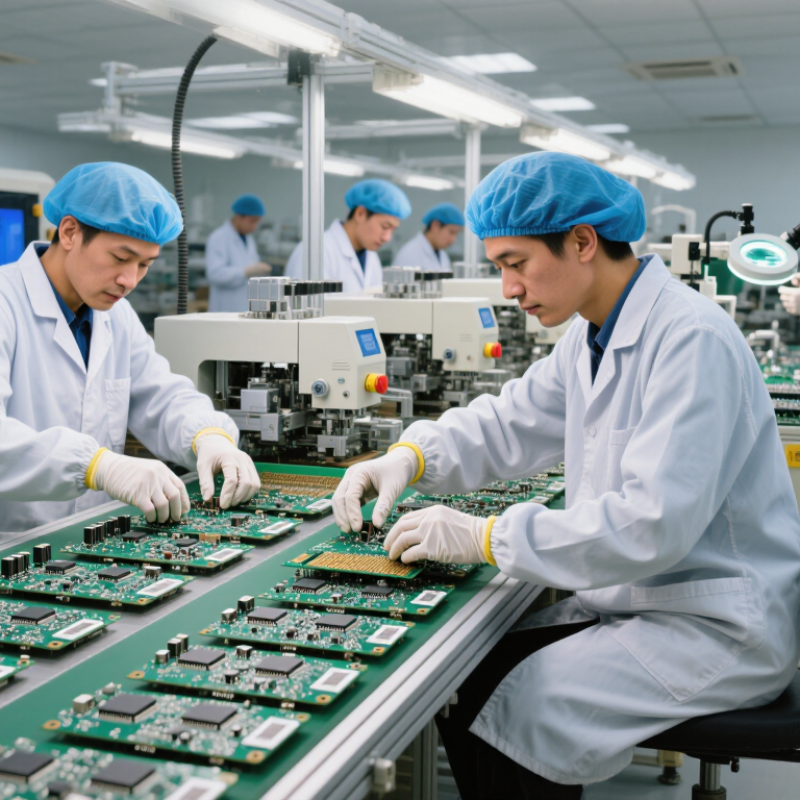
A PCBA board assembly manufacturer converts a circuit design and bill of materials into a populated, inspected board. Its work begins before production. Engineers review component footprints, spacing, solderability, and panel layout to flag assembly risks. They also check whether parts are available and suitable substitutes are approved. A rushed substitution can change fit or performance. That detail matters.
During production, technicians apply solder paste through a stencil, place surface-mount components, and run boards through a controlled reflow oven. Through-hole parts may be soldered separately. Automated optical inspection checks placement and visible solder joints; X-ray inspection can reveal hidden joints beneath some packages. Electrical or functional testing then checks whether the board behaves as intended. The WSTS Fall 2024 forecast put global semiconductor sales at about $627 billion for 2024, with further growth forecast for 2025. This is a component-market signal, not proof that every PCBA order will grow. Buyers should ask about inspection coverage, traceability, test limits, and how defects are reported. IPC-A-610 and J-STD-001 provide widely used workmanship and soldering criteria, but a certificate alone cannot guarantee a reliable product. Real performance depends on the design, materials, process control, and actual test results.
Who Is the Best PCBA Board Assembly Manufacturer in China? - What PCBA Board Assembly Manufacturers Do
There is no single manufacturer that is best for every project. PCBA manufacturers commonly provide some combination of the services below; capabilities, certifications, and process controls should be verified for the specific product and production volume.
| Service or evaluation dimension | What the manufacturer does | Typical inputs or outputs | What to verify when comparing suppliers |
|---|---|---|---|
| Engineering review and DFM | Reviews the design and manufacturing files for assembly risks, component clearances, footprint issues, and process compatibility before production. | Inputs: Gerber or ODB++ files, BOM, pick-and-place data, and assembly drawings. Output: questions, risk findings, or proposed adjustments. | Ask whether the review covers both the bare PCB and assembly, how design questions are documented, and whether changes require customer approval. |
| Component sourcing | Purchases or receives components, checks part information, and manages material availability for the build. | Inputs: BOM, approved-part requirements, and customer-supplied materials. Output: assembled or production-ready kits of components. | Check the sourcing and traceability process, handling of substitutions, counterfeit-risk controls, and how shortages or long lead times are communicated. |
| Bare PCB fabrication coordination | Provides bare-board fabrication directly or coordinates it with a board supplier before assembly. | Inputs: board design files and fabrication specifications. Output: fabricated, inspected bare PCBs ready for assembly. | Confirm whether fabrication is included, which materials and stack-ups are supported, and how board acceptance criteria are agreed. |
| Surface-mount technology (SMT) | Applies solder paste through a stencil, places surface-mount components, and reflows solder to form electrical and mechanical connections. | Inputs: bare boards, components, stencil data, and placement files. Output: SMT-assembled boards. | Ask whether the line can handle the component sizes, package types, board dimensions, and assembly complexity in your design. |
| Through-hole assembly | Installs components with leads that pass through holes in the PCB; soldering may be manual or performed using a wave or selective soldering process. | Inputs: drilled boards and through-hole components. Output: soldered through-hole connections. | Verify support for the required component types, soldering method, and any hand-assembly or rework requirements. |
| Inspection and process quality control | Checks assembly at selected stages. Methods may include solder-paste inspection, automated optical inspection, and X-ray inspection for joints that are not visible from the surface. | Inputs: assembly criteria and production boards. Output: inspection records and identified defects for review or correction. | Confirm which inspection methods are used for your board, how defects are recorded, and what acceptance criteria and reporting are included. |
| Electrical and functional testing | Performs agreed checks to detect electrical opens or shorts, or to verify that the assembled product operates as specified. | Inputs: test requirements, test fixtures or software where needed, and assembled boards. Output: test results and pass/fail records. | Clarify whether in-circuit testing or functional testing is available, who supplies test equipment, and how test coverage is defined. |
| Rework and nonconformance handling | Investigates assembly defects, carries out approved repairs or rework, and documents material or process issues. | Inputs: inspection or test findings and agreed repair instructions. Output: repaired boards, disposition records, or corrective-action information. | Ask how rework is authorized and documented, how repaired units are retested, and how recurring issues are investigated. |
| Coating, final assembly, and packaging | When included in the project scope, applies conformal coating, installs the PCBA into an enclosure, completes cable or box-build work, and prepares units for shipment. | Inputs: assembled boards, drawings, coating requirements, and packaging instructions. Output: protected or integrated assemblies ready for delivery. | Verify which finishing services are performed in-house or by a partner, and agree on inspection, labeling, and packaging requirements. |
| Delivery, traceability, and production fit | Plans builds, tracks materials and production status, and supplies agreed production records. A suitable supplier should match the project’s volume, schedule, and support needs. | Inputs: forecast, order quantity, revision-controlled files, and delivery requirements. Output: completed boards or assemblies with agreed records. | Compare prototype and production capabilities, communication practices, revision control, traceability scope, lead-time assumptions, and quality documentation. |
FAQS
Ask how it reviews design files, checks component availability, and flags manufacturing concerns. Request records, not just a confident presentation.
Compare its experience with your board’s layer count, component spacing, and expected volume. Similar equipment alone is not enough.
Look for inspection criteria, material traceability, and test results linked to each production batch. Sensitive customer details can be removed.
Not always. Visual checks may miss weak solder joints or intermittent faults. Ask about automated inspection and functional testing.
Check solder joints, connector alignment, and component polarity. Small details matter. A neat surface does not prove reliable performance.
Ask how fine-pitch parts are inspected and how solder paste is controlled. Request sample records showing defects and corrective actions.
Ask how the team handles missing footprints, warped panels, or repeated solder bridges. Clear answers matter, though I might be judging one conversation too heavily.
A small build can reveal defects, rework needs, test coverage, and delivery consistency. Review the results carefully; one pilot may not show every production issue.
Check whether the price includes fixtures, testing, and protective packaging. A low price can leave important details unclear.
Conclusion
Choosing the best PCBA Board Assembly manufacturer in China depends on how well its services fit a project’s technical requirements, production volume, and schedule. These manufacturers typically support the process from component sourcing and printed circuit board assembly to inspection and testing. Understanding each stage of manufacturing helps buyers assess how a supplier manages quality, communication, and production planning.
A useful comparison considers engineering support, equipment and process capabilities, quality-control procedures, sourcing practices, capacity, lead times, and the ability to handle prototypes as well as larger production runs. No single manufacturer is the right choice for every project. By defining product requirements, expected volumes, budget, and delivery needs in advance, businesses can evaluate suppliers consistently and select a manufacturing partner suited to their specific goals.
